In simple terms
A cruise missile is a guided weapon that flies like an aircraft rather than arcing through space. A jet engine drives it for most or all of its flight.
It stays inside the atmosphere, follows a route it can adjust, and can be launched from land, ships, submarines or aircraft.
How it works
The Center for Arms Control and Non-Proliferation describes cruise missiles as unmanned vehicles propelled by jet engines, much like an airplane, launched from ground, air or sea platforms.
Guidance comes from a mix of inertial systems, satellite navigation, terrain matching or a camera watched by a remote operator. The missile can therefore turn, follow the shape of the land and approach from an unexpected direction.
Flying low is the point. A cruise missile can travel a few meters above the surface, which the same source notes makes it very difficult to detect.
Export rules treat these weapons seriously. Under the Missile Technology Control Regime, established in April 1987, systems able to deliver a 500 kilogram payload at least 300 kilometers fall in Category I, where members apply a strong presumption to deny transfers. Cruise missiles and unmanned aerial vehicles are covered alongside rockets and space launch vehicles.
Why it matters
Cruise missiles let a state strike precisely at long range without risking a pilot. That lowers the political cost of an attack.
Their low flight path also stresses air defenses built to catch objects falling from high altitude, so defending against them is a different problem from defending against ballistic missiles.
Where you will see it
- Military reporting on strikes and interceptions during conflicts.
- Arms control negotiations and export licensing decisions.
- Defense procurement budgets and air defense programs.
- Non-proliferation control lists such as the MTCR annex.
Example
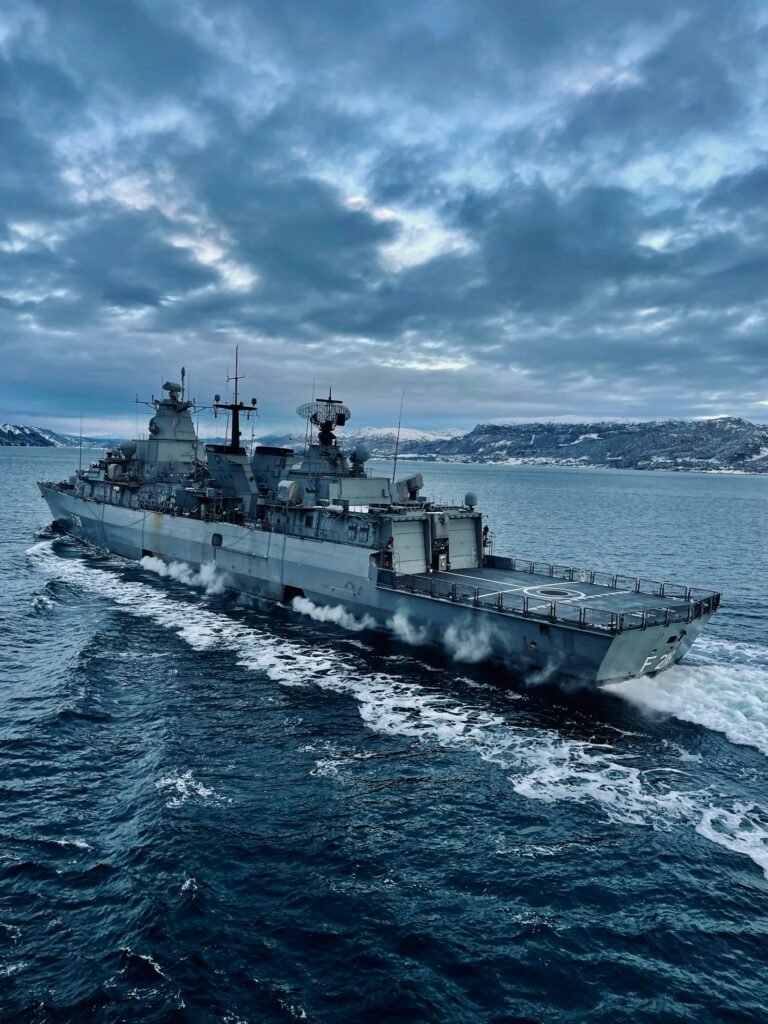
A navy ship launched cruise missiles that flew several hundred kilometers at low altitude before striking a coastal radar site.
Often confused with
A ballistic missile is boosted by rockets and then follows an unpowered arc, much of it very high and very fast. A cruise missile stays low and keeps its engine running.
Key facts
- Cruise missiles are unmanned vehicles propelled by jet engines and can be launched from ground, air or sea platforms.1
- Ballistic missiles follow an unpowered arcing trajectory after boost, while cruise missiles stay within the atmosphere and can fly as low as a few meters.1
- Low-altitude flight makes a cruise missile very difficult to detect.1
- The Missile Technology Control Regime was established in April 1987; the Arms Control Association lists 35 participating countries, including India, which joined in June 2016.2
- Systems able to deliver a 500 kilogram payload at least 300 kilometers fall under MTCR Category I, where there is a strong presumption to deny transfers.23
Related concepts
In the news
Quick checkWhat is the main difference between a cruise missile and a ballistic missile?Show answer
A cruise missile flies low through the atmosphere under continuous jet power. A ballistic missile is boosted by rockets and then coasts along a high, unpowered arc.
Sources
- Center for Arms Control and Non-Proliferation. Fact Sheet: Ballistic vs. Cruise Missiles. Undated (accessed 23 September 2026)
- Arms Control Association. The Missile Technology Control Regime at a Glance. Undated (accessed 23 September 2026)
- Australian Government, Department of Foreign Affairs and Trade. Missiles, export control regimes. Undated (accessed 23 September 2026)
Editorially reviewed by Specialty Digest Editorial TeamLast reviewed September 23, 2026Researched and drafted with AI assistanceReport an issue