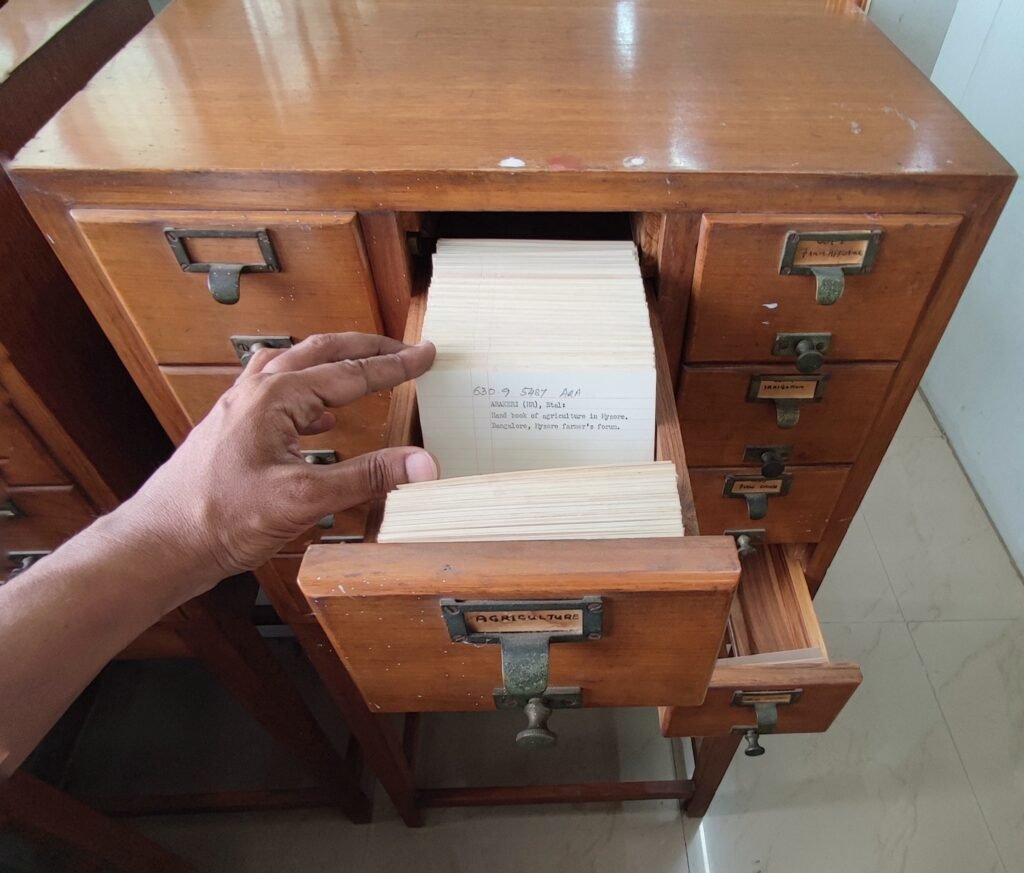
Authority control is the practice of maintaining consistent, standardized forms of names, subjects, and titles across a library catalog, ensuring that every work by or about the same person, organization, place, or topic is linked together under one authorized heading rather than scattered across multiple inconsistent variants.
An author name might appear differently across different publications due to variations in spelling, the use of a full name versus initials, or a name change over time. Without authority control, these variants would be treated as entirely separate, disconnected entries, making it difficult for a searcher to locate everything written by that person. Authority control resolves this by establishing one authorized heading, along with cross-references from known variant forms, so that catalog searches reliably gather all related works together.
Authority Records
Each controlled heading is documented in an authority record, which specifies the chosen authorized form along with any variant forms, relevant biographical or identifying details distinguishing the entity from others with similar names, and references to related headings. Major authority files, such as the Library of Congress Name Authority File, are shared resources that many libraries draw upon rather than creating independent authority records in isolation.
Scope Beyond Personal Names
While often discussed in terms of personal names, authority control extends equally to corporate body names, geographic place names, series titles, and subject headings, applying the same underlying principle of resolving variant forms into one consistent, authorized version across all of these different kinds of catalog access points.
Connection to Linked Data
Authority records increasingly serve as a foundation for linked data initiatives, since an authority record unique identifier can connect a library catalog entry to the same entity as represented in other systems, extending the benefits of authority control beyond a single library catalog into the broader interconnected information landscape.
Economic Considerations
Maintaining authority control requires dedicated staff time to research and resolve ambiguous or conflicting name forms, a labor-intensive process that many libraries address by drawing on shared, centrally maintained authority files rather than duplicating this research independently at every individual institution.
International Perspectives
Authority control efforts increasingly span national boundaries, with international initiatives working to link authority records for the same person or organization across different countries national authority files, recognizing that significant authors and entities are relevant to library catalogs well beyond any single country.
Looking Ahead
As authority records increasingly connect to linked data and identifier systems beyond traditional library catalogs, authority control is expanding from a purely internal cataloging function into a broader piece of shared information infrastructure connecting libraries, archives, and other cultural institutions.
Practical Guidance
Catalogers encountering an ambiguous name, such as two different authors sharing an identical name, are generally advised to consult established authority records and, where necessary, create or request a new distinguishing authority record rather than guessing which existing heading applies, since an incorrect match would incorrectly merge two distinct people under one heading.
Related Specialties
Authority control work connects closely with biographical and institutional research, since correctly distinguishing between similarly named entities or establishing an accurate preferred form for an organization name sometimes requires research skills extending well beyond routine cataloging procedure alone.
Cross-References and Variant Forms
A well-constructed authority record includes cross-references directing searchers from variant or rejected forms of a name toward the single authorized heading, so that a patron searching under a commonly used but non-preferred version of an author name is still guided to the correct, complete set of that author works rather than returning an incomplete or empty result.
Maintaining these cross-references accurately requires ongoing attention as new variant forms come to light, such as when additional publications reveal a previously unknown pseudonym or alternate spelling used by an author, making authority control an active, continuous process rather than a one-time task completed when a heading is first established.
Scale of Authority Files
Major shared authority files contain many millions of established headings covering personal names, corporate bodies, and subjects, representing a vast cumulative cataloging investment built up over many decades of cooperative effort among contributing libraries worldwide.
This scale means that even small inconsistencies or errors within a shared authority file can have outsized downstream effects, propagating across every library catalog that draws on the same shared authority data for its own local headings.
Automated Matching Challenges
Efforts to automate authority matching using computational techniques face persistent challenges distinguishing between genuinely identical entities and merely similar but distinct ones, meaning human review remains an important safeguard even as automated tools increasingly assist with the initial matching process.
For this reason, most authority control workflows continue to rely on trained staff making the final determination in ambiguous cases, treating automated suggestions as a starting point rather than a definitive answer.
Investing in this ongoing human oversight remains necessary despite improving automation, since the cost of an incorrect authority match, silently merging two distinct people, can be difficult to detect and correct after the fact.
Institutions that skip this safeguard entirely tend to discover costly errors only much later, once they have already spread widely.
Allocating adequate staff time for authority work, rather than treating it as a low priority afterthought, remains an important institutional commitment.
Library administrators who recognize the long-term value of accurate authority data tend to protect this staffing commitment even during budget constraints.
This protection ultimately benefits every patron who relies on the catalog to reliably bring together a complete picture of an author body of work.
It is a quiet but essential piece of infrastructure supporting accurate research across countless library catalogs.
Key facts
- Array
Quick checkWhat problem does authority control solve in a library catalog?Show answer
Authority control ensures that every work by or about the same person, organization, or subject is linked under one consistent, authorized heading, even when different sources spell or present that name differently, so that searches and browsing reliably retrieve everything related to that entity.
Sources
- Array
Editorially reviewed by Specialty Digest Editorial TeamLast reviewed November 3, 2026Researched and drafted with AI assistanceReport an issue