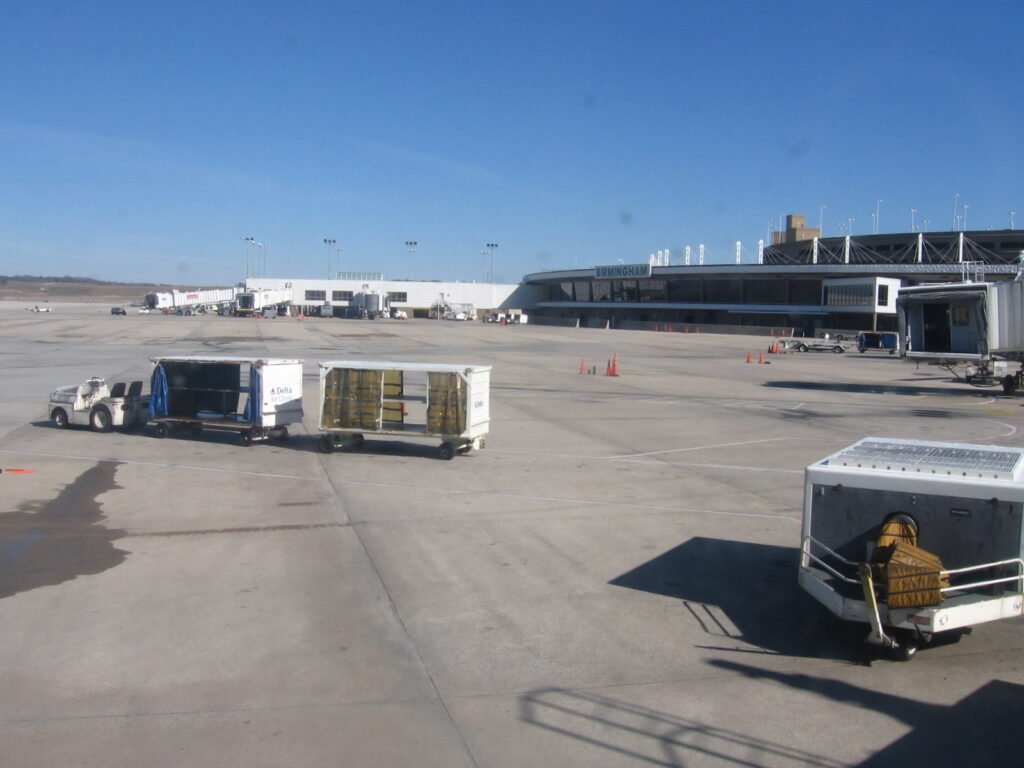
What Airport Operations Covers
Airport operations encompasses the full range of activities needed to run an airport safely and efficiently, including managing runways and taxiways, coordinating ground handling services for arriving and departing aircraft, overseeing terminal passenger flow, and ensuring security screening processes run smoothly. It requires close coordination among the airport operator, airlines, air traffic control, and government security agencies.
Airside and Landside Operations
Airport operations are often divided into airside activities, covering runways, taxiways, and aircraft parking areas, and landside activities, covering terminal buildings, parking facilities, and ground transportation access. Airside operations focus heavily on safety and efficient aircraft movement, while landside operations focus on passenger experience and commercial activities such as retail and dining.
Ground Handling Services
Ground handling covers the services required to prepare an aircraft for its next flight after arrival, including baggage loading and unloading, aircraft cleaning, catering restocking, fueling, and pushback from the gate. These services are performed either by the airline itself or by specialized third-party ground handling companies under contract.
Airport Capacity and Congestion
Airport capacity, determined by runway configuration, air traffic control capability, and terminal gate availability, directly limits how many flights an airport can handle, particularly during peak travel periods. Major airports facing capacity constraints often invest in infrastructure expansion or implement slot allocation systems to manage demand within available capacity.
Security Screening and Airport Operations
Passenger and baggage security screening forms a major part of airport operations, requiring airports to coordinate closely with government security agencies to process passengers efficiently while maintaining required security standards, a balance that becomes especially challenging during peak travel periods when checkpoint wait times can significantly affect passenger experience.
Airport Slot Allocation
At capacity-constrained airports, takeoff and landing slots are allocated to airlines through formal slot allocation systems, often based on historical usage rights that airlines must maintain by using their allocated slots regularly, a system designed to manage scarce runway capacity fairly among competing airlines.
Airport Revenue Sources
Airports generate revenue from both aeronautical sources, such as landing fees and gate rental charged to airlines, and non-aeronautical sources, including retail concessions, parking, and advertising, with many larger airports increasingly relying on non-aeronautical revenue to fund operations and infrastructure investment.
Ground Transportation and Landside Access
Airport operations include managing landside ground transportation access, such as curbside pickup and drop-off areas, parking facilities, and connections to public transit, rail, or rideshare services, with congestion at terminal curbsides becoming an increasingly significant operational challenge at busy airports as rideshare volume has grown substantially in recent years.
Airport Emergency Planning
Airports maintain detailed emergency response plans covering scenarios ranging from aircraft incidents to severe weather and security threats, conducting regular training exercises with airport staff, airlines, and local emergency responders to ensure a coordinated response capability is ready if a real emergency occurs.
Sustainability in Airport Operations
Many airports have adopted sustainability initiatives covering energy efficiency, waste reduction, and ground vehicle electrification, responding both to environmental regulations and to growing public and airline interest in reducing the environmental footprint associated with airport operations and aviation more broadly.
Airport Ownership and Governance Models
Airports operate under a variety of ownership and governance structures around the world, ranging from government-owned and operated facilities to privatized airports run by private companies or public-private partnerships, with each model carrying different implications for how investment decisions, fee structures, and operational priorities are set.
Coordinating Multiple Stakeholders
Successful airport operations depend on close coordination among numerous independent stakeholders, including multiple airlines, ground handling companies, government security and customs agencies, and air traffic control, none of which the airport operator directly controls, making effective communication and collaborative planning essential to smooth daily operations.
Airport Expansion Planning
Major airport expansion projects, such as new runways or terminal buildings, require years of planning, environmental review, and community consultation, reflecting the significant land use, noise, and traffic implications that come with substantially increasing an airport’s capacity.
Technology in Airport Operations
Airports increasingly deploy technology such as automated baggage handling systems, biometric boarding, and self-service check-in kiosks to speed passenger processing and reduce the staffing required for routine tasks, reshaping the passenger experience across many large international airports.
Airport Resilience Planning
Beyond day-to-day operations, airports increasingly plan for resilience against disruptions such as extreme weather events, cyberattacks on operational systems, and public health emergencies, recognizing that airport operations sit at the intersection of numerous interdependent systems that must each function for the airport to operate normally.
Outlook for Airport Operations
Airports will likely continue investing in technology-driven passenger processing and resilience planning as travel demand grows and operational expectations around speed and reliability continue to rise.
As passenger volumes continue growing globally, the airports that invest wisely in both capacity and coordination will be best positioned to keep operations running smoothly.
The complexity involved is largely invisible to passengers, who experience it only as whether their journey through the airport felt smooth or frustrating.
Smooth coordination, in the end, is what defines a well-run airport.
Even small operational improvements can meaningfully improve how millions of passengers experience air travel each year.
As more passengers travel each year, the pressure to keep that coordination running smoothly will only increase over time.
Behind every smooth journey through an airport lies an enormous amount of coordinated planning most travelers never notice.
Good operations, ultimately, are the ones passengers barely notice at all.
That invisibility is, in its own way, a sign of success.
It is the product of countless coordinated decisions made well before any passenger arrives.
Key facts
- Array
Quick checkWhat activities fall under airport operations?Show answer
Runway and taxiway management, ground handling, passenger terminal services, security screening, and coordination among airlines and air traffic control.
Sources
- Array
Editorially reviewed by Specialty Digest Editorial TeamLast reviewed November 4, 2026Researched and drafted with AI assistanceReport an issue