Where Bolivia Is and What Kind of Place It Is
Bolivia is a landlocked country in west-central South America, bordered by Brazil to the north and east, Paraguay and Argentina to the south, and Chile and Peru to the west. It is one of only two landlocked nations in South America, along with Paraguay, and it is unusual among countries for operating with two capitals: Sucre, the constitutional capital and seat of the judiciary, and La Paz, home to the executive and legislative branches and, at roughly 3,600 meters above sea level, the world’s highest seat of government. According to Bolivia’s 2024 national census, carried out by the Instituto Nacional de Estadística (INE), the country has a population of 11,365,333, with about 38 percent of residents self-identifying as Indigenous, one of the highest shares of any country in the Americas.
Key Takeaways
- Bolivia is one of two landlocked countries in South America and uniquely operates with two capitals: Sucre (constitutional) and La Paz (seat of government).
- Its 2024 national census recorded a population of 11,365,333, with about 38 percent identifying as Indigenous.
- The 2009 Constitution recognizes Spanish plus 36 Indigenous languages as official, one of the most linguistically diverse legal frameworks in the world.
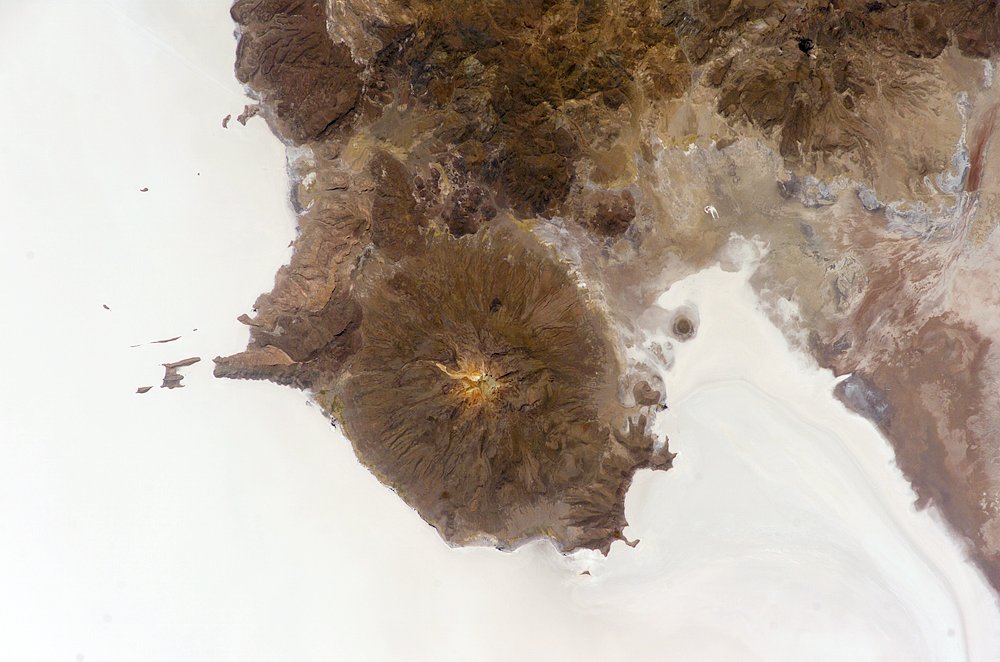
- The Salar de Uyuni, covering 10,582 square kilometers, is the world’s largest salt flat and Bolivia’s most recognizable natural landmark.
- Bolivia holds an estimated 23 million tons of measured and indicated lithium resources, about a fifth of the world’s known total.
- In October 2025, Rodrigo Paz’s election ended nearly two decades of Movement Toward Socialism (MAS) governance.
- Bolivia is home to seven UNESCO World Heritage Sites, including the colonial city of Potosí and the pre-Columbian center of Tiwanaku.
Geography
Bolivia covers about 1,083,300 square kilometers, an area larger than France and Spain combined, divided into three broad regions. In the west, the Andes rise into the Altiplano, a high plateau above 3,600 meters that holds La Paz, the southern shore of Lake Titicaca, and most of the country’s traditional mining activity. East of the Altiplano lie the Valles, a band of temperate valley cities including Cochabamba, Sucre, and Tarija. The rest of the country, more than half its territory, forms the Oriente: lowland plains, savanna, and Amazon rainforest stretching toward Brazil and Paraguay, anchored by the fast-growing city of Santa Cruz. Bolivia’s defining natural feature sits on the southern Altiplano: the Salar de Uyuni, a 10,582-square-kilometer expanse of salt crust that is the largest salt flat on Earth, formed by the evaporation of prehistoric lakes and visible from orbit as a bright white plain against the surrounding volcanic terrain.
A Brief History
Pre-Columbian and Colonial Periods
Long before Spanish contact, the region was home to advanced Andean societies, most notably the Tiwanaku culture, which built a major ceremonial and political center near Lake Titicaca and whose ruins are today a UNESCO World Heritage Site. The Inca Empire later absorbed the area, and Spanish forces arrived in the 1530s. Colonial Bolivia’s fortunes centered on the mountain city of Potosí, whose silver deposits made it one of the largest and wealthiest cities in the Spanish Empire, and whose historic center is likewise inscribed by UNESCO.
Independence Through the 1952 Revolution
Independence movements began as early as 1809, and Spanish forces were finally defeated in 1825, when the country took its present name in honor of Simón Bolívar. For more than a century afterward, political power remained concentrated among a small landowning and mining elite. That changed with the 1952 National Revolution, in which the Nationalist Revolutionary Movement nationalized the country’s major tin mines, granted universal suffrage, and, through a 1953 land reform decree, redistributed land to Indigenous communities that had previously worked under near-feudal conditions.
Toward a Plurinational State
Evo Morales, elected in 2005 as the country’s first Indigenous president, oversaw a new constitution in 2009 that renamed the country the Plurinational State of Bolivia and formally recognized Spanish alongside 36 Indigenous languages as official tongues. Morales’s Movement Toward Socialism (MAS) party governed for nearly two decades before losing power amid economic strain. In October 2025, centrist senator Rodrigo Paz won the presidential runoff, a result the U.S. State Department marked by congratulating Bolivia’s “president-elect”, ending MAS’s long hold on the presidency.
Government and Economy
Bolivia is a unitary presidential republic organized, since 2009, as a plurinational state that formally recognizes the political and cultural autonomy of its many Indigenous nations. The World Bank classifies Bolivia as a lower-middle-income country. Its economy has historically depended on natural gas exports and mineral extraction, including zinc, silver, and tin, alongside agricultural products such as soybeans. That reliance has grown more precarious as gas production and reserves have declined in recent years, contributing to fuel shortages and currency pressures that shaped the 2025 election. Looking forward, Bolivia’s economic weight increasingly rests on lithium: the U.S. Geological Survey estimates the country holds about 23 million tons of measured and indicated lithium resources, roughly a fifth of the world’s total, concentrated in the brine beneath the Salar de Uyuni and adjacent salt flats. This gives Bolivia a central, if largely untapped, position in the global supply chain for batteries and electric vehicles.
Culture and People
Bolivia’s cultural identity is shaped directly by its Indigenous majority. The 2009 Constitution recognizes 36 Indigenous languages, including Aymara, Quechua, and Guaraní, as official alongside Spanish, and requires government bodies to operate in at least two official languages based on regional population. Andean traditions, from textile weaving to festivals that blend Catholic and pre-Columbian ritual, remain central to public life in the Altiplano and Valles, while the lowland Oriente reflects a more Hispanic and mestizo cultural mix shaped by its Amazonian and Chaco borderlands. This diversity, written into law rather than treated as background detail, sets Bolivia apart from most of its South American neighbors.
What Bolivia Is Best Known For
Internationally, Bolivia is most closely associated with the Salar de Uyuni, whose mirror-flat surface, especially when covered by a thin layer of rainwater, has made it one of the most photographed natural landmarks in South America. The country is also known for La Paz’s extreme altitude, for its deep Indigenous heritage and the political prominence that heritage gained after 2006, and, increasingly, for its lithium reserves, which have drawn global attention as demand for battery materials rises. Its cluster of seven UNESCO World Heritage Sites, including Potosí, Tiwanaku, and the Jesuit Missions of Chiquitos, further anchors its reputation as a country whose geography and history are unusually intertwined.
Why Bolivia Matters
Bolivia’s significance extends beyond its scenery. As one of the world’s most Indigenous-majority states, and the first to formally reorganize itself as a “plurinational” country, it has served as a reference point in global discussions of Indigenous rights, land reform, and multicultural governance. Its lithium resources place it at the center of the global energy transition, even as Bolivia has struggled to convert that resource into large-scale production. Politically, the 2025 change of government, ending nearly twenty years of MAS rule, is being watched closely as a test of whether Bolivia can stabilize its economy while preserving the constitutional gains of the plurinational period. Bolivia’s biodiversity, from the Andean highlands to the Amazonian lowlands, including UNESCO-listed sites such as Noel Kempff Mercado National Park, also gives it outsized ecological importance relative to its size.
Sources
- World Bank, Bolivia Country Overview
- World Bank Open Data, Land Area (sq. km), Bolivia
- UNFPA Bolivia, Bolivia 2024 Census Results (Instituto Nacional de Estadística)
- UNESCO World Heritage Centre, States Parties: Bolivia
- Encyclopaedia Britannica, Bolivia
- U.S. Geological Survey, Mineral Commodity Summaries 2025: Lithium
- Constitute Project, Bolivia (Plurinational State of) 2009 Constitution
- NASA Earth Observatory, An Expanse of White in Bolivia
- U.S. Department of State, Congratulations to Bolivia’s President-Elect Paz
Key facts
- Population of 11,365,333 recorded in the 2024 national census.3
- Land area of about 1,083,300 square kilometers.2
- About 38 percent of the population self-identifies as Indigenous.1
- Spanish plus 36 Indigenous languages are recognized as official under the 2009 Constitution.7
- Holds an estimated 23 million tons of measured and indicated lithium resources, about a fifth of the world's total.6
Quick checkWhat is the world's largest salt flat, and where is it located?Show answer
The Salar de Uyuni, covering about 10,582 square kilometers on Bolivia's southern Altiplano, is the world's largest salt flat.
Sources
- World Bank. Bolivia Country Overview. Undated (accessed 2026-09-22)
- World Bank Open Data. Land Area (sq. km), Bolivia. 2023 data (accessed 2026-09-22)
- UNFPA Bolivia. Bolivia 2024 Census Results (Instituto Nacional de Estadistica). 2024-08-28 (accessed 2026-09-22)
- UNESCO World Heritage Centre. States Parties: Bolivia. Undated (accessed 2026-09-22)
- Encyclopaedia Britannica. Bolivia. Undated (accessed 2026-09-22)
- U.S. Geological Survey. Mineral Commodity Summaries 2025: Lithium. 2025-01 (accessed 2026-09-22)
- Constitute Project. Bolivia (Plurinational State of) 2009 Constitution. 2009 (accessed 2026-09-22)
- NASA Earth Observatory. An Expanse of White in Bolivia. 2016-06-15 (accessed 2026-09-22)
- U.S. Department of State. Congratulations to Bolivia's President-Elect Paz. 2025-10-19 (accessed 2026-09-22)
Editorially reviewed by Specialty Digest Editorial TeamLast reviewed September 22, 2026Researched and drafted with AI assistanceReport an issue