The Lactation Cycle and Production Timing
Dairy cattle management revolves centrally around the lactation cycle, the period following calving during which a cow produces milk, which typically peaks several weeks after calving before gradually declining until the cow is dried off and rebred to begin the cycle again. Managing this cycle effectively requires careful attention to breeding timing, since a cow must become pregnant again during her lactation to maintain an efficient annual calving interval, and nutritional management must adjust precisely to match the cow’s changing energy and protein demands as she moves through different phases of lactation.
Mastitis as a Persistent Health Challenge
Mastitis, inflammation of the mammary gland typically caused by bacterial infection, represents one of the most common and economically significant health problems in dairy cattle, reducing milk yield and quality while sometimes requiring costly treatment or even leading to a cow’s premature removal from the herd in severe or recurring cases. Prevention-focused management practices, including proper milking hygiene, clean housing, and regular udder health monitoring, have become central to modern dairy herd health programs specifically because mastitis prevention has proven more cost-effective than treating established infections.
Automation and Production Monitoring
Automated milking systems, including robotic milking units that allow cows to be milked without direct human labor at each session, have expanded considerably in dairy operations seeking to reduce labor costs and allow more frequent milking aligned with each cow’s natural rhythm rather than a fixed twice-daily schedule. These systems typically integrate individual cow monitoring, tracking milk yield, composition, and even behavioral indicators that can flag early signs of health problems or reduced fertility, extending the broader precision livestock management trend into the specific context of dairy operations.
Herd Expansion and Facility Investment
Average dairy herd size has grown substantially in many regions over recent decades, as economies of scale and rising per-cow production costs have pushed many smaller operations out of the industry while remaining farms have expanded, often requiring significant capital investment in larger milking parlors, free-stall housing, and manure management infrastructure sized appropriately for larger herds. This consolidation trend has reshaped the dairy industry’s structure considerably, though smaller specialty and organic dairy operations have carved out viable market niches in some regions by emphasizing product differentiation rather than competing purely on production scale efficiency.
Milk quality testing, including somatic cell count and bacterial load measurement, provides ongoing feedback on herd udder health and milking hygiene practices, with many milk processors tying payment premiums directly to these quality metrics.
Transition Period Management
The transition period surrounding calving, when a cow’s metabolic demands shift dramatically as she moves from late pregnancy into early lactation, represents a particularly critical and vulnerable management window, since metabolic disorders and health problems disproportionately occur during this narrow timeframe, making transition cow management a specialized focus area within overall dairy herd health programs.
Reproductive management technologies, including estrus synchronization and embryo transfer, allow dairy operations to more precisely schedule breeding and propagate genetics from particularly high-merit cows across a larger number of offspring than natural reproduction alone would allow.
Heat stress management, including fans, misting systems, and shade structures, has grown increasingly important in dairy operations located in warmer climates, since heat stress measurably reduces both milk production and reproductive performance even in otherwise well-managed herds.
Organic and grass-based dairy certification programs impose additional management constraints, such as restrictions on synthetic inputs and minimum pasture access requirements, that require distinct management approaches compared with conventional dairy production systems.
Milking Parlor Design and Throughput
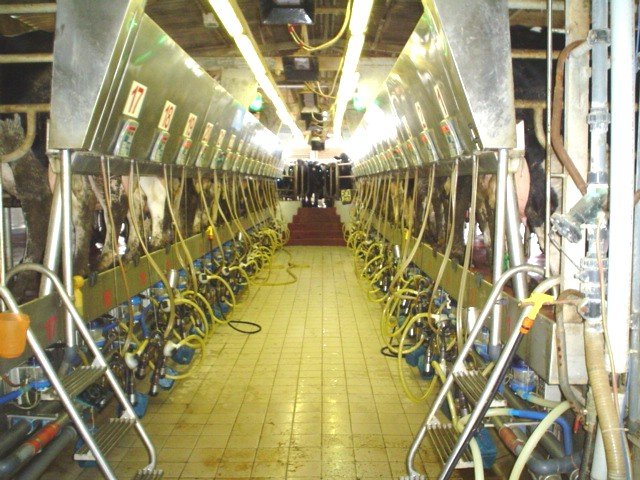
Milking parlor design, whether a traditional herringbone parlor, rotary parlor, or robotic milking system, significantly affects labor efficiency and daily milking throughput, with larger operations generally investing in higher-capacity parlor designs specifically engineered to minimize the time required to milk large herds twice or more daily without compromising milking consistency or cow comfort during the process.
Somatic cell count trends over time at the herd level, tracked alongside individual cow records, help identify whether mastitis prevention protocols are working effectively or require adjustment across the broader milking herd population.
Cow comfort features such as proper stall dimensions and soft bedding surfaces directly influence lying time, which research has linked to both cow health and milk production, making comfort design a productivity as well as welfare consideration.
Genomic testing of young dairy replacement heifers allows producers to make earlier, more informed decisions about which animals to retain for breeding versus sell, improving overall herd genetic progress efficiency.
Component pricing systems, paying for milk based on fat and protein content rather than volume alone, have shifted some breeding and feeding priorities toward maximizing component yield rather than pure milk volume.
Calf-rearing protocols during the pre-weaning period significantly influence future productivity, with adequate colostrum management in the first hours of life recognized as one of the most critical interventions for lifetime calf health.
Udder health scoring at routine herd checks complements laboratory somatic cell count data, giving veterinarians and herd managers a more complete picture of overall mammary health across the herd.
Replacement heifer development programs track growth targets closely, since heifers reaching appropriate size and weight at first breeding show better lifetime productivity than those bred too early or too late.
Nutrient management planning for dairy manure, balancing crop fertilizer needs against environmental runoff risk, has become a more formalized regulatory requirement in many dairy-producing regions.
Robotic milking adoption rates continue growing as equipment costs decline and labor availability tightens, shifting the economics of automation further in its favor for many mid-sized operations.
Key facts
- Array
Quick checkHow has genetic selection changed average dairy cow milk production over time?Show answer
Decades of selective breeding focused on milk yield have dramatically increased average production per cow, with some modern dairy breeds producing several times more milk annually than cows did generations ago.
Sources
- Array
Editorially reviewed by Specialty Digest Editorial TeamLast reviewed November 4, 2026Researched and drafted with AI assistanceReport an issue