Izembek National Wildlife Refuge on the Bering Sea coast of the Alaska Peninsula covers 315,000 acres and was established in 1960. Its centerpiece is Izembek Lagoon, 30 miles long and 5 miles wide, which holds one of the world’s largest eelgrass beds.[1]
| Area | 315,000 acres |
|---|---|
| Established | 1960 |
| Lagoon | 30 by 5 miles |
| Wilderness | 307,982 acres (1980) |
| Refuge office | Cold Bay |
Lagoon and wildlife
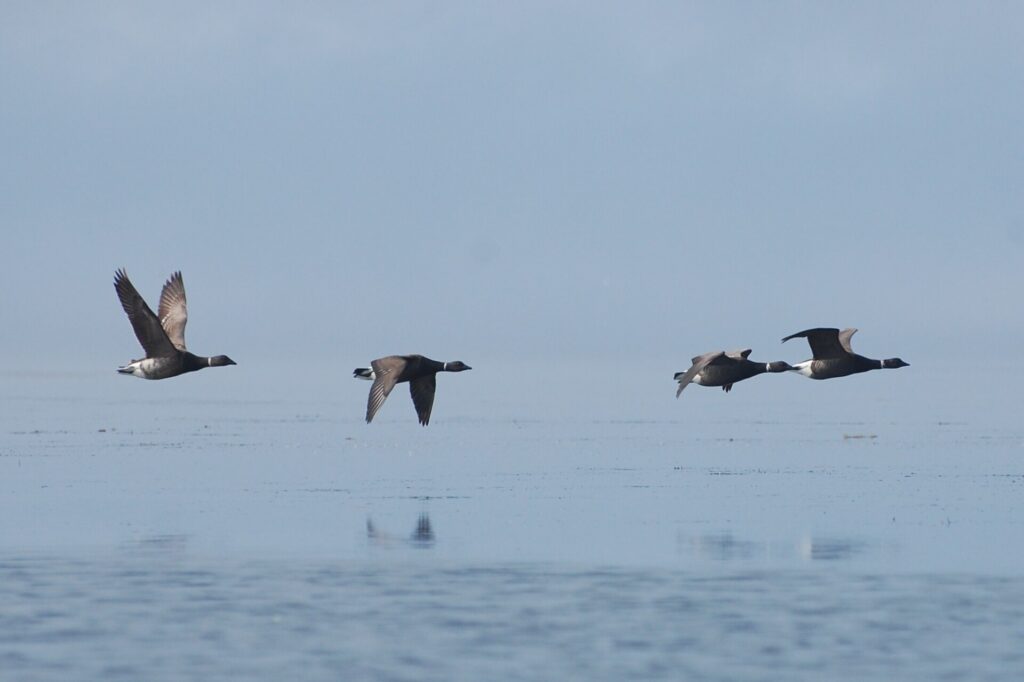
Izembek Lagoon contains one of the world’s largest beds of eelgrass, and the refuge hosts the entire world population of black brant each fall.[1]
Protection
Of the 315,000 acres, 307,982 were designated wilderness in 1980 under the Alaska National Interest Lands Conservation Act. The refuge lies in the Aleutians East Borough with offices at Cold Bay.[1]
Establishment and size
Izembek National Wildlife Refuge was established in 1960 and is administered by the U.S. Fish and Wildlife Service from offices in Cold Bay. It covers about 315,000 acres, the smallest national wildlife refuge in Alaska, and about 307,982 acres were designated wilderness in 1980 under ANILCA [2].
Izembek Lagoon and eelgrass
The core of the refuge is Izembek Lagoon, roughly 30 miles long and 5 miles wide, which contains one of the world largest eelgrass (Zostera marina) beds that feed and shelter birds [2].
Birds
Each fall the refuge hosts about a quarter-million migratory birds, including the entire world population of black brant, plus Canada geese, emperor geese, Steller’s eiders, ducks, and shorebirds. Tundra swans live on the refuge year-round [2].
Other wildlife
More than 200 wildlife species and nine fish species are found on the refuge, and hundreds of thousands of salmon return to its streams each year. Land mammals include brown bears, red foxes, wolves, and caribou of the Southern Alaska Peninsula herd [2].
Recognition
In 1986 the refuge and the adjoining Izembek State Game Refuge became the first U.S. wetland recognized as a Wetland of International Importance under the Ramsar Convention, and in 2001 the National Audubon Society designated it a Globally Important Bird Area [2].
FAQs
When was Izembek established? 1960.
What bird gathers there? Black brant, each fall.
Where are its offices? Cold Bay.
Why is Izembek important to birds? Its lagoon hosts the entire world population of black brant each fall [2].
How big is the refuge? About 315,000 acres, the smallest in Alaska [2].
Sources
Key facts
- 315,000 acres
- Founded 1960
- Eelgrass beds
Quick checkKey bird?Show answer
Black brant.
Sources
- Wikipedia. Izembek National Wildlife Refuge. 2026 (accessed 2026-11-12)
- Wikipedia. Izembek National Wildlife Refuge. 2026 (accessed 2026-11-14)
Editorially reviewed by Specialty Digest Editorial TeamLast reviewed November 12, 2026Researched and drafted with AI assistanceReport an issue