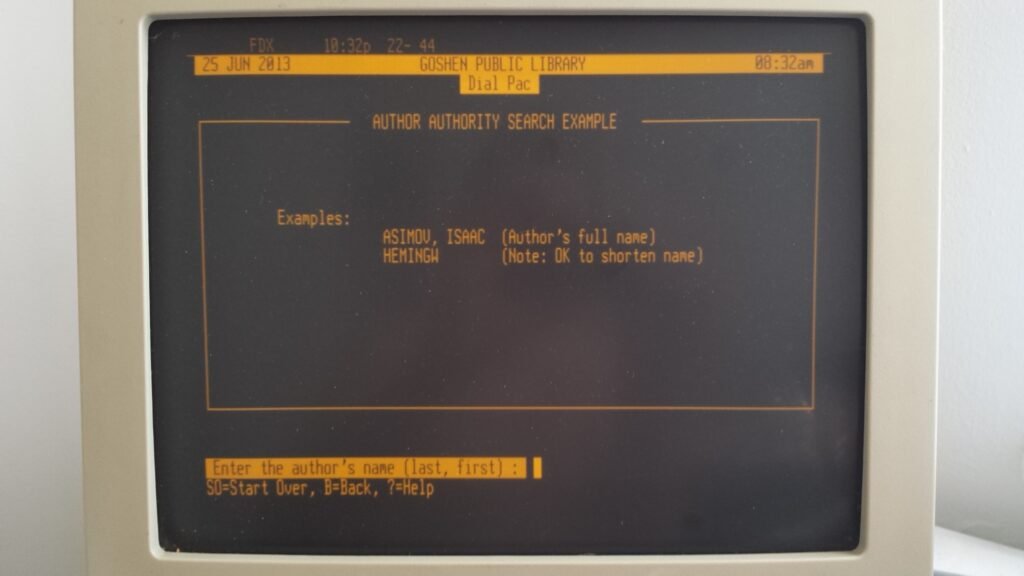
Resource Description and Access, commonly abbreviated RDA, is a cataloging standard that provides detailed guidelines for describing library and archival resources in a consistent, structured way across a wide range of formats and media, from printed books to electronic resources and recorded media.
RDA replaced the earlier Anglo-American Cataloguing Rules, which had served as the dominant English-language cataloging standard for decades but was increasingly seen as poorly suited to describing digital resources and incompatible with emerging linked data approaches. RDA was designed from the outset with greater flexibility for new resource types and closer alignment with underlying data models intended to support linked data applications.
Separation of Content and Carrier
A distinctive feature of RDA is its clear separation between describing the intellectual content of a resource and describing its physical or digital carrier, allowing a cataloger to record, for example, that a particular work exists both as a printed book and as an electronic file, with shared content-level description but separate carrier-specific details for each manifestation.
International Adoption
RDA has been adopted by national libraries and cataloging communities in many English-speaking countries and beyond, often following a coordinated transition process to help the existing cataloging workforce and legacy records adjust to the new standard without disrupting ongoing library operations during the changeover period.
Relationship to Underlying Data Models
RDA is built on conceptual models that describe the relationships between works, expressions, manifestations, and items, a layered framework intended to more accurately represent how different versions and formats of the same underlying intellectual content relate to one another than earlier, less structured cataloging rules allowed.
Economic Considerations
Transitioning to RDA required substantial retraining investment for cataloging staff accustomed to the previous standard, along with updates to cataloging software and documentation, representing a significant one-time cost that many libraries absorbed gradually rather than switching abruptly across their entire cataloging operation at once.
International Perspectives
RDA was developed through international collaboration among several English-language cataloging communities and has since been adopted, with local adaptations, by national libraries in a number of additional countries, reflecting a broader trend toward internationally coordinated cataloging standards rather than purely national rule sets.
Looking Ahead
Ongoing development of RDA continues to refine its alignment with linked data principles, with future revisions expected to further strengthen the connections between library catalog data and the broader web of structured, machine-readable information beyond traditional library systems.
Practical Guidance
Catalogers new to RDA are generally advised to work through official training materials and example records carefully, since the standard introduces conceptual distinctions, such as separating works from their specific manifestations, that differ meaningfully from the more straightforward item-level description approach used under earlier cataloging rules.
Related Specialties
RDA implementation connects cataloging practice with broader metadata and linked data initiatives, requiring catalogers to understand not only traditional descriptive rules but also how their records function within the underlying conceptual models that RDA is designed to support across interconnected library systems.
The Underlying Entity-Relationship Model
RDA is grounded in a conceptual model that distinguishes between a work as an abstract intellectual creation, its specific expression through particular wording or content, its manifestation as a physically or digitally realized publication, and the individual item a library actually holds. Describing these distinct but related entities separately allows a cataloger to represent, for example, that a single abstract work exists in multiple translated expressions, each published in several distinct physical manifestations, far more precisely than earlier, flatter cataloging rules permitted.
This layered structure, while initially unfamiliar to catalogers trained under earlier rules, provides a foundation well suited to representing the complex relationships found among the many versions, translations, and formats under which a single work may ultimately circulate.
Toolkit and Documentation
Catalogers apply RDA primarily through an online toolkit providing detailed instructions, examples, and interpretive guidance, which is continuously updated as the standard evolves, making familiarity with navigating this reference resource an essential practical skill for anyone cataloging under RDA.
Navigating this toolkit efficiently is itself a skill that develops with experience, since the sheer volume of detailed guidance can initially feel overwhelming to catalogers accustomed to the comparatively simpler rule structure of earlier cataloging standards.
Relationship Designators
RDA places strong emphasis on recording relationship designators that specify the precise role a person or organization played in creating a resource, such as distinguishing an author from an editor or illustrator, providing richer and more precise metadata than many earlier cataloging practices typically captured.
This detailed relationship data has proven particularly valuable for distinguishing contributors in collaborative or multi-creator works, where a simple undifferentiated list of names would otherwise obscure who actually did what.
As collaborative and multi-author publishing continues to grow across many disciplines, this precise relationship data is likely to become an even more valuable feature of library catalog records going forward.
Catalogers who develop strong fluency with relationship designators are generally better equipped to produce records that serve researchers well, particularly in fields where attribution and contributor roles carry significant scholarly importance.
This fluency develops naturally with sustained practice and exposure to a wide range of real cataloging examples.
Mentorship from experienced colleagues also plays an important role in helping newer catalogers build confidence with these concepts.
Institutions that pair formal instruction with real mentorship relationships tend to produce more confident and accurate catalogers over time.
Institutions that treat this as an ongoing professional development priority rather than a one-time training event tend to see the strongest long-term results.
Such sustained investment ultimately strengthens the overall quality and consistency of the shared cataloging record over time.
Key facts
- Array
Quick checkWhat cataloging standard did Resource Description and Access replace?Show answer
Resource Description and Access replaced the Anglo-American Cataloguing Rules, offering a framework better suited to describing a wider range of resource formats and designed with linked data and web-based discovery in mind.
Sources
- Array
Editorially reviewed by Specialty Digest Editorial TeamLast reviewed November 3, 2026Researched and drafted with AI assistanceReport an issue