The sea otter has the densest fur of any animal, up to 150,000 hairs per square centimetre. Alaska holds most of the species, but its numbers there fell from 100,000–125,000 in 1973 to an estimated 73,000 by 2006.[1]
| Fur density | Up to 150,000 hairs per cm² |
|---|---|
| Male weight | 22–45 kg |
| Female weight | 14–33 kg |
| Alaska population | 73,000 (2006 estimate) |
| Role | Keystone species |
Diet and tools
Sea otters eat marine invertebrates such as sea urchins, mollusks and crustaceans, and in northern areas fish can be a major share; at Amchitka Island in the 1960s fish made up 50 percent of stomach contents. Otters pound shellfish against a rock held on the chest.[1]
Fur trade
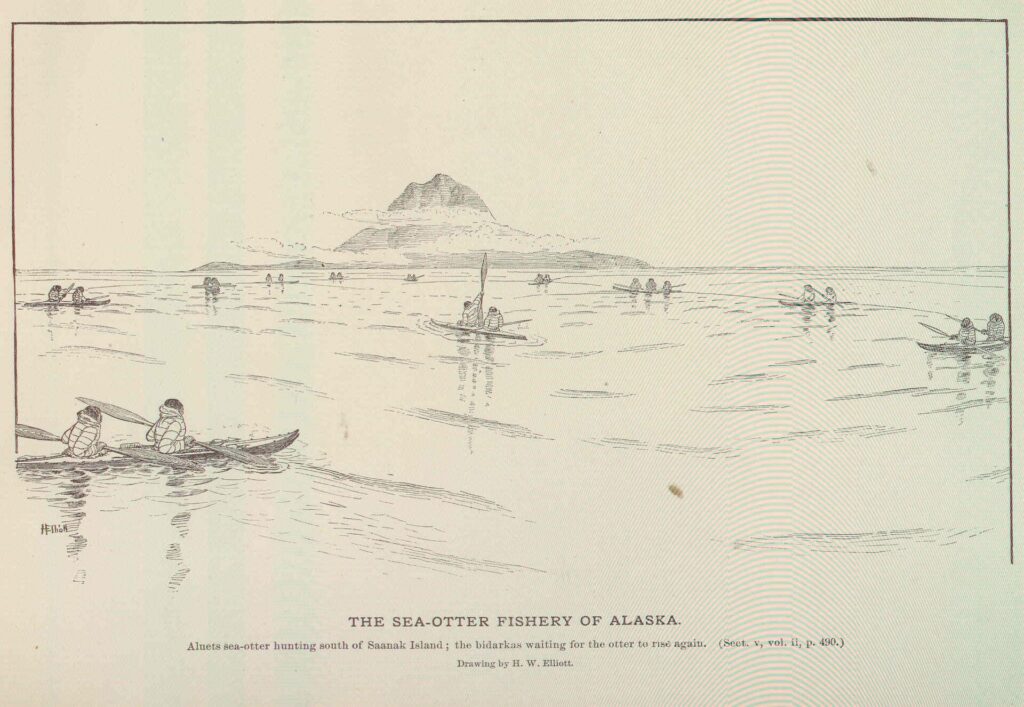
Hunting between 1741 and 1911 reduced the world population from an estimated 150,000–300,000 to 1,000–2,000. After the Alaska Purchase of 1867, when the Alaska population had recovered to over 100,000, American hunting quickly depleted it again. The 1911 Treaty for the Preservation and Protection of Fur Seals, signed by Russia, Japan, Great Britain and the United States, imposed a moratorium on harvest.[1]
Kelp forests and recent decline
Otters control sea urchins, which otherwise graze kelp stems and create urchin barrens. The Aleutian Islands account for most of Alaska’s recent decline, from an estimated 55,000–100,000 in the 1980s to about 6,000 by 2000.[1]
FAQs
Why is sea otter fur special? It is the densest of any animal, up to 150,000 hairs per square centimetre.
Why do otters matter to kelp? They eat urchins that would otherwise destroy kelp.
Did otters nearly go extinct? Hunting from 1741 to 1911 reduced them to 1,000–2,000 worldwide.
Sources
Key facts
- 150,000 hairs per cm²
- 1911 fur-seal treaty
- Alaska ~73,000 (2006)
Quick checkDensest fur?Show answer
Sea otters.
Sources
- Wikipedia. Sea otter. 2026 (accessed 2026-11-12)
Editorially reviewed by Specialty Digest Editorial TeamLast reviewed November 12, 2026Researched and drafted with AI assistanceReport an issue