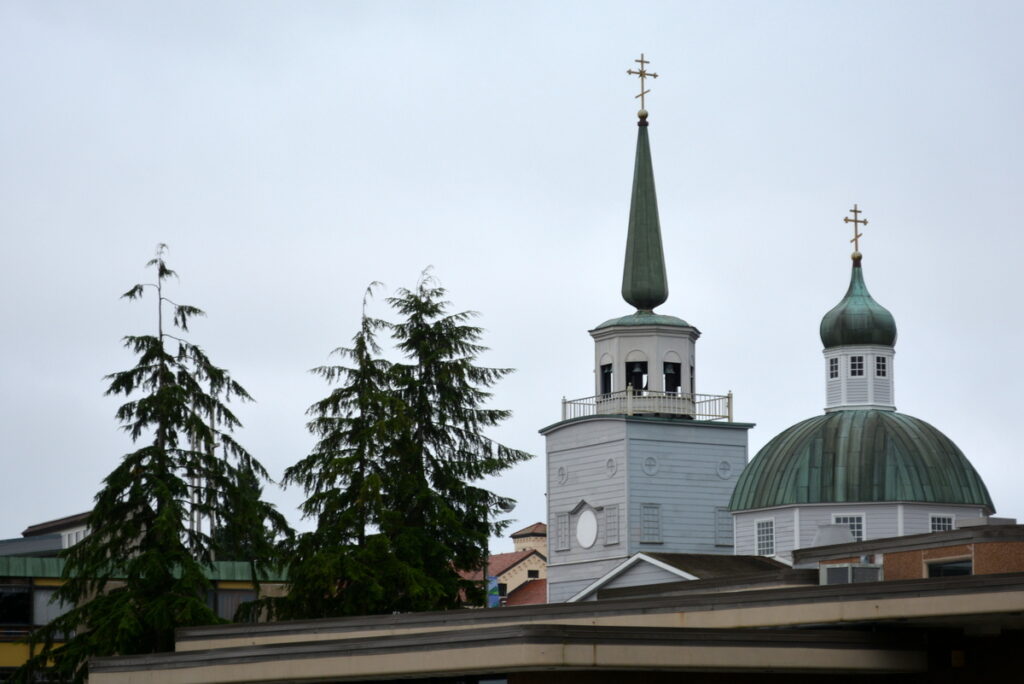
The Alaska Purchase was the acquisition of Alaska by the United States from the Russian Empire in 1867 for $7.2 million. Negotiated by Secretary of State William H. Seward and Russian diplomat Eduard de Stoeckl, the treaty was signed on March 30, 1867, ratified by the U.S. Senate on April 9, and put into effect with a ceremony at Sitka on October 18, 1867. The United States gained about 586,000 square miles of territory at a price of roughly two cents per acre [1][2].
| Treaty signed | March 30, 1867, in Washington, D.C. |
|---|---|
| Senate ratification | April 9, 1867 (37 to 2) |
| Transfer ceremony | October 18, 1867, at Sitka |
| Price | $7.2 million (about $132 million in 2024 dollars) |
| Area acquired | About 586,412 square miles |
| Negotiators | William H. Seward and Eduard de Stoeckl |
| Commemoration | Seward’s Day and Alaska Day |
Russian America Before the Sale
Russian fur traders began working the Aleutian Islands and the Alaskan coast after the expeditions of Vitus Bering in 1728 and 1741. The first permanent European settlement was founded in 1784, and Sitka, then called New Archangel, became the capital of Russian America in 1804. The colony was run by the Russian-American Company, which depended on sea otter and fur seal pelts [1][3].
By the 1860s the colony was a poor investment. Sea otter populations had collapsed, the settlements were costly to supply, and the territory was difficult to defend. Russia had also lost the Crimean War to Britain and France, and it needed money. Officials feared that British forces based in Canada could take Alaska in any future conflict, and they preferred that a friendlier power, the United States, hold it instead [1].
Why Russia Decided to Sell
Grand Duke Konstantin, the brother of Tsar Alexander II, pressed for the handover, and the Tsar ultimately approved it. Russia also worried that a gold rush similar to California’s could bring a flood of foreign settlers into the colony. Selling to the United States offered a way to settle accounts and avoid handing a rival a base across the Bering Sea [1].
Negotiations and the Treaty
Seward, an expansionist who believed that American trade with Asia would grow, opened serious talks with Stoeckl in early March 1867, after the Tsar instructed his envoy to resume negotiations. The two men worked through the night in Washington, and the treaty was signed at about 4:00 a.m. on March 30, 1867. The agreed price was $7.2 million, about two cents per acre [1][2].
Senator Charles Sumner, chairman of the Senate Foreign Relations Committee, spoke in favor of the treaty, and the Senate approved it on April 9, 1867, by a vote of 37 to 2. Congress later had to provide the money, and the price was paid with a $7.2 million check [1].
The Transfer at Sitka
The treaty took legal effect on October 18, 1867, when representatives of both governments met at Sitka. The Russian flag was lowered and the American flag raised. In that year Sitka had 116 log cabins and 968 residents, while St. Paul in the Pribilof Islands had 100 homes and 283 residents. Secretary Seward later reported about 60,000 inhabitants in the territory, including roughly 10,500 people tied to the Russian fur company. Alaska Natives, who made up most of the population, were not consulted about the sale and were not U.S. citizens at the time [1][3].
Reaction in the United States
Critics mocked the purchase with names such as “Seward’s Folly,” “Seward’s Icebox” and “Walrussia.” The New York Tribune was the main opposing newspaper. Historians, however, describe the idea that the purchase was broadly unpopular as a persistent myth, since most American newspapers either backed it or stayed neutral. Supporters expected Alaska to help trade with Asia and thought it might lead to the American acquisition of British Columbia [1].
Aftermath
Nearly all Russian residents left after the transfer. Sitka’s population fell from about 2,500 to a few hundred by 1873, and Alaska stayed lightly settled until the Klondike Gold Rush that began in 1896. The territory was first run by the military and then, from 1884, as the District of Alaska. It was renamed the Territory of Alaska in 1912 and became a state in 1959 [1][3]. The fur seal fishery produced substantial revenue in the decades after the sale, and the Bering Sea controversy over sealing rights ended in arbitration in 1893 [1].
Legacy and Commemoration
Gold discoveries at Juneau in 1880, the Klondike in 1897, Nome in 1898 and Fairbanks in 1903 soon showed Alaska’s mineral wealth, and later the oil of Prudhoe Bay and the fisheries of the Bering Sea confirmed the value of the bargain [3][4]. Economists still debate the financial return, with one argument that the federal government has not earned a positive return and other scholars disputing that conclusion [1]. Alaska Day is observed each October 18, and Seward’s Day is observed on the last Monday in March, marking the signing of the treaty [5].
The Purchase in Numbers
The figures behind the deal explain why it later looked like a bargain. The price of .2 million works out to about two cents an acre, or roughly 2 million in 2024 dollars, for an area of about 586,412 square miles [1]. The addition enlarged the country by nearly one-fifth, and it brought into the United States a coastline of about 34,000 miles, the Aleutian chain, and the heartland of the Yukon River [4]. Much of the Russian payment reportedly went to American railway contractors Thomas and William Winans, who received 6.5 million rubles, a detail that shows how the sale was entangled with Russian finance as well as diplomacy [1].
Boundaries and Later Milestones
The treaties of 1824 between Russia, the United States and Britain had first defined the limits of Russian America, and the Alaska boundary with Canada remained a subject of dispute for decades after the sale. An Alaska Boundary Tribunal settled the matter in 1903, in the same era as the gold rushes that carried thousands of prospectors north [3]. Statehood came after a long campaign, with Congress approving it on July 7, 1958, and admission following on January 3, 1959 [2]. The centennial of the purchase in 1967 was a major occasion in Alaska, and the state motto “North to the Future” was chosen during the celebrations [5].
FAQs
How much did the United States pay for Alaska? $7.2 million, or about two cents per acre.
When was Alaska purchased? The treaty was signed on March 30, 1867, and the formal transfer took place at Sitka on October 18, 1867.
Who negotiated the Alaska Purchase? U.S. Secretary of State William H. Seward and Russian minister Eduard de Stoeckl.
Why did Russia sell Alaska? The colony was costly and hard to defend, the fur trade was declining, Russia needed money after the Crimean War, and it feared losing the territory to Britain.
Was the purchase really called Seward’s Folly? Some critics used the label, but historians say most newspapers supported or accepted the deal, so widespread opposition is considered a myth.
Sources
- Wikipedia: Alaska Purchase
- Wikipedia: Alaska
- Encyclopaedia Britannica: History of Alaska
- Encyclopaedia Britannica: Alaska
- State of Alaska: Alaska State Symbols
Key facts
Quick checkHow much did the U.S. pay Russia for Alaska?Show answer
$7.2 million
Sources
- Wikipedia. Alaska Purchase. 2026 (accessed 2026-11-11)
- Wikipedia. Alaska. 2026 (accessed 2026-11-11)
- Encyclopaedia Britannica. History of Alaska. 2026 (accessed 2026-11-11)
- Encyclopaedia Britannica. Alaska. 2026 (accessed 2026-11-11)
- State of Alaska. Alaska State Symbols. 2026 (accessed 2026-11-11)
Editorially reviewed by Specialty Digest Editorial TeamLast reviewed November 11, 2026Researched and drafted with AI assistanceReport an issue