In simple terms The Apollo 11 moon landing, on 20 July 1969, was the first time humans landed a crewed spacecraft on the Moon and walked on its surface, fulfilling a goal the United States had set less than a decade earlier. [1] What happened Apollo 11 launched from Florida on 16 July 1969, carrying
Apollo 11 moon landing Read More »
The Apollo 11 moon landing, on 20 July 1969, was the first time humans landed a crewed spacecraft on the Moon and walked on its surface.
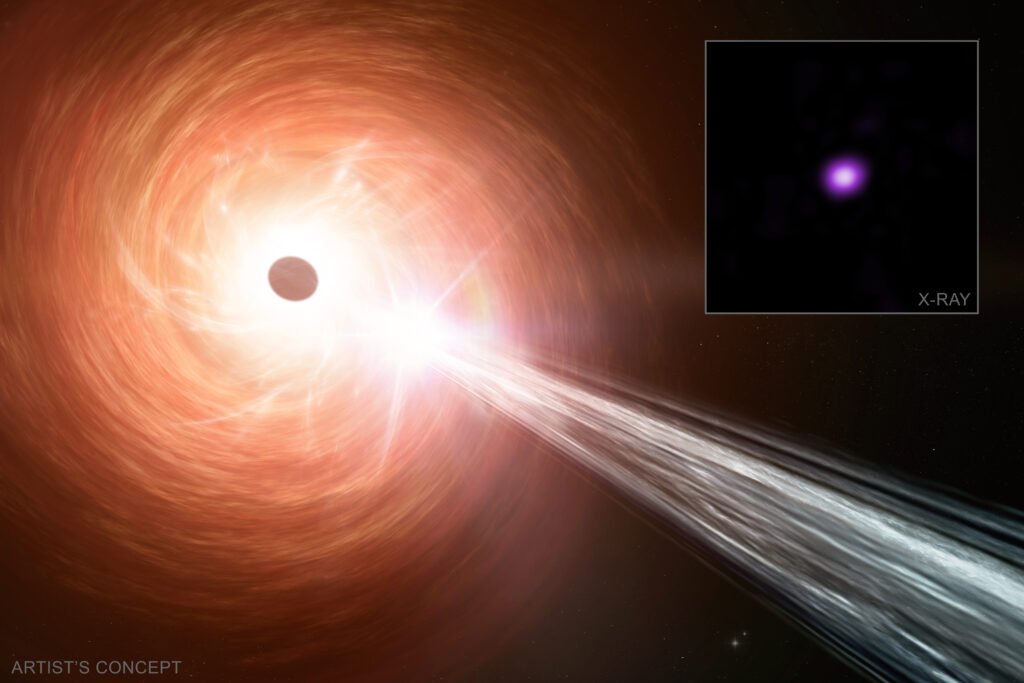
A black hole is a region of space where gravity is so intense that nothing, not even light, can escape once it crosses a boundary called the event horizon. Black holes form when a sufficiently massive amount of matter is compressed into a small enough volume, most commonly when a massive star exhausts its nuclear
Black Hole Read More »
A region of space where gravity is so intense that nothing, not even light, can escape.
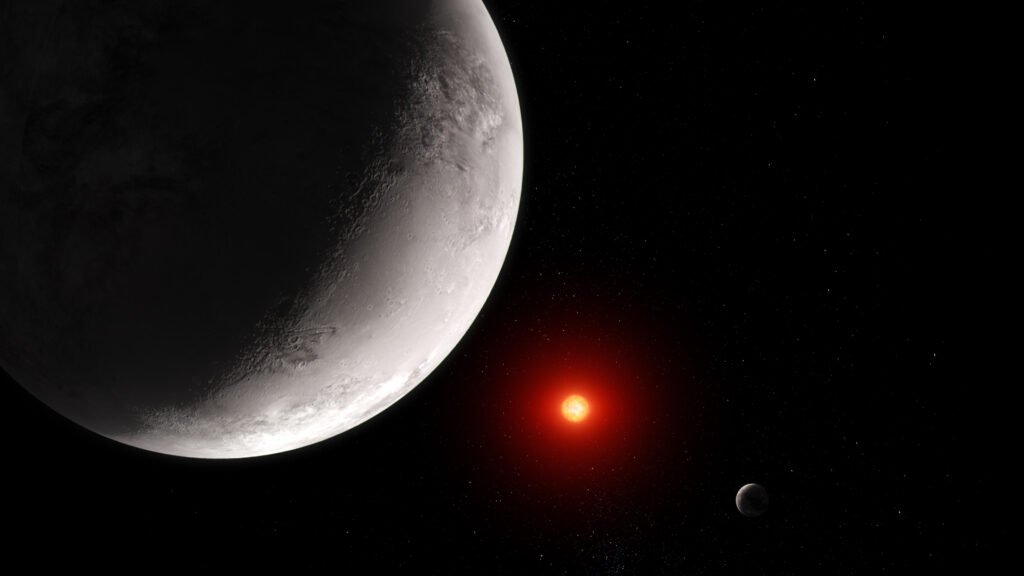
An exoplanet is a planet that orbits a star other than the Sun, situated anywhere else in the universe beyond our own solar system. Astronomers had long suspected that other stars hosted planets of their own, but the first confirmed detection of an exoplanet orbiting an ordinary, Sun-like star came only in 1995, when Swiss
Exoplanet Read More »
A planet that orbits a star other than the Sun, located beyond our own solar system.
In simple terms An interstellar object formed around another star, was thrown out of that system, and drifted between the stars until it reached ours. It is a visitor, not a resident. The Sun bends its path but never captures it, so the object leaves again and does not return. How it works Astronomers identify
Interstellar object Read More »
An interstellar object is a comet or asteroid that formed around another star and is passing through our solar system without ever orbiting the Sun.
In simple terms Orbital eccentricity is a single number that says how far an orbit departs from a perfect circle. It is written as e. A value of 0 is a circle, and the larger the number, the more stretched the path. How it works NASA’s Jet Propulsion Laboratory defines eccentricity as the ratio of
Orbital eccentricity Read More »
Orbital eccentricity is a number describing how stretched an orbit is, from 0 for a circle to above 1 for a path that never returns.
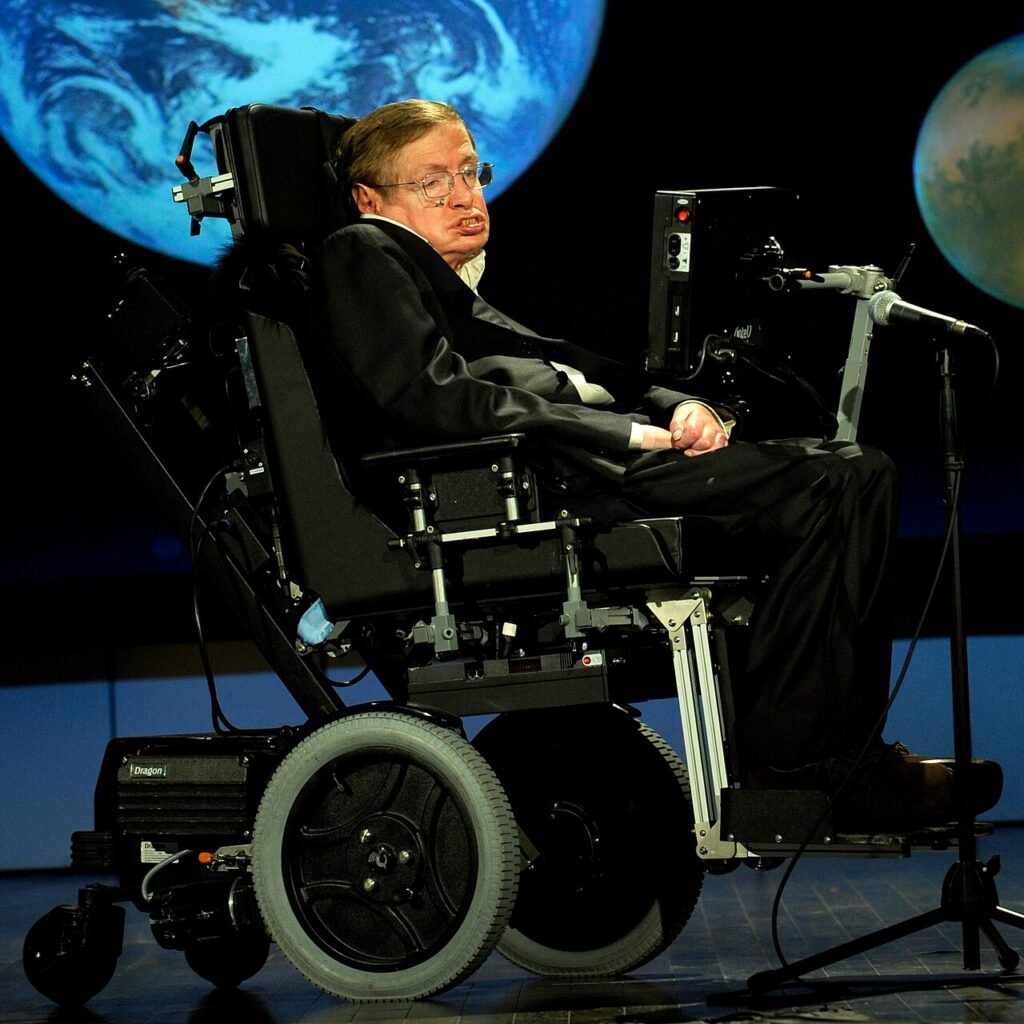
Stephen Hawking (1942 to 2018) was an English theoretical physicist who worked on black holes, the early universe and the nature of space and time. He showed that black holes can emit radiation, a result now called Hawking radiation. His book A Brief History of Time, published in 1988, became one of the best-selling popular
Stephen Hawking Read More »
Stephen Hawking was an English theoretical physicist known for his work on black holes and cosmology and for his bestseller A Brief History of Time.
A telescope is an instrument that gathers light or other radiation from distant objects and forms a magnified or brighter image of them. The first recorded telescope was a lens-based device announced by a Dutch spectacle maker in 1608, and Galileo’s improved versions in 1609 and 1610 opened the era of telescopic astronomy. History of
Telescope Read More »
An instrument that gathers light to magnify distant objects; the first recorded telescope was announced by Hans Lipperhey in 1608.