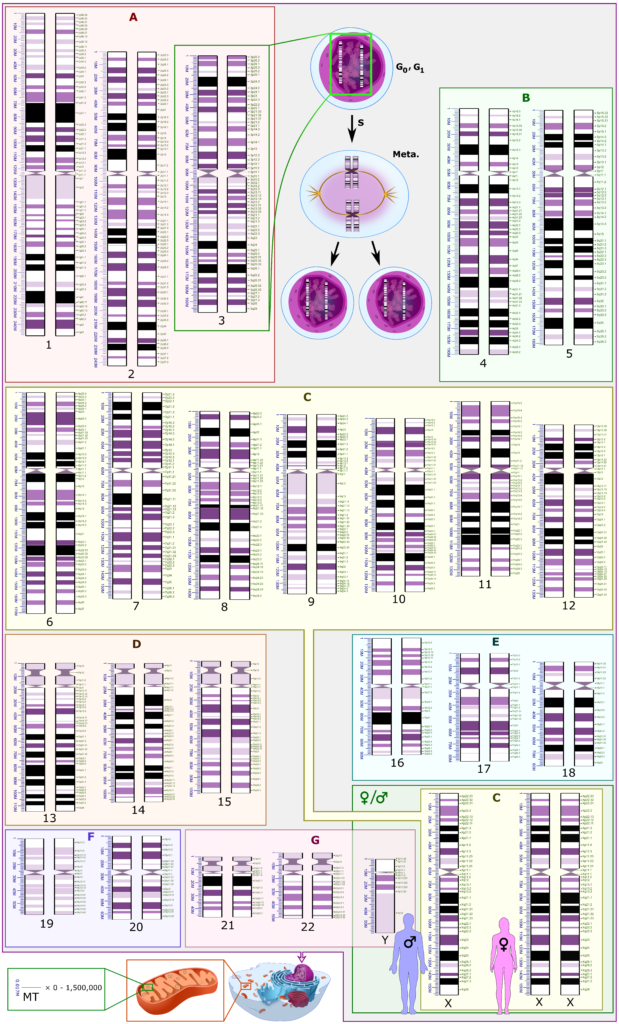
A chromosome is a tightly packaged, thread-like structure made of DNA wound around proteins called histones, which carries the genetic information of an organism and ensures that information is organized, protected, and accurately distributed whenever a cell divides. Each chromosome contains many individual genes arranged along its length, and the number of chromosomes varies considerably
Chromosome Read More »
A tightly packaged, thread-like structure of DNA and protein that carries and organizes an organism genetic information.
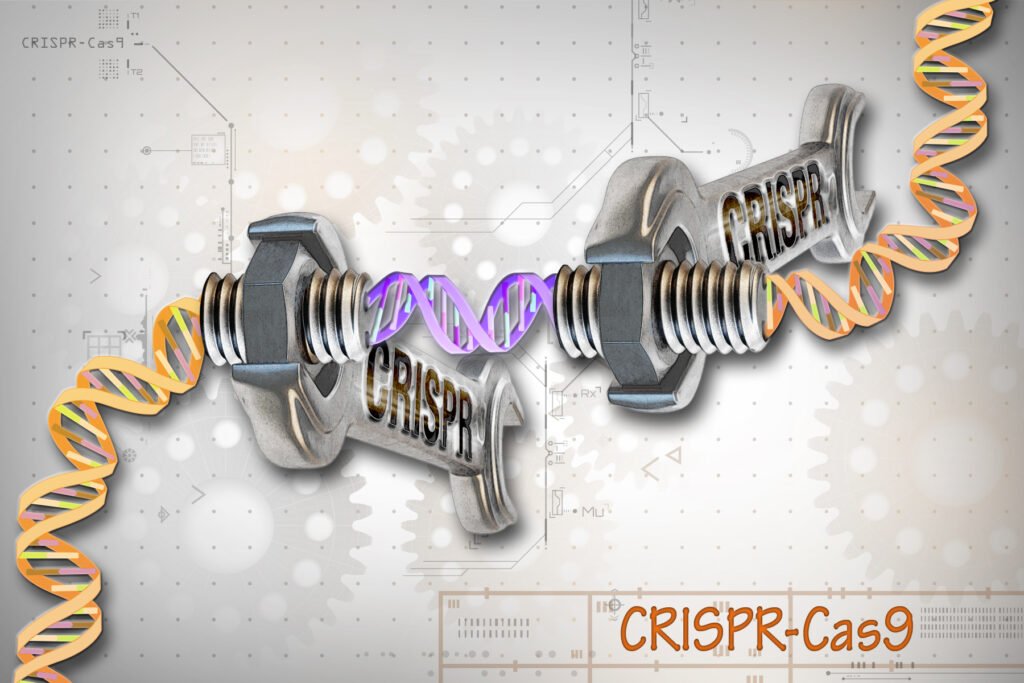
CRISPR is a gene-editing technology that allows scientists to make precise, targeted changes to DNA by exploiting a natural defense system originally found in bacteria. The full name, clustered regularly interspaced short palindromic repeats, describes a distinctive pattern of repeated DNA sequences that bacteria use to store a genetic memory of viruses that previously infected
CRISPR Read More »
A gene-editing technology that allows precise, targeted changes to DNA, adapted from a bacterial immune defense system.
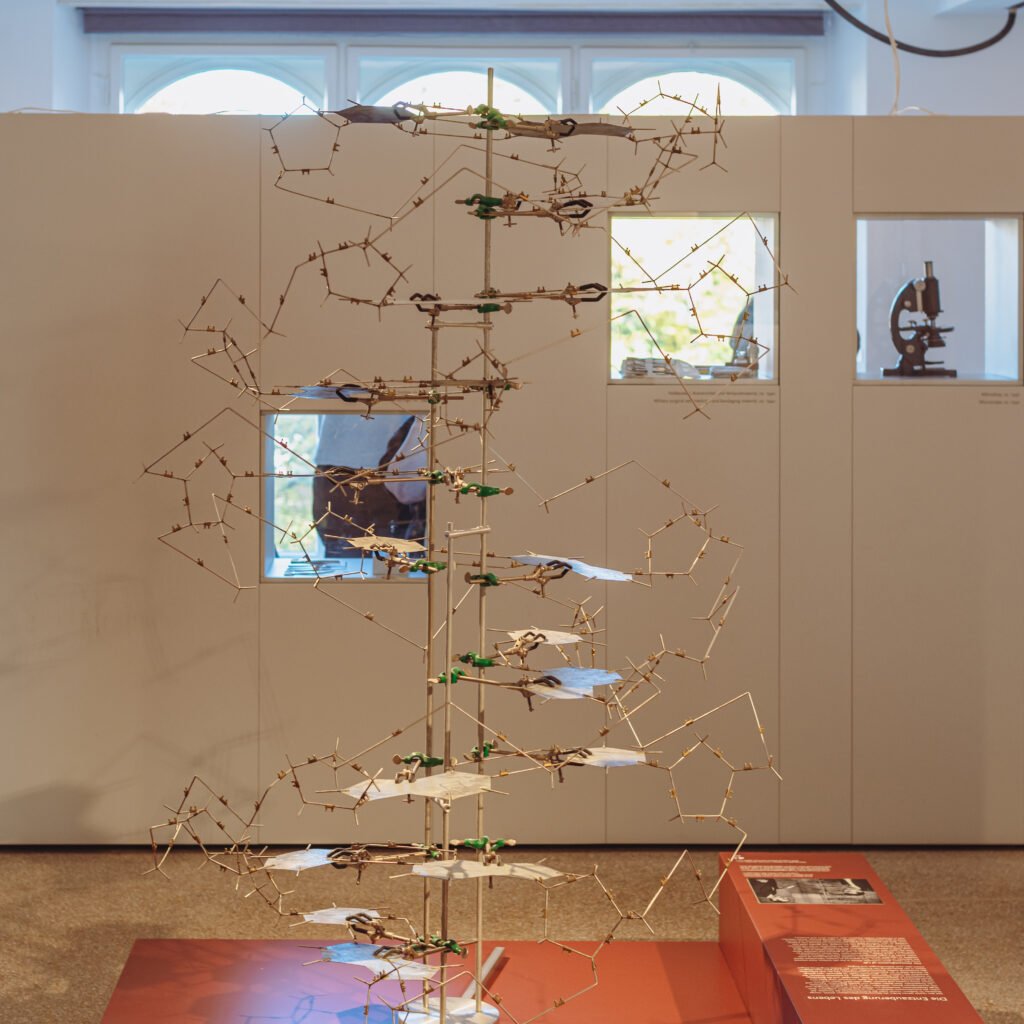
In simple terms The DNA double helix is the twisted, ladder-like structure of the DNA molecule, discovered in 1953, that explained for the first time how genetic information could be physically stored and accurately copied inside living cells. [1] How it was discovered By the early 1950s, scientists knew DNA likely carried genetic information but
DNA double helix Read More »
The DNA double helix is the twisted, ladder-like structure of DNA, discovered in 1953, that explained how genetic information is stored and copied.
A gene is a specific segment of DNA that contains the instructions needed to build a particular protein or functional RNA molecule, making it the basic physical and functional unit of heredity. Genes are passed from parents to offspring and collectively determine many of an organism inherited traits, from eye color to susceptibility to certain
Gene Read More »
A specific segment of DNA containing the instructions to build a particular protein, the basic unit of heredity.
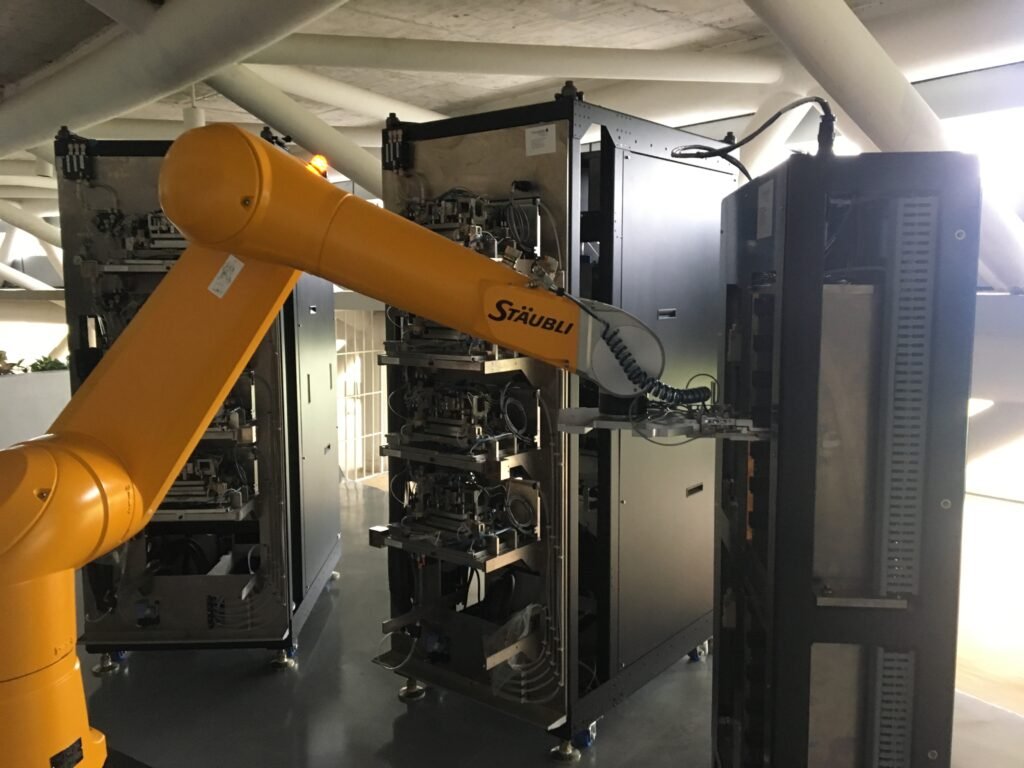
Gene sequencing is the process of determining the order of the four chemical bases, abbreviated A, T, C and G, that make up a DNA molecule. That order spells out the genetic information in a gene, a chromosome or a whole genome. The term is often used loosely for DNA sequencing in general, whether the
Gene sequencing Read More »
Gene sequencing determines the order of the four chemical bases in a stretch of DNA, from a single gene to a whole genome.
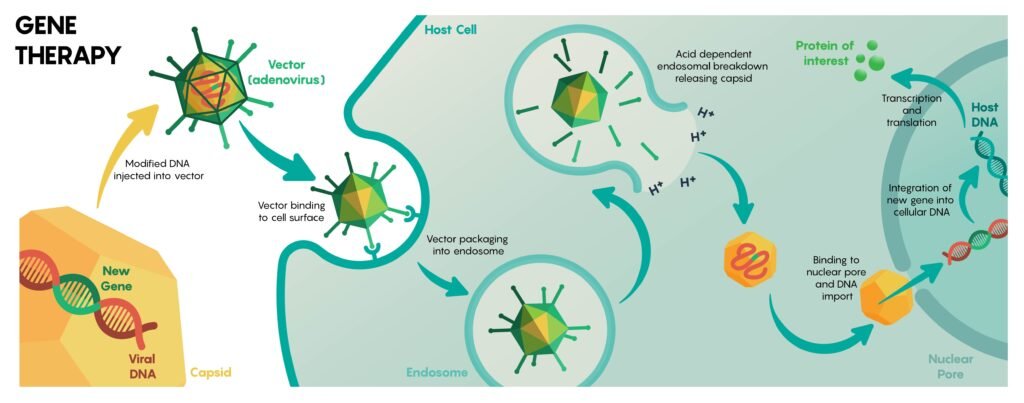
Gene therapy is a medical approach that treats or prevents disease by correcting the underlying genetic problem. Instead of relying only on drugs or surgery, it alters a person’s genetic makeup, for example by adding a working copy of a faulty gene or by editing DNA inside cells. The information here is general background, not
Gene therapy Read More »
A medical approach that treats or prevents disease by correcting the underlying genetic problem, such as by adding a working gene or editing DNA.
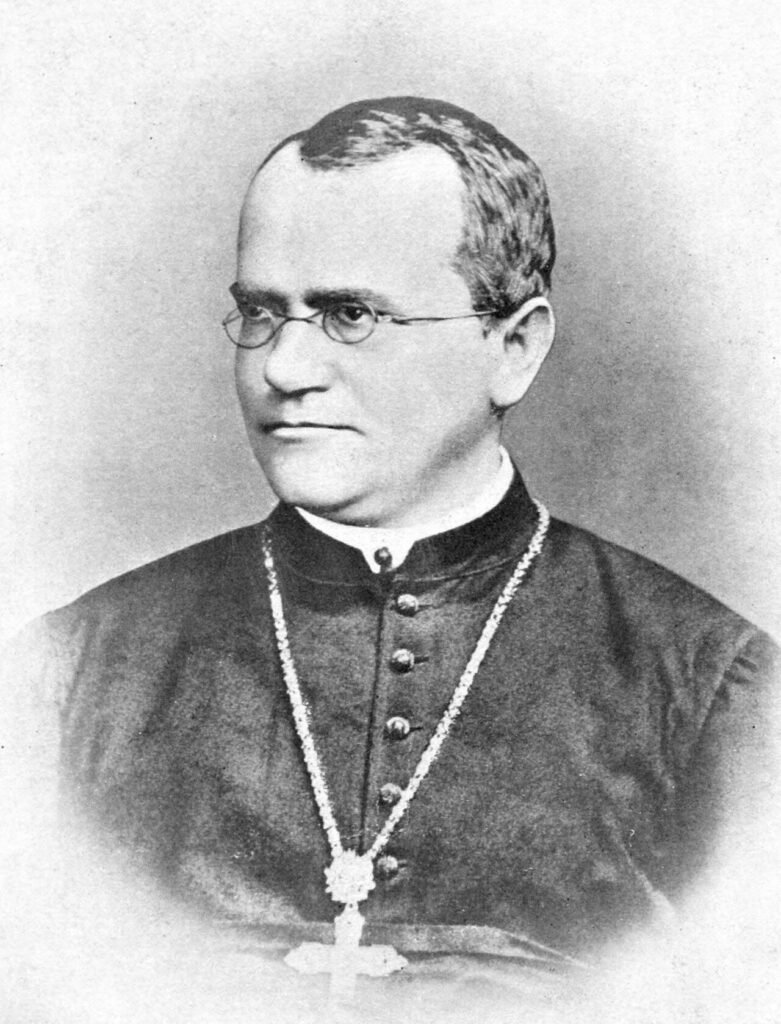
Gregor Johann Mendel (1822 to 1884) was a Moravian friar and scientist whose experiments with pea plants revealed basic patterns of inheritance. His work, carried out mainly between 1856 and 1863, went largely unnoticed in his lifetime. When it was rediscovered in 1900 it became the foundation of genetics. Early life of Gregor Mendel Mendel
Gregor Mendel Read More »
Gregor Mendel was a Moravian friar whose pea plant experiments in the 1850s and 1860s revealed the basic patterns of inheritance and founded genetics.
In simple terms Almost all of a person’s DNA sits in the nucleus of each cell. A small amount sits somewhere else, inside the mitochondria. Mitochondria are the structures that convert energy from food into a form cells can use. They carry a little DNA of their own, called mitochondrial DNA, or mtDNA. How it
Mitochondrial DNA Read More »
Mitochondrial DNA is a small, separate loop of DNA inside a cell's mitochondria, inherited almost entirely from the mother.