Los Angeles is the largest city in the U.S. state of California and the second most populous city in the United States, after New York City. It occupies a broad coastal basin in Southern California, bordered by the Pacific Ocean to the west and ringed by mountain ranges, including the Santa Monica Mountains and the
Los Angeles: History, Geography, Culture and Key Facts Read More »
Los Angeles is the second-largest U.S. city, on the Southern California coast, known globally as the center of the entertainment industry.
Luxembourg is a landlocked country in Western Europe, wedged between Belgium, Germany, and France. Despite covering only about 2,586 square kilometers, one of the smallest sovereign states in the world, it is a founding member of the European Union and one of the world’s leading international financial centers, with the highest GDP per capita in
Luxembourg: Geography, History, Government and Key Facts Read More »
Luxembourg is a small, landlocked Western European country and EU founding member known as a leading global financial center.
Madagascar is an island nation in the Indian Ocean, roughly 400 kilometers off the southeastern coast of Africa. Commonly described as the fourth largest island in the world, it separated from other landmasses more than 60 million years ago, and that long isolation left it with one of the highest concentrations of plants and animals
Madagascar: Geography, History, Wildlife and Key Facts Read More »
Madagascar is an island nation off East Africa renowned for extreme biodiversity, with the majority of its species found nowhere else on Earth.
Where Is Madrid Located? Madrid is the capital and largest city of Spain, sitting near the geographic center of the Iberian Peninsula on a high plateau roughly 650 meters above sea level. It is the seat of the Spanish national government, the Spanish royal family, and the autonomous Community of Madrid, which the city governs
Madrid: History, Geography, Culture and Key Facts Read More »
Madrid is Spain's capital and largest city, a European political and cultural center known for royal heritage and world-class art museums.
Malawi is a landlocked country in southeastern Africa, defined above all by Lake Malawi, one of the African Great Lakes, which fills much of the Rift Valley floor along the country’s eastern border and holds one of the most scientifically important collections of freshwater fish in the world. Where Is Malawi Located? Malawi sits within
Malawi: Geography, History, Government and Key Facts Read More »
Malawi is a landlocked southeastern African nation defined by Lake Malawi, famous for its extraordinary diversity of endemic cichlid fish.
Malaysia is a Southeast Asian country split across two separate landmasses: Peninsular Malaysia, on the Malay Peninsula, and East Malaysia, on the island of Borneo, roughly 640 kilometers away across the South China Sea. Once a low income, largely agricultural economy at independence, it has become one of the region’s leading manufacturing and trade hubs,
Malaysia: Geography, History, Economy and Key Facts Read More »
Malaysia is a Southeast Asian nation split between the Malay Peninsula and Borneo, known for rapid economic growth and the Petronas Twin Towers.
The Maldives is an archipelago nation in the Indian Ocean, made up of nearly 1,200 low lying coral islands grouped into 20 atolls. Widely described as the world’s lowest lying country, it has become both a symbol of luxury tourism and a frequently cited case study in the risks of sea level rise. Where Is
Maldives: Geography, History, Economy and Key Facts Read More »
The Maldives is a low lying Indian Ocean archipelago of coral atolls, known for luxury tourism and its exposure to sea level rise.
Mali is a landlocked country in West Africa, spanning the Sahara Desert in the north and the Sahel to the south, and defined historically by the Niger River and by Timbuktu, once one of the most important centers of Islamic scholarship in Africa. Where Is Mali Located? Mali sits in the interior of West Africa,
Mali: Geography, History, Government and Key Facts Read More »
Mali is a landlocked West African country in the Sahara and Sahel, historically home to Timbuktu, a major center of Islamic scholarship.
Malta is a small archipelago nation in the central Mediterranean Sea, roughly 93 kilometers south of Sicily. Despite covering only about 316 square kilometers, it holds some of the oldest freestanding stone structures on Earth and today ranks as the most densely populated country in the European Union. Where Is Malta Located? Malta sits in
Malta: Geography, History, Government and Key Facts Read More »
Malta is a small Mediterranean archipelago nation known for prehistoric megalithic temples and the fortified capital of Valletta.
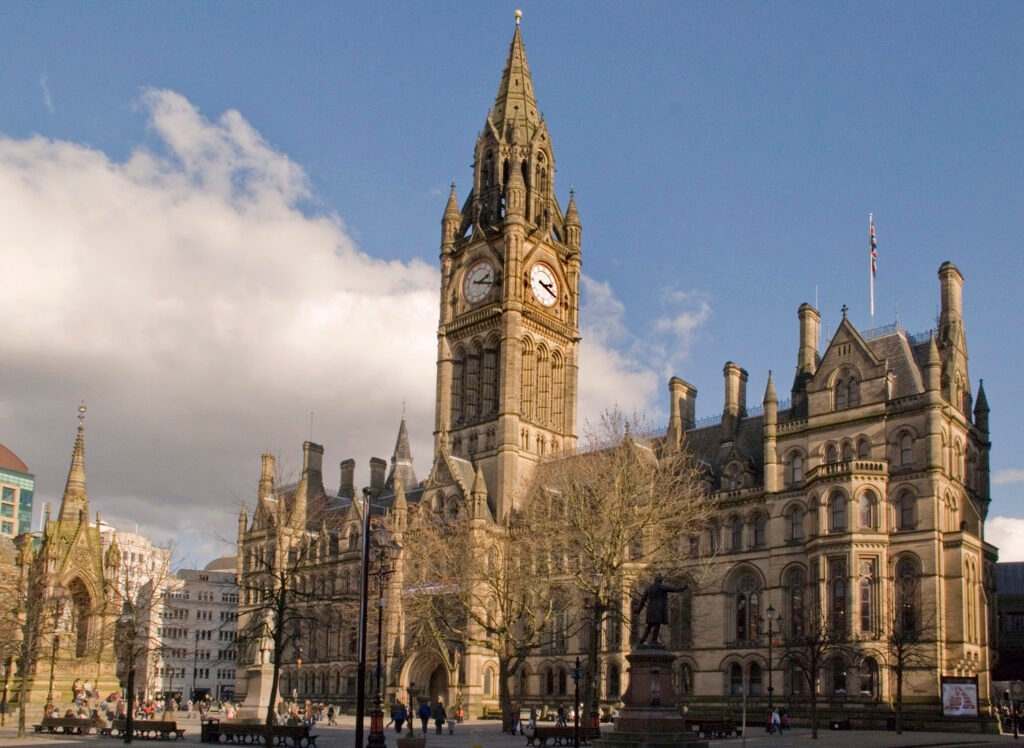
Manchester is a city in northwest England that grew from a Roman fort into the world’s first major industrial city. Its rapid growth around cotton manufacturing in the eighteenth and nineteenth centuries made it a global symbol of the Industrial Revolution, and it later became a center of computing research and English football. Where Is
Manchester: Birthplace of the Industrial Revolution Read More »
Manchester is a city in northwest England that became the world's leading center of cotton textile manufacturing during the Industrial Revolution.