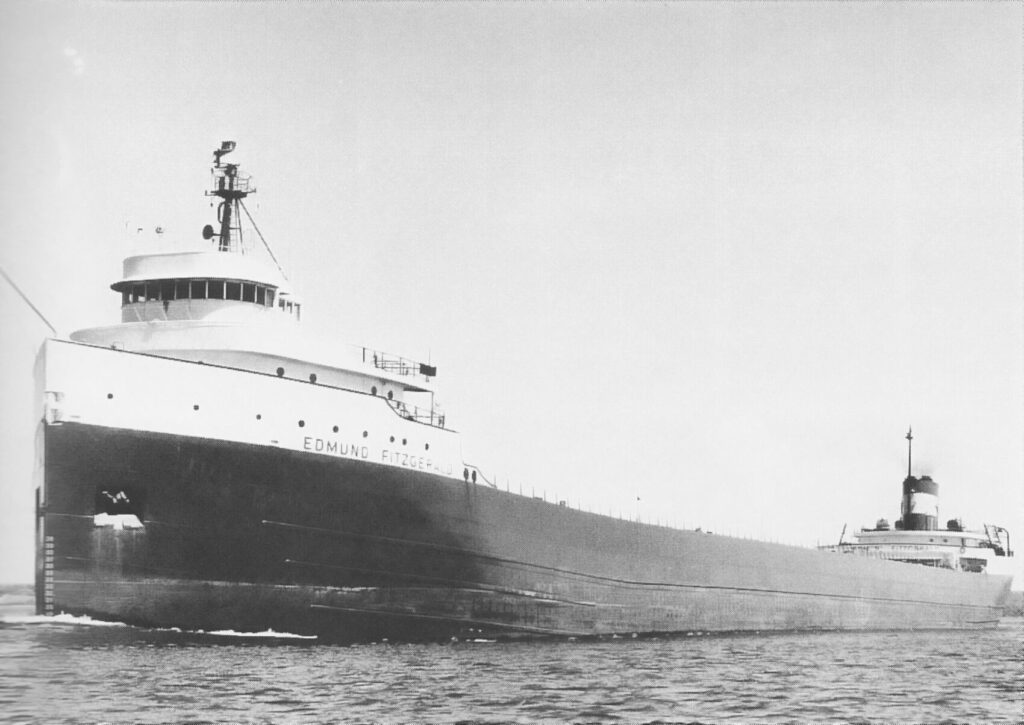
The Edmund Fitzgerald Sinks in a Lake Superior Gale
A 729-foot freighter loaded with iron ore vanished into a Lake Superior storm less than twenty miles from safe harbor, taking all 29 of its crew down with the Great Lakes’ most famous and still unexplained shipwreck.
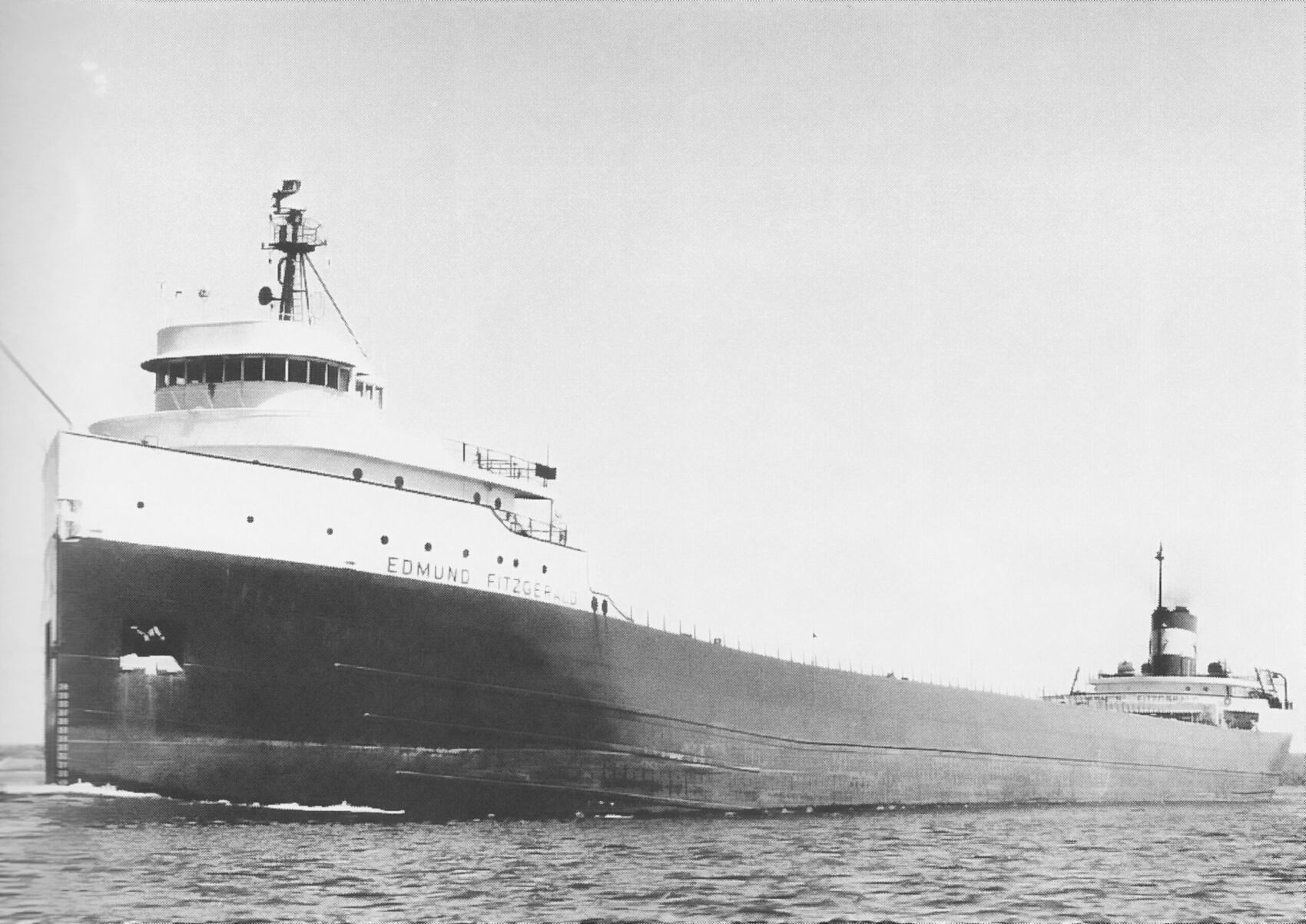
On the evening of November 10, 1975, the freighter Edmund Fitzgerald sank in a violent gale on Lake Superior while hauling taconite ore toward a steel mill near Detroit. Minutes after its captain radioed that the ship was “holding its own,” the 729-foot carrier vanished from radar less than twenty miles short of shelter at Whitefish Point. All 29 crew members died.
Mariners’ Church of Detroit tolled its bell 29 times the next morning, once for each lost crewman, and news accounts called it the worst Great Lakes shipping disaster in eleven years. The loss pushed regulators toward a hard look at cargo-carrier safety rules, structural standards, and Coast Guard rescue capability, and it still shapes how the region remembers its working sailors every November.
Investigators had radar tracks, radio transcripts, a companion ship’s eyewitness account, and a fully mapped wreck, more documentation than most disasters ever get, and still could not agree on why the Fitzgerald went down. It is a reminder that thorough evidence does not guarantee a settled answer, in shipping, aviation, or any complex system investigators try to reconstruct after the fact.
Key Moments
Departs Burlington Northern Dock 1 in Superior, Wisconsin, carrying about 26,000 tons of taconite ore pellets bound for a steel mill on Zug Island near Detroit.
Radios the Arthur M. Anderson that it is “holding its own” in winds past 65 mph and waves climbing above 20 feet, then vanishes from the Anderson’s radar minutes later with no distress call ever sent.
A Coast Guard search plane detects wreckage on the lake floor within days; a U.S. Navy survey the following spring photographs the hull broken in two, 530 feet down and about 17 miles from Whitefish Point.
The U.S. Coast Guard’s official report blames flooding through improperly closed hatch covers, but later reviews and dive expeditions have never settled the question.
A joint U.S.-Canadian mission raises the ship’s bronze bell from the wreck. It now rests at the Great Lakes Shipwreck Museum near Whitefish Point, and Mariners’ Church of Detroit still remembers the crew every November 10.
Did you know? Gordon Lightfoot’s 1976 ballad “The Wreck of the Edmund Fitzgerald” turned this into the most famous shipwreck in Great Lakes history, and its line about a tolling church bell points to Mariners’ Church of Detroit, which still holds a memorial for the crew every November 10.
- “Edmund Fitzgerald,” Encyclopaedia Britannica
- “The Sinking of the SS Edmund Fitzgerald, November 10, 1975,” UW–Madison CIMSS
- “Sinking of the Edmund Fitzgerald,” EBSCO Research Starters
- “How a Signature Item at the Great Lakes Shipwreck Museum Brought Closure to Families of the Edmund Fitzgerald Victims,” News4JAX
- “Edmund Fitzgerald 50th Anniversary,” Mariners’ Church of Detroit
More in History
- This Day in History, November 11: The Armistice Ends World War I
- This Day in History, November 12: Berners-Lee and Cailliau Propose the World Wide Web
- This Day in History, November 13: Mariner 9 Becomes First Spacecraft to Orbit Another Planet
- This Day in History, November 14: Nellie Bly Races Around the World