Core Components of Management Decisions
Livestock management integrates several interdependent decision areas, including nutrition programs tailored to an animal’s age and production stage, health protocols covering vaccination and parasite control, housing and facility design appropriate to the species and climate, and breeding decisions that shape the genetic makeup of future generations. These components do not operate independently, since a nutrition program must account for an animal’s health status, and housing design directly influences disease risk and reproductive success, requiring producers to think holistically rather than optimizing any single factor in isolation.
The Growing Role of Data and Precision Techniques
Modern livestock management increasingly incorporates precision agriculture techniques, including electronic identification tags, automated feeding systems, and sensor-based health monitoring, that generate detailed data on individual animal performance and condition rather than relying solely on herd-level averages and visual observation. This data-driven approach allows producers to identify underperforming or at-risk individual animals earlier than traditional methods would reveal, supporting more targeted interventions that can improve both production efficiency and animal welfare outcomes compared with a uniform, one-size-fits-all management approach applied across an entire herd or flock.
Variation Across Production Systems
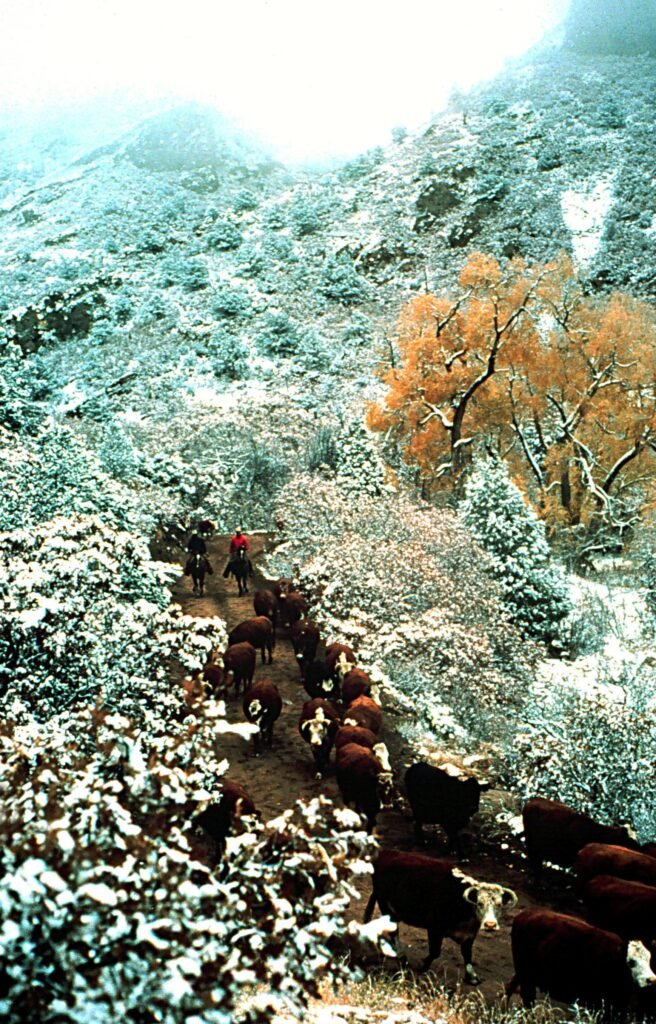
Livestock management practices vary considerably depending on the production system in use, ranging from extensive grazing operations where animals range over large areas with minimal daily human intervention to intensive confinement systems where animals are managed in controlled indoor environments with precisely regulated feeding and climate conditions. Each system carries distinct management priorities and challenges, with extensive systems requiring greater attention to pasture and water resource management while intensive systems demand more rigorous attention to air quality, waste management, and disease control within confined spaces.
Labor and Succession Challenges
Livestock management increasingly contends with labor availability challenges, as finding and retaining skilled agricultural workers has grown more difficult in many regions, prompting some operations to invest more heavily in automation and labor-saving technology specifically to reduce dependence on hired labor for routine tasks such as feeding and basic health monitoring. Farm succession, transferring management and ownership to a new generation, presents a related long-term challenge for many livestock operations, requiring careful planning around both the technical knowledge transfer and the financial structuring needed to keep an operation viable across generational transitions.
Environmental stewardship considerations, including manure management and water use efficiency, have become increasingly integrated into mainstream livestock management practice rather than treated as separate regulatory compliance concerns, reflecting both tightening regulation and growing producer recognition of long-term sustainability benefits.
Insurance and risk management products tailored to livestock operations, covering mortality, disease outbreaks, and weather-related losses, have also become more sophisticated tools supporting overall operation stability alongside direct management practices.
Record-Keeping Systems and Software
Digital herd management software has largely replaced paper-based record systems on commercial operations, allowing producers to track individual animal identification, health events, breeding dates, and production metrics in integrated databases that can generate reports and flag animals needing attention automatically. These systems increasingly integrate with other farm technology, including automated feeders and health monitoring sensors, creating comprehensive digital records that support both day-to-day management decisions and longer-term analysis of herd performance trends across multiple production cycles.
Animal Identification Systems
Individual animal identification, through ear tags, microchips, or increasingly electronic identification devices, underpins virtually every other aspect of livestock management by allowing producers to reliably link health events, breeding records, and performance data to specific individual animals rather than relying on herd-level estimates. Many countries have implemented mandatory identification and traceability systems specifically to support disease outbreak response, allowing animal movements to be traced quickly when a disease concern arises, which has become an increasingly important regulatory requirement as global livestock trade and disease transmission risk have both grown.
Benchmarking services, comparing an individual operation’s performance metrics against regional or industry averages, help producers identify specific areas where their management practices may be underperforming relative to achievable standards elsewhere in the industry.
Succession to younger operators increasingly involves formal mentorship and gradual management transition programs, recognizing that transferring the accumulated judgment behind good livestock management decisions takes considerably longer than simply transferring legal ownership of land and animals.
Peer learning networks and producer discussion groups continue to play an important role in disseminating management innovations, often complementing formal extension and consulting services with practical, field-tested insights from fellow operators.
Cross-species comparative management knowledge sharing, drawing lessons from how one livestock sector has addressed a particular challenge, has increasingly informed practice in other sectors facing analogous problems despite differing species-specific details.
Benchmarking against regional peers has also encouraged broader adoption of proven management innovations, as producers can see concrete evidence of improved outcomes from neighboring operations using updated practices.
Operational checklists and standard operating procedures help ensure consistency in daily management tasks across multiple staff members, particularly important on larger operations where several employees share animal care responsibilities.
Continuing education and certification programs for livestock managers have expanded in availability, offering structured pathways for developing management expertise beyond informal on-the-job learning alone.
Cost-benefit analysis of new technology adoption helps producers evaluate whether a given management innovation will deliver returns justifying its investment given their specific operation scale and circumstances.
Weather monitoring and forecasting tools increasingly integrate directly into livestock management planning, helping producers anticipate heat stress, storm, or cold snap events requiring proactive management adjustments.
Animal handling facility design, including low-stress handling principles, reduces both human injury risk and animal stress during routine procedures like vaccination and sorting.
Mentorship programs pairing experienced producers with newcomers help preserve institutional knowledge that might otherwise be lost as experienced operators retire.
Key facts
- Array
Quick checkWhy has record-keeping become increasingly central to modern livestock management?Show answer
Detailed records of feed intake, health events, reproduction, and productivity allow producers to identify underperforming animals, track disease patterns, and make data-driven decisions that improve both efficiency and animal welfare.
Sources
- Array
Editorially reviewed by Specialty Digest Editorial TeamLast reviewed November 4, 2026Researched and drafted with AI assistanceReport an issue