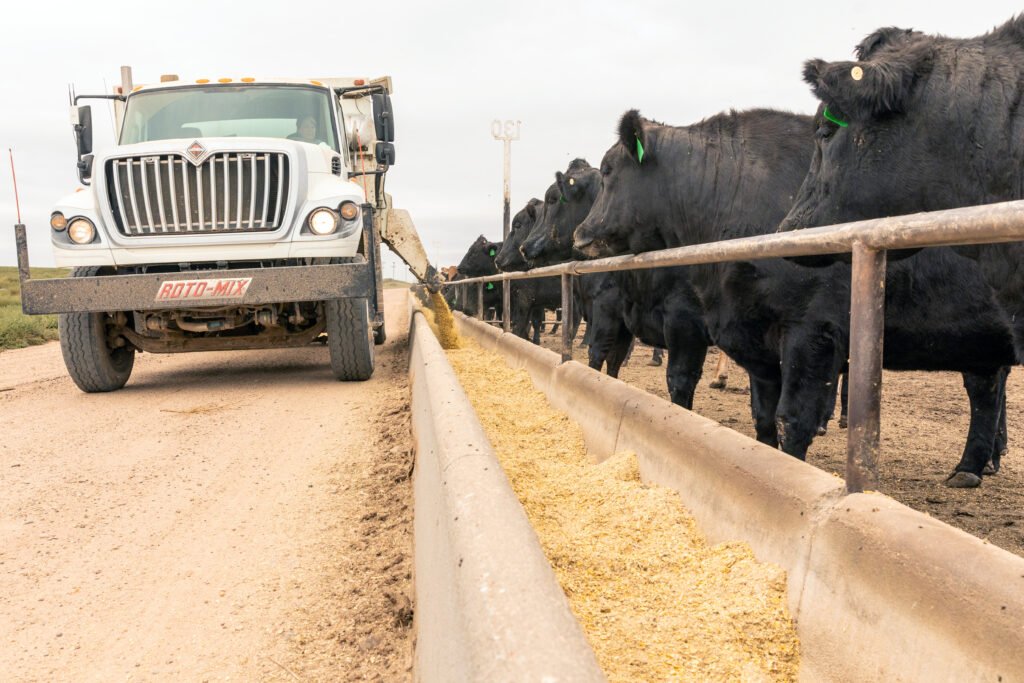
Ruminant Versus Monogastric Digestion
Animal nutrition must account for fundamental digestive differences between species, most notably the distinction between ruminants, such as cattle, sheep, and goats, whose multi-chambered stomachs host microbial fermentation capable of breaking down fibrous cellulose, and monogastric animals, including pigs and poultry, whose simpler single-chambered digestive systems require more easily digestible, energy-dense feed formulations. This difference shapes entire feeding strategies, since ruminants can derive substantial nutrition from pasture grasses and crop residues that would provide little nutritional value to monogastric livestock, which instead require grain-based or formulated feeds more similar in composition to human dietary staples.
Life Stage and Production Purpose Requirements
Nutritional requirements shift substantially across an animal’s life stages and production purpose, with young growing animals requiring higher protein concentrations to support tissue development, lactating females needing significantly increased energy and calcium to support milk production, and animals raised for different end purposes, such as meat, milk, or egg production, requiring distinctly formulated rations optimized for their specific output. Feed formulation software and nutritionist consultation have become standard tools for larger operations seeking to precisely match ration composition to these varying requirements rather than relying on generic feeding approaches that may oversupply some nutrients while undersupplying others.
Economic Significance of Feed Costs
Feed typically represents the single largest ongoing cost in most livestock production systems, often accounting for more than half of total production expenses, making nutritional efficiency a central economic consideration alongside animal health and welfare goals. This economic weight has driven substantial research investment into feed additives, alternative protein sources, and precision feeding technologies aimed at improving feed conversion efficiency, the amount of production output achieved per unit of feed consumed, since even modest efficiency improvements can translate into significant cost savings across large-scale commercial operations.
Feed Additives and Supplementation
Beyond basic macronutrient and mineral requirements, animal nutrition increasingly incorporates specialized feed additives, including probiotics supporting digestive health, enzymes improving nutrient digestibility, and targeted mineral supplementation addressing regional soil deficiencies that can leave grazing animals short of specific trace minerals despite otherwise adequate forage availability. Research into these additives continues to evolve, with some products demonstrating clear, consistent benefits while others show more mixed or context-dependent results, requiring nutritionists to evaluate additive claims carefully rather than assuming uniform effectiveness across all production systems and species.
Water intake, often overlooked relative to solid feed, represents an equally critical nutritional component, since inadequate water availability can suppress feed intake and overall productivity even when solid ration formulation is otherwise well balanced.
Byproduct and Alternative Feed Ingredients
Rising feed costs and sustainability concerns have driven growing interest in byproduct feeds, including distillers grains from ethanol production and various processing residues from food manufacturing, which can provide nutritional value at lower cost than conventional grain while also reducing waste from other industries. Nutritionists must carefully evaluate these alternative ingredients for nutrient consistency and potential contaminant risks, since byproduct feed composition can vary more than purpose-grown feed ingredients depending on the specific source process generating them.
Mineral supplementation programs must account for regional soil and forage mineral content, since deficiencies in trace minerals such as selenium or copper vary geographically and can cause subtle productivity losses or specific health problems if left uncorrected through targeted supplementation.
Precision Feeding Technology
Precision feeding systems, increasingly common in larger operations, can deliver individually tailored rations to animals based on real-time data about their body condition, production stage, or even genetic merit, moving beyond the traditional approach of feeding entire groups a single standardized ration regardless of individual variation in requirements. These systems promise improved feed efficiency and reduced waste by better matching nutrient delivery to actual individual animal need, though the capital cost of precision feeding infrastructure currently limits widespread adoption primarily to larger, better-capitalized operations.
Forage testing, analyzing the nutrient content of hay, silage, or pasture samples, provides essential data for accurately formulating rations, since forage nutrient content can vary considerably based on plant maturity, weather conditions, and harvest timing.
Least-cost ration formulation software optimizes diet composition to meet nutritional targets at the lowest achievable feed cost, automatically adjusting ingredient proportions as commodity prices fluctuate throughout the year.
Body condition scoring, a standardized visual and hands-on assessment of fat cover, provides a practical field tool for monitoring whether current feeding programs are meeting an animal’s actual energy needs across different production stages.
Mycotoxin contamination risk in stored grain and feed ingredients requires ongoing monitoring, since certain mold-produced toxins can cause significant health and productivity problems even at concentrations too low to visibly detect without laboratory testing.
Pelleted and extruded feed processing techniques can improve digestibility and reduce feed wastage compared with simple ground or whole-grain feeding, though processing adds cost that must be weighed against the resulting efficiency gains.
Seasonal ration adjustments account for changing forage availability and quality throughout the year, requiring producers to shift supplemental feeding strategies as pasture conditions change from lush spring growth to dormant winter vegetation.
Vitamin stability during feed storage can degrade over time, particularly under heat and humidity, requiring attention to storage conditions and feed turnover rates to ensure formulated nutrient levels remain accurate at the point of feeding.
Amino acid balancing in monogastric diets, rather than simply targeting total crude protein, has improved both nutrient use efficiency and reduced nitrogen excretion into the environment from modern poultry and swine production.
Least-stress sampling techniques for forage and feed testing help ensure representative results without requiring excessive sample collection labor.
Key facts
- Array
Quick checkWhy can ruminant animals like cattle thrive on feed that other livestock cannot digest well?Show answer
Ruminants have a specialized multi-chambered stomach housing microorganisms that break down fibrous plant cellulose, allowing them to extract nutrition from grasses and roughage that monogastric animals like pigs and poultry cannot efficiently digest.
Sources
- Array
Editorially reviewed by Specialty Digest Editorial TeamLast reviewed November 4, 2026Researched and drafted with AI assistanceReport an issue