Production Phases and Farm Specialization
Swine production moves through distinct phases, including breeding and gestation, farrowing when sows give birth, a nursery phase for young weaned pigs, and a growing-finishing phase during which pigs reach market weight, with some operations managing all phases on a single farm under a farrow-to-finish model while others specialize in just one or two phases within a broader segmented production system. This segmented approach, common in larger commercial swine industries, allows individual farms to optimize facilities and management specifically for one production stage rather than accommodating the differing environmental and handling needs of pigs at every life stage simultaneously.
Reproductive Efficiency and Sow Productivity
Modern commercial sows can produce more than two litters annually under intensive management, with genetic selection and management practices focused heavily on maximizing the number of piglets weaned per sow per year, a key productivity metric that significantly influences overall operation profitability. Breeding programs and estrus synchronization techniques have been developed specifically to support this reproductive efficiency goal, allowing more predictable farrowing schedules that help operations plan facility use and labor needs more precisely.
Disease Control in Confined Systems
Because swine are frequently raised in confined group housing where disease can spread rapidly, biosecurity protocols, including controlled visitor access, equipment sanitation, and all-in-all-out management that avoids mixing pigs of different ages and health histories, have become essential standard practice across commercial swine operations. Diseases such as porcine reproductive and respiratory syndrome have caused substantial economic losses in affected herds historically, reinforcing why biosecurity investment is generally viewed as cost-effective risk management rather than an avoidable expense within the industry.
Housing System Variation
Swine housing systems vary from individual gestation stalls for pregnant sows, which have faced increasing welfare-related regulatory restriction and voluntary industry phase-out in various markets, to group housing systems that allow sows greater movement and social interaction but require more sophisticated management to prevent aggression-related injuries among group-housed animals. This ongoing shift toward group housing reflects broader welfare standard evolution within the swine industry, requiring many operations to undertake significant facility renovation to transition away from stall-based gestation housing.
Feed efficiency genetics research continues to identify genetic markers associated with better feed conversion, offering swine breeders additional selection tools beyond traditional growth rate and carcass quality traits alone.
Environmental and Manure Management
Large-scale swine operations generate substantial manure volumes requiring careful management through systems such as lagoons or anaerobic digesters, both to meet environmental regulations addressing water quality protection and increasingly to capture value through nutrient recycling as fertilizer or biogas energy production from manure that would otherwise represent a pure waste management cost.
Nursery phase management focuses heavily on supporting the transition from milk-based nutrition to solid feed, a vulnerable period during which digestive upset and disease susceptibility both tend to increase if dietary transition is managed too abruptly.
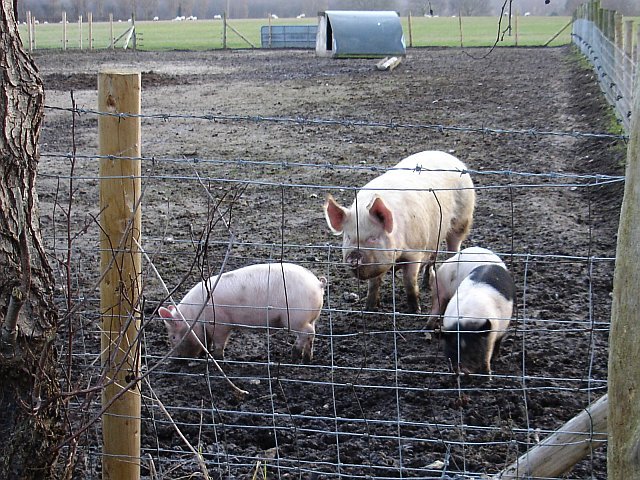
Alternative and higher-welfare production systems, including outdoor and bedded group housing approaches, have grown as a market niche in some regions, though these systems generally require more land and labor input per animal than conventional confinement systems.
Export market access for pork products often depends on meeting specific importing country requirements around production practices and disease status, adding an international trade compliance dimension to swine production planning for export-oriented operations.
Air quality monitoring within swine barns, tracking ammonia and particulate levels, has become a more routine management practice as research has strengthened understanding of the respiratory health effects these factors can have on both animals and barn workers.
Boar genetics and semen distribution networks function similarly to dairy cattle artificial insemination systems, allowing elite boar genetics to be widely distributed across many commercial sow herds without requiring physical animal transport.
Enrichment items such as chewable toys have become more common in group housing systems, addressing natural rooting and exploratory behaviors that bare concrete pens do not otherwise accommodate.
Weaning age and management practices significantly affect piglet health outcomes, with earlier weaning generally requiring more sophisticated nursery nutrition and health support compared with later, more gradual weaning approaches.
Sow longevity has become an increasing breeding and management focus, since retaining productive sows longer improves lifetime reproductive efficiency and reduces the replacement gilt costs associated with higher herd turnover rates.
Precision ventilation control systems increasingly use real-time sensor feedback to automatically adjust barn airflow, reducing the labor burden of manual ventilation management while improving consistency of air quality conditions.
Vaccination protocols tailored to specific regional disease pressures help swine operations manage health risk cost-effectively, since blanket vaccination against every possible pathogen would be neither economical nor necessary in most settings.
Record-keeping software tailored to swine operations tracks individual sow productivity across parities, supporting culling decisions for underperforming breeding animals.
Gilt development programs prepare young female pigs for their first breeding, balancing growth rate against reproductive readiness timing.
Transport stress mitigation during the move from nursery to finishing barns, or to market, draws on handling principles similar to those used across other livestock sectors.
Climate control retrofits in older swine barns represent a significant capital investment many operations have undertaken to improve air quality and animal comfort in aging facilities.
Biosecurity protocols for visitor and vehicle traffic remain a frontline defense against disease introduction onto commercial swine operations.
Market hog grading standards reward lean muscle yield, informing both genetic selection and finishing diet formulation decisions across the industry.
Carcass composition scanning technology at processing facilities provides feedback data that producers can use to refine finishing diet and genetic selection decisions over time.
More in Animal Husbandry and Production
Key facts
- Production typically follows farrow-to-finish or segmented phase systems
- Sows can produce multiple litters per year under intensive management
- Biosecurity is critical given disease susceptibility in confined operations
- Feed conversion efficiency is a major focus of genetic selection
Related concepts
Quick checkWhat is the difference between a farrow-to-finish operation and a segmented production system in swine production?Show answer
A farrow-to-finish operation manages pigs through every stage from birth to market weight on a single farm, while a segmented system splits these stages across specialized farms, such as separate breeding, nursery, and finishing operations, each optimized for a specific production phase.
Sources
- National Pork Board
- Journal of Animal Science
Editorially reviewed by Specialty Digest Editorial TeamLast reviewed November 4, 2026Researched and drafted with AI assistanceReport an issue