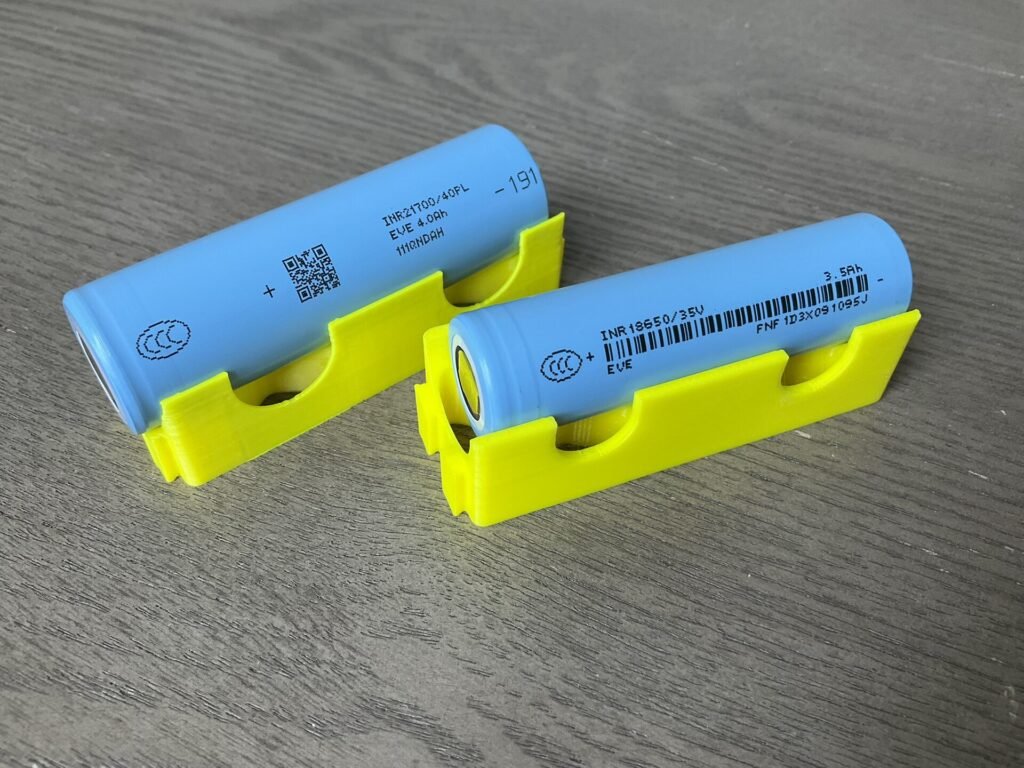
A lithium-ion battery is a rechargeable battery that stores and releases electrical energy by moving lithium ions back and forth between two electrodes. It is light and holds a lot of energy for its size, which is why it powers mobile phones and laptops, drives most electric vehicles, and is increasingly used for grid-scale energy storage. Its development was honored with the 2019 Nobel Prize in Chemistry.
History of the lithium-ion battery
The idea grew out of the 1970s oil crisis, when researchers began looking for energy technologies that did not depend on petroleum. At Exxon, M. Stanley Whittingham built a rechargeable battery with a titanium disulfide cathode and a metallic lithium anode. The cathode has molecular-scale gaps that can hold lithium ions, a process called intercalation. The cell produced a little over two volts, but repeated charging grew thin lithium whiskers that could short-circuit it and start fires, so the design was too hazardous for wide use.
Exxon scaled back its work when oil prices fell in the early 1980s, and development continued elsewhere. In 1980, John B. Goodenough showed that lithium cobalt oxide could serve as a cathode producing about four volts, nearly double the earlier cell. In 1985, Akira Yoshino paired that cathode with an anode made of petroleum coke, a carbon material that also takes up lithium ions. Because the cell no longer contained pure lithium metal, it was safer, and it could be recharged hundreds of times before its performance declined.
According to the Nobel Committee, a major Japanese electronics company began selling the first lithium-ion batteries in 1991. Goodenough, Whittingham and Yoshino shared the 2019 Nobel Prize in Chemistry, announced on October 9, 2019, for the development of lithium-ion batteries.
How a lithium-ion battery works
A lithium-ion cell has four main parts. The anode is the negative electrode, the side that gives up electrons during discharge. In most cells it is made of graphite or another carbon material, which holds lithium ions between its layers when the cell is charged.
The cathode is the positive electrode. It is usually a metal oxide or phosphate, such as the lithium cobalt oxide Goodenough introduced, that can host lithium ions in its structure. The choice of cathode material shapes a cell’s voltage, cost and safety, which is why battery types are named after it.
The electrolyte is the liquid between the electrodes, typically a lithium salt dissolved in an organic solvent. It lets ions travel from one electrode to the other while forcing electrons to take the outside circuit, where they can power a device. The separator is a thin porous membrane that keeps the electrodes from touching and short-circuiting while still letting ions pass through.
The U.S. Department of Energy describes the process as a “rocking chair” design. During charging, lithium ions move from the cathode to the anode. During discharge, they move back to the cathode while electrons flow through the external circuit. Because the ions slide into the electrodes instead of chemically transforming them, the cell avoids much of the wear that shortens the life of other batteries.
Types of lithium-ion batteries
Lithium-ion batteries are usually grouped by cathode chemistry. The Department of Energy lists lithium iron phosphate (LFP), lithium cobalt oxide (LCO), lithium nickel manganese cobalt oxide (NMC), lithium manganese oxide (LMO) and lithium nickel cobalt aluminum oxide (NCA). Each offers a different balance of energy per kilogram and expected cycle life, meaning the number of full charge and discharge rounds a cell can complete.
LCO was the original commercial choice and remains the reference point for the technology. In its 2023 assessment, the Department of Energy described NMC and LFP as the two chemistries that dominate the industry, valued for energy density and safety, respectively. Energy density is how much energy a cell stores for its weight or volume, and it determines how far a vehicle can travel on one charge.
LFP contains no cobalt or nickel, so it is often viewed as facing fewer supply chain restrictions than NMC. The same report cited industry projections that LFP would become the leading chemistry by 2030, a forecast and not a measured result. Goodenough himself later proposed iron phosphate in place of cobalt oxide, a change the Nobel Committee describes as making the battery more environmentally friendly.
Applications and examples of lithium-ion batteries
Japanese electronics companies were early drivers of the technology because they wanted lightweight rechargeable batteries for video cameras, cordless telephones and computers. Lithium-ion cells later made mobile phones smaller, laptops portable and tablets and music players practical.
Larger packs followed. Long-range electric cars depend on them, and batteries now smooth the output of solar panels and wind turbines by storing surplus electricity for later use. Shipping is a further example, since lithium cells are among the items treated as dangerous goods in transport and need specific packaging and labeling.
Advantages and disadvantages of lithium-ion batteries
The main advantages are low weight, high voltage and high capacity. Cells can be recharged hundreds of times, and because modern cells have no pure lithium metal, they avoid the whisker problem that troubled the first prototype. The Nobel Committee credits the technology with enabling cleaner energy systems that reduce reliance on fossil fuels, although it has found nothing yet that beats the lithium-ion battery’s combination of capacity and voltage.
The disadvantages are safety, materials and cost. A damaged or defective cell can still short-circuit, and the Nobel account of early lithium fires is a reminder of what that can mean in practice. Making the batteries also has an environmental footprint, as the Committee acknowledges. Cobalt and nickel supply is a recognized concern, which is one reason for the shift toward LFP.
Recycling is an active research area. The Department of Energy’s assessment lists recycling of defective and degraded cells among the innovations needed, indicating that large-scale recovery of materials is not yet a solved problem.
Lithium-ion vs. other batteries
Before lithium-ion cells, only two types of rechargeable battery were common, according to the Nobel Committee: the heavy lead battery, invented in 1859 and still used to start gasoline-powered cars, and the nickel-cadmium battery developed in the first half of the twentieth century. Lithium-ion cells are much lighter for the energy they hold.
Lead-acid, flow, zinc and sodium batteries are still being studied for stationary storage, and the Department of Energy treats each as a distinct technology alongside lithium-ion.
More in Energy
Key facts
- Array
Related concepts
In the news
Quick checkWhy was the cell Akira Yoshino built safer than the earlier lithium battery?Show answer
Yoshino replaced the metallic lithium anode with petroleum coke, which holds lithium ions without any pure lithium metal, avoiding the lithium whiskers that could short-circuit the earlier cell.
Sources
- Array
Editorially reviewed by Specialty Digest Editorial TeamLast reviewed November 4, 2026Researched and drafted with AI assistanceReport an issue