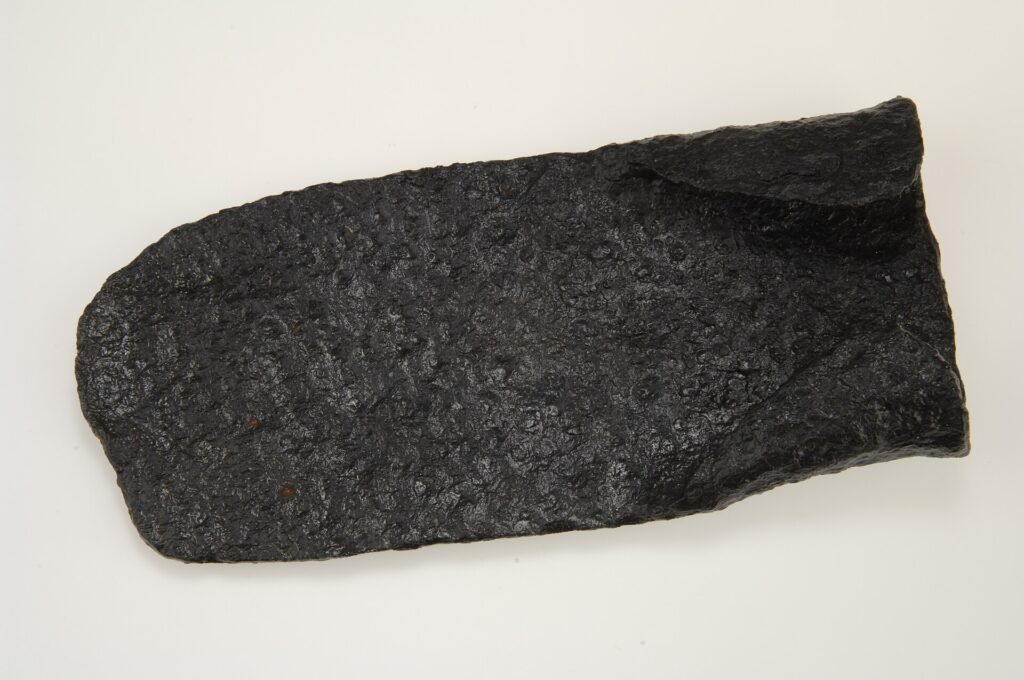
A plow, spelled plough in British English, is a farm tool that cuts and turns over soil to prepare a seedbed. The simplest kind, the ard, scratches a furrow without turning the soil, while the moldboard plow cuts and inverts a whole furrow. John Deere’s self-scouring steel plow of 1837 adapted the moldboard idea to sticky prairie soil in the United States.
History of the plow
The plow is one of the oldest farm tools. The Butser Ancient Farm, an experimental archaeology project in England, notes that the ard stayed in use through most of agricultural history and is still used in parts of the world today. The moldboard plow, which adds a curved board to lift and turn the soil, developed in northwestern Europe and has been widely used there over the last two centuries or so.
Evidence for early ards comes mostly from finds in bogs and marshes. Butser calls P. V. Glob’s 1951 survey the definitive publication on ard types. It divides them into crook ards, which have a crook and a horizontal sole, and bow ards, which end in an inclined share. The best surviving bow ard was found at Donnerupland. Sole ards are shown on Greek vases, and stave ards are known only from Scandinavian rock carvings.
The cast iron plows used by settlers in the eastern United States failed on the prairie. The soil of the American Midwest was rich, but it was denser and clumpier than the soil in the East, and it stuck to the iron blades. Farmers had to stop every few steps to clean the blade, which slowed their work, according to a research summary by EBSCO.
John Deere, a blacksmith born in Rutland, Vermont, in 1804, moved to Grand Detour, Illinois, in 1837. The National Inventors Hall of Fame reports that his plow that year had a cutting part made from an old sawmill blade, shaped by bending it over a log, and a wrought iron moldboard polished on its upper surface to stop soil from clogging. Deere sold almost a thousand a year by 1846, then organized a plow company in Moline, Illinois, and by 1856 he sold more than 13,000 plows a year. The business was incorporated as Deere and Company in 1868 and still exists.
Inventor and origins of the plow
No single person invented the plow. The ard and the moldboard plow come from farming communities whose makers are unknown, and the sources describe a long development rather than a single moment. The National Inventors Hall of Fame credits Deere with the first successful self-scouring steel plow, which was covered by U.S. Patent No. 46,454, “Improvement in Plows.” EBSCO likewise attributes the steel plow to him in 1837. The sources used here do not discuss rival claims.
“Scouring” is the way a plow cleans itself by shedding soil as it moves. A self-scouring plow is one whose polished surface lets soil slide off instead of piling up. Deere used polished steel and wrought iron in place of the rough cast iron of earlier plows. Steel came into wide use during the First Industrial Revolution, a period covered in the entry on the Industrial Revolution.
How a plow works
A plow is pulled through the soil by animals or a tractor. A cutting edge slices the soil from below, and on a moldboard plow the curved board then lifts the slice and rolls it over. Butser explains that a full inversion leaves a bare surface, can bury manure and fertilizers such as lime, and disrupts weeds by burying annual weeds and breaking the roots of perennial ones.
An ard works differently. It undercuts weeds and plants and leaves their roots loosened, so that the weeds dry out and die. This works best at the right time of year in warm, dry periods, and the drying plants and roots help hold the soil and act as a mulch to retain moisture.
Depth is a trade-off. A 1961 statement by Russell, quoted by Butser, held that plowing depths of about 4 inches (100 millimeters) were quite satisfactory for crop yields on weed-free land, a depth within the range of most ards. Deep plowing to 15 to 18 inches (380 to 460 millimeters) improves drainage and aeration, but if an impermeable layer lies below, the extra pore space can become waterlogged. Plowing repeatedly to the same depth can form a hard layer called a pan.
Types and variants of the plow
Researchers divide the early ards into crook ards, bow ards, sole ards and stave ards by their shape and construction. Some Scandinavian scholars reserve the word plough for tools with a moldboard and use ard for symmetrical tools that lack one.
Moldboard plows have been made of cast iron, wrought iron and steel. The early iron plows of the American East were cast iron, a material related to the metal described in the entry on iron, and Deere’s design combined a steel cutting part with a polished wrought iron moldboard. Modern direct drills, which place seed without turning the soil, are said by Butser to closely imitate the action of the ard. Seeding without tillage is the subject of the entry on no-till farming.
Impact of the plow
The steel plow let farmers work the dense prairie soil faster and grow more food, which, according to EBSCO, supported the westward expansion of the United States. It brought previously difficult land into cultivation, and it raised crop output and profits.
The same tool had costs. EBSCO notes that the steel plow contributed to soil erosion and to the loss of native prairie landscapes. Butser makes a related point: a moldboard plow leaves a bare surface that erodes easily, which matters little in cool, moist climates but can be a disaster in the humid tropics with torrential rain or in windy dry regions. Readers can learn more about the process in the entry on erosion.
Uses today
The ard is still in use, according to Butser, and the moldboard plow, though common in northwestern Europe and North America, is used on only a small part of the world’s farmland. Deere and Company, the firm that grew from the 1837 plow, still operates.
More in Agriculture & Food
Key facts
- The ard, which scratches a furrow without turning the soil, stayed in use through most of agricultural history.3
- John Deere made his steel plow in Grand Detour, Illinois, in 1837.1
- By 1856 Deere was selling more than 13,000 plows a year, and the business was incorporated as Deere and Company in 1868.1
- The moldboard plow developed in northwestern Europe and leaves a bare surface that can erode.3
- The steel plow supported westward expansion in the United States but contributed to soil erosion and loss of prairie.2
Related concepts
Quick checkWho invented the steel plow?Show answer
The sources credit John Deere, an Illinois blacksmith, with the first successful self-scouring steel plow in 1837. Plows themselves are far older and have no single inventor.
Sources
- National Inventors Hall of Fame, John Deere, Improvement in Plows, U.S. Patent No. 46,454, https://invent.org/inductees/john-deere
- Ungvarsky J, Invention of the Steel Plow, EBSCO Research Starters, Agriculture and Agribusiness (2023), https://ebsco.com/research-starters/agriculture-and-agribusiness/invention-steel-plow
- Butser Ancient Farm, Ploughing, https://butser.org.uk/ploughing.html
Editorially reviewed by Specialty Digest Editorial TeamLast reviewed November 4, 2026Researched and drafted with AI assistanceReport an issue