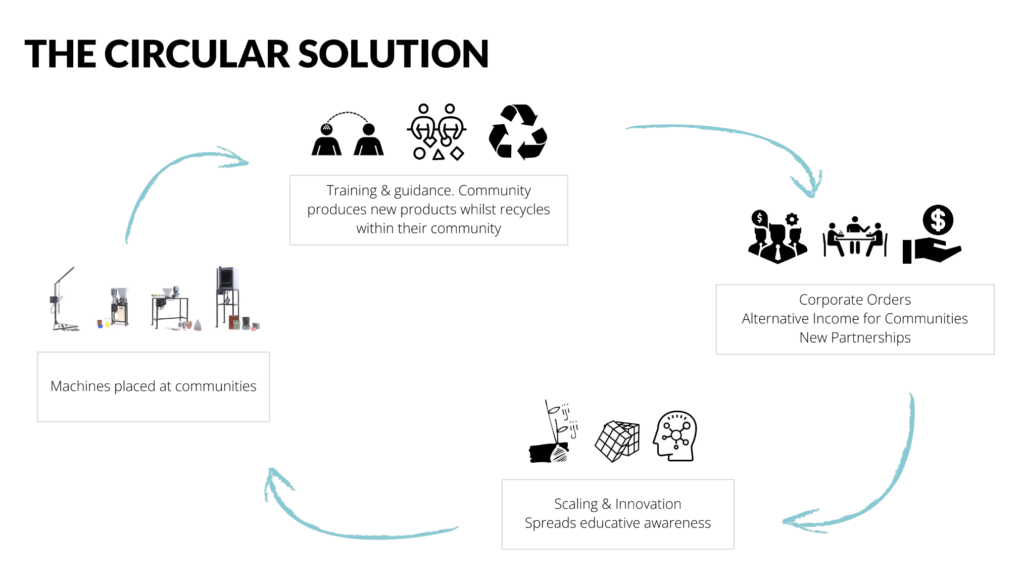
A circular economy is an economic model designed to eliminate waste and maximize the continued use of materials and products, in contrast to the traditional linear economic model of extracting raw materials, manufacturing products, and ultimately disposing of them after use. Instead of a one-way flow from resource extraction to landfill, a circular economy aims to keep materials in use for as long as possible through strategies such as repair, reuse, refurbishment, and recycling, ideally returning materials to productive use repeatedly rather than only once.
The concept has gained significant traction with governments, businesses, and international organizations over the past decade, with the European Union adopting a formal Circular Economy Action Plan and numerous countries, cities, and major corporations setting specific circularity targets, reflecting both growing environmental concern and recognition that resource efficiency can also reduce costs and supply chain risk for businesses.
Core Principles
Circular economy frameworks commonly organize strategies into a hierarchy that prioritizes keeping products and materials at their highest value for as long as possible: refusing unnecessary consumption and reducing material use come first, followed by reusing and repairing existing products, then refurbishing or remanufacturing products that can be restored to like-new condition, and finally recycling materials into new raw inputs only when the earlier, higher-value strategies are not feasible.
This hierarchy reflects the principle that recycling, while valuable, is generally less resource-efficient than simply keeping a product in its original functional form for longer, since recycling processes themselves consume energy and often degrade material quality somewhat with each cycle, making extended product lifespans and reuse generally preferable from a resource-efficiency standpoint whenever practical.
Product Design for Circularity
Achieving a circular economy requires rethinking product design from the earliest stages, favoring durable materials, modular construction that allows individual components to be repaired or replaced rather than discarding an entire product, and designs that avoid permanently bonding different material types together in ways that make later separation and recycling difficult or impossible.
Some manufacturers have adopted “right to repair” commitments and modular product designs specifically to extend product lifespans and support secondary markets for refurbished goods, while a growing number of jurisdictions have passed right-to-repair legislation requiring manufacturers to make spare parts, tools, and repair information available to consumers and independent repair shops rather than restricting repairs to manufacturer-authorized service centers alone.
Business Models Supporting Circularity
The shift toward circularity has given rise to new business models that decouple revenue from the sale of new physical products, including product-as-a-service arrangements in which customers pay for the use of equipment, such as industrial machinery or even clothing, rather than purchasing it outright, giving the manufacturer a continued financial incentive to design durable, repairable, and eventually recoverable products since they retain ownership and responsibility for the item’s full lifecycle.
Resale and refurbishment markets, including both dedicated secondhand retailers and manufacturer-operated certified refurbished programs, have also expanded substantially in recent years, supported by growing consumer comfort with purchasing used or refurbished goods and by improved logistics and quality assurance processes that have made refurbished products a more mainstream and trusted option than in the past.
Measuring Circularity
Assessing how circular a given product, company, or economy actually is remains methodologically challenging, since circularity involves multiple dimensions, including the proportion of recycled or reused material inputs, the rate of material recovery at the end of a product’s life, and the overall rate of material consumption relative to economic output, none of which is fully captured by any single metric.
Organizations including national statistical agencies and international bodies have developed various circularity indicators and material flow accounting frameworks to track progress, though researchers generally caution against relying on any single circularity metric in isolation, since a product or system can score well on one dimension of circularity, such as recycling rate, while still consuming large quantities of virgin material overall.
Limits and Criticisms
Critics of the circular economy concept argue that it can sometimes function as a way for companies and governments to claim environmental progress through incremental recycling and reuse initiatives while overall material and energy consumption continues to grow, a phenomenon some researchers describe as circular economy initiatives failing to meaningfully challenge an underlying growth-oriented economic model.
Other researchers note that achieving a genuinely circular economy at a global scale faces substantial physical and thermodynamic limits, since no recycling process is perfectly efficient and some portion of material is inevitably lost or degraded with each cycle, meaning a circular economy can significantly reduce but likely cannot entirely eliminate the need for ongoing extraction of virgin raw materials.
These circular strategies increasingly shape procurement decisions at large institutions, which now favor vendors offering take-back programs and remanufactured components over single-use alternatives.
FAQ
What is the difference between a circular economy and a linear economy?
A linear economy follows a one-way path of extracting raw materials, manufacturing products, and disposing of them after use, while a circular economy aims to keep materials in use through repair, reuse, and recycling for as long as possible.
Why is recycling considered lower priority than reuse in circular economy frameworks?
Recycling consumes energy and can degrade material quality with each cycle, so circular economy hierarchies generally prioritize reducing consumption and reusing or repairing products before recycling materials into new raw inputs.
Can a circular economy completely eliminate the need for raw material extraction?
Likely not entirely, since no recycling process is perfectly efficient and some material is inevitably lost or degraded with each cycle, meaning a circular economy can greatly reduce but not fully eliminate virgin material extraction.
More in Environmental Science
Editorially reviewed by Specialty Digest Editorial TeamLast reviewed November 4, 2026Researched and drafted with AI assistanceReport an issue