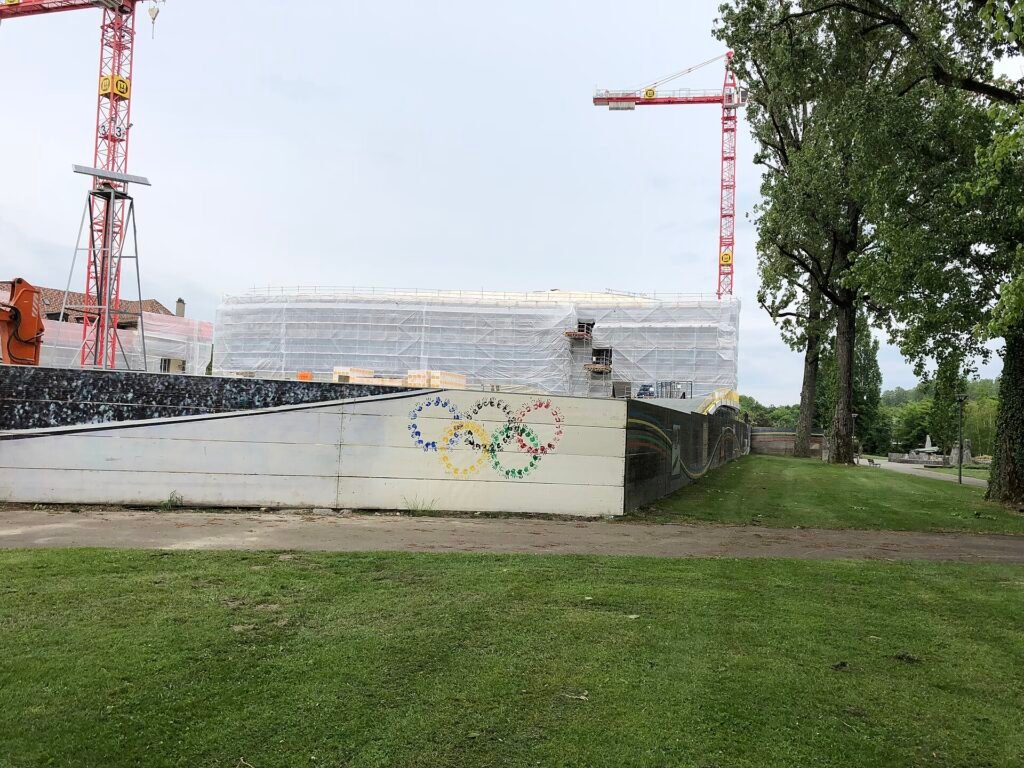
The International Olympic Committee (IOC) is the international non-governmental organization that leads the Olympic Movement and acts as guardian of the Olympic Games. Founded on 23 June 1894 and based in Lausanne, Switzerland, it describes itself as a not-for-profit body that is entirely privately funded.
History and founding of the IOC
The IOC was created in Paris at the Sorbonne on 23 June 1894. Delegates from twelve countries attended a congress there and unanimously backed a proposal by Pierre de Coubertin to revive the Olympic Games, and the committee was founded at the same event.
Coubertin had already organized international congresses on sport and physical education, beginning around the 1889 Paris Exhibition. The 1894 congress approved the revival and fixed the first modern Games for Athens, where they were held in 1896. Coubertin later became the committee’s president, succeeding Demetrios Vikelas, who had held the post before him.
The IOC’s Executive Board, the group that manages its day-to-day affairs, dates from 1921. Over the following century the committee grew from a small founding body into the center of a worldwide network of national and international sport organizations.
Structure and membership of the IOC
The IOC is headquartered in Lausanne, which it calls the Olympic Capital. IOC members meet in a Session, where they vote by secret ballot to elect the President and the Executive Board.
The Executive Board has 15 members: the President, four Vice-Presidents and ten other members. Terms last four years, and members may serve at most two successive terms, a limit that does not apply to the President. The Board also proposes candidates for IOC membership and sets the agenda for each Session.
The current President is Kirsty Coventry of Zimbabwe, elected on 20 March 2025 at the 144th IOC Session in Costa Navarino, Greece. She is the tenth President and the first woman to hold the office. She succeeded Thomas Bach, whose twelve-year tenure ended in June 2025, and the presidential term is eight years.
The IOC sits at the top of a wider system called the Olympic Movement. Its other parts include National Olympic Committees, International Federations (the world governing bodies for individual sports) and the organizing committee created for each edition of the Games. The IOC recognizes 206 National Olympic Committees and is the only body that can grant that recognition. Each committee’s task is to develop, promote and protect the Movement in its own country under the Olympic Charter.
What the IOC does
The IOC is responsible for the regular celebration of the Olympic Games and for promoting Olympism, the set of values behind the Movement, around the world. It also says it works to support sport in society, strengthen the integrity of sport and support clean athletes. Its stated vision is to build a better world through sport.
In practice it coordinates a long list of groups: athletes, National Olympic Committees, International Federations, organizing committees, Worldwide Olympic Partners and media rights holders. It also works with the United Nations and other international bodies. Because the Games bring these groups together, the IOC’s decisions on rules, bids and eligibility affect the whole field of sports governance.
The committee’s calendar includes the Youth Olympic Games. The Dakar 2026 edition runs from 30 October to 13 November 2026, according to the IOC.
Funding and governance of the IOC
The IOC says that it is entirely privately funded and that it passes 90 percent of its revenues to the wider sporting movement. Its income comes mainly from two programs: the Olympic Partner (TOP) sponsorship program and the broadcast program. Both rest on sports broadcasting rights and sport sponsorship.
According to the IOC, those two programs together produced USD 5.2 billion in 2013 to 2016, USD 6.9 billion in 2017 to 2020/21 and USD 7.7 billion in 2021 to 2024. The committee reports that USD 7.4 billion is already secured for 2025 to 2028 and a further USD 6.5 billion for 2029 to 2032.
An independent analysis of the IOC’s 2024 annual report, published by the trade site The Sports Examiner, reached a lower distribution figure. It found that 73.9 percent of revenue was distributed in the 2021 to 2024 cycle when deferred Tokyo 2020 television rights are counted in the revenue base, and 64.9 percent when they are excluded. The article notes that this is below the 90 percent the IOC often cites. The two numbers use different bases, so readers comparing them should check how each defines revenue.
Criticism and controversies
The best-known governance crisis began in December 1998. Allegations surfaced that IOC members had accepted cash, gifts, entertainment, travel, medical expenses and tuition for relatives from members of the Salt Lake City bid committee for the 2002 Winter Games. Several earlier bid committees were also accused of improper conduct. According to Britannica, the IOC expelled six members and several others resigned.
In December 1999 an IOC commission announced a 50-point reform package. It covered how members are selected and how they behave, the bidding process, financial transparency, the size and conduct of the Games, and drug regulation. The reforms also created an independent Ethics Commission.
A continuing point of debate is how much of the committee’s income actually reaches sport. The IOC holds that 90 percent of its revenue is distributed, while the independent analysis above reports a lower share for the 2021 to 2024 cycle.
Legacy and impact of the IOC
A committee that began with delegates from twelve countries in 1894 now recognizes 206 National Olympic Committees, a measure of how far the Olympic Movement has spread. The IOC’s mission statement stresses sport as a tool for social benefit, a theme Coventry repeated when she said after her election that sport can unite people.
Because most IOC revenue is passed on to the wider movement, the commercial results of each Olympic cycle affect funding for National Olympic Committees, International Federations and organizing committees. That link between Games revenue and the finances of many sports bodies is one reason the IOC’s governance and transparency continue to draw close attention.
More in Sports Management and Administration
Key facts
- The IOC was founded on 23 June 1894 and is based in Lausanne, Switzerland.1
- The founding congress met at the Sorbonne in Paris, with delegates from twelve countries.2
- The IOC recognizes 206 National Olympic Committees.4
- The IOC Executive Board has 15 members: a President, four Vice-Presidents and ten other members.5
- Kirsty Coventry was elected the 10th IOC President on 20 March 2025, the first woman in the role.6
- The IOC says it is entirely privately funded and distributes 90 percent of its revenue to the wider sporting movement.1
- Olympic Partner and broadcast revenue totaled USD 7.7 billion in 2021 to 2024.7
Quick checkWhen and where was the International Olympic Committee founded?Show answer
It was founded on 23 June 1894 at a congress at the Sorbonne in Paris, where delegates from twelve countries backed Pierre de Coubertin's proposal to revive the Olympic Games. It is now based in Lausanne, Switzerland.
Sources
- International Olympic Committee, About the IOC (overview), https://olympics.com/ioc/overview
- City of Paris, Pierre de Coubertin and the origin of the Olympic Games, https://www.paris.fr/en/pages/pierre-de-coubertin-and-the-origin-of-the-olympic-games-27628
- Encyclopaedia Britannica, Pierre, Baron de Coubertin: Father of the Modern Olympics, https://www.britannica.com/biography/Pierre-Baron-de-Coubertin-Father-of-the-Modern-Olympics
- International Olympic Committee, National Olympic Committees, https://olympics.com/ioc/national-olympic-committees
- International Olympic Committee, IOC Executive Board, https://olympics.com/ioc/executive-board
- International Olympic Committee, Kirsty Coventry elected IOC President, the first female President in IOC history, https://olympics.com/ioc/news/kirsty-coventry-elected-ioc-president-the-first-female-president-in-ioc-history
- International Olympic Committee, Economic and financial resilience, https://olympics.com/ioc/olympic-agenda-reforms/economic-and-financial-resilience
- Encyclopaedia Britannica, Olympic Games: Corruption, https://www.britannica.com/sports/Olympic-Games/Corruption
- The Sports Examiner, IOC annual report shows IOC distributed almost 74% of its revenues from 2021-24, https://www.thesportsexaminer.com/intl-olympic-committee-annual-report-shows-ioc-distributed-almost-74-of-its-revenues-from-2021-24-and-has-4-9-billion-in-the-bank/
Editorially reviewed by Specialty Digest Editorial TeamLast reviewed November 4, 2026Researched and drafted with AI assistanceReport an issue