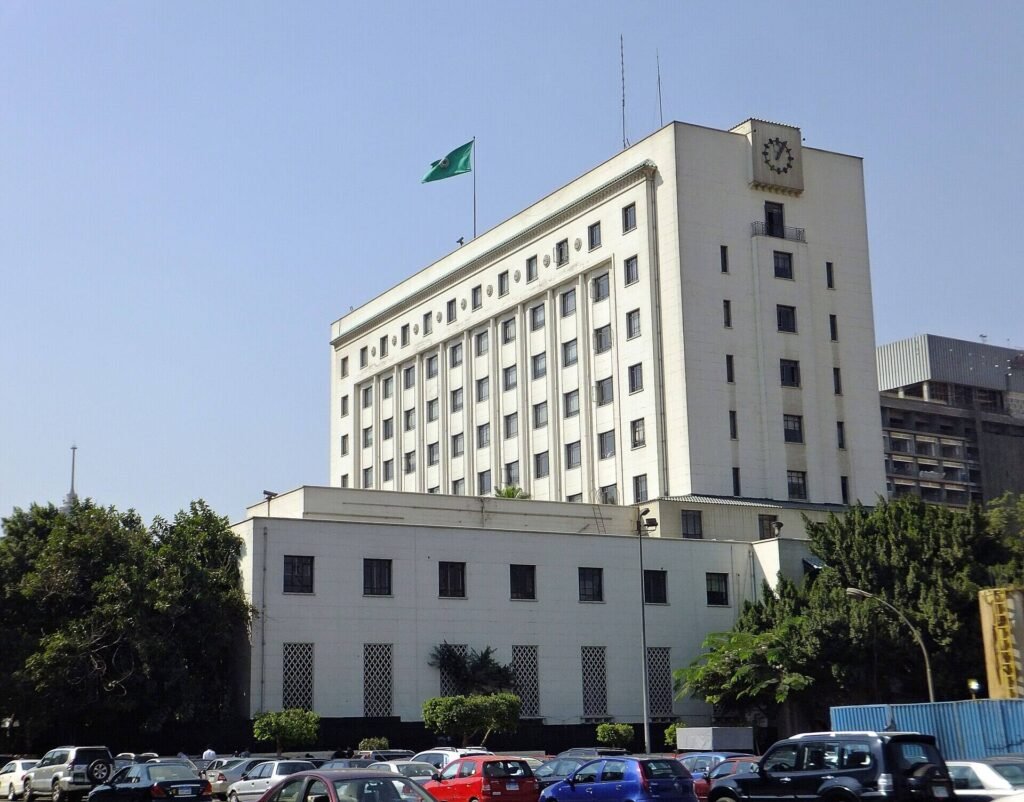
The League of Arab States, usually called the Arab League, is a regional organization of Arab countries founded in Cairo in 1945. Its founding Pact commits members to closer cooperation on political, economic, cultural and social matters while safeguarding each member’s independence and sovereignty. The organization has 22 members.
History of the Arab League
Arab leaders began negotiating a union during the Second World War, after Britain expressed support for Arab unity in 1941. Those talks led to the Alexandria Protocol in 1944, which laid the groundwork for the league. The Council on Foreign Relations says the league was chartered in response to concerns about postwar colonial divisions of territory and strong opposition to the emergence of a Jewish state on Palestinian territory.
The Pact of the League of Arab States was signed on 22 March 1945 by seven states: Egypt, Iraq, Lebanon, Saudi Arabia, Syria, Transjordan and Yemen. It set the permanent seat in Cairo and created a permanent General Secretariat.
The first major league action came in 1948, when five member states took up arms against Israel after its declaration of independence. A 1950 pact committed members to treat aggression against any member as aggression against all. The league has maintained an official boycott of Israeli goods and companies since 1948, although the Council on Foreign Relations says its effects are hard to measure because enforcement is lax and trade flows are limited.
The league’s stance on Palestine has evolved. After the 1967 war it issued the Khartoum Resolution, remembered for its three refusals regarding peace, recognition and negotiation with Israel. In 2002 it endorsed the Arab Peace Initiative. In 2011 it supported the ouster of Muammar al-Qaddafi in Libya during the uprisings of the Arab Spring period.
Structure and membership of the Arab League
The 22 members are Algeria, Bahrain, Comoros, Djibouti, Egypt, Iraq, Jordan, Kuwait, Lebanon, Libya, Mauritania, Morocco, Oman, Palestine, Qatar, Saudi Arabia, Somalia, Sudan, Syria, Tunisia, the United Arab Emirates and Yemen. Under Article 1, any independent Arab state may apply to join, with the application filed with the General Secretariat and put to the Council.
The Council is the supreme authority. It is made up of representatives of the member states, usually foreign ministers or their delegates, and each state has one vote regardless of the number of representatives. The Council meets in regular session twice a year and in extraordinary session at the request of two members. It supervises the execution of agreements among members and decides on membership applications, withdrawals and amendments to the Pact.
A General Secretariat headed by a Secretary-General carries out administration. The Council appoints the Secretary-General by a two-thirds vote, and the post carries the rank of ambassador. The first Secretary-General, Abdul-Rahman Azzam, served from 1945 to 1952.
Other bodies include committees for the fields of cooperation named in the Pact and specialized ministerial councils, such as those for information, interior, justice, health and transport ministers. A Treaty for Joint Defence and Economic Cooperation created a Joint Defence Council of foreign and defense ministers and an Economic Council, later developed into an Economic and Social Council in 1977.
What does the Arab League do?
Article 2 of the Pact lists the areas of cooperation: economic and financial matters including trade, customs, currency, agriculture and industry; communications; culture; nationality, passports, visas, execution of judgments and extradition; social welfare; and health. Each area has a committee that drafts agreements for the Council.
The league also acts as a political forum. It coordinates member positions in regional and international bodies and tries to settle disputes among members peacefully. In 2004 some members adopted the Arab Charter on Human Rights, which was ratified in 2008.
The Pact bans recourse to force to settle disputes among members. If a dispute does not involve a state’s independence, sovereignty or territorial integrity and both parties apply to the Council, its decision is binding. The Council may also mediate disputes that threaten to lead to war between members or between a member and another state.
Funding and decision-making
Under Article 13, the Secretary-General prepares the budget and the Council approves it before each fiscal year. The Council determines each member’s share of expenses and may revise it.
Voting rules limit collective action. In case of aggression against a member, the Council decides on measures by unanimous vote, not counting the vote of an aggressor that is a member. Article 7 says unanimous decisions bind all members, while majority decisions bind only the states that accept them. Each state must also respect the form of government of the others and pledge not to try to change it.
Criticism and challenges
Because majority decisions bind only those who accept them, the league has no mechanism to compel compliance. The Council on Foreign Relations quotes New York University professor Mohamad Bazzi calling it a “glorified debating society.” The same source reports that critics fault the league for internal conflict, for collective inaction on major international issues and for representing its governments more than Arab citizens.
Examples cited include a failed diplomatic effort over Syria and a fractured response to the rise of the Islamic State group. During the Lebanese civil war, the league had limited success in negotiations. In the end the Taif Agreement, formally under league auspices, was driven mainly by Saudi Arabia and Syria.
The league also produced the 2002 Arab Peace Initiative, which the Council on Foreign Relations links to its long-running work on the Palestinian cause. Shifting attitudes toward Israel, sectarian divisions and rivalries among members continue to shape how effective it can be, according to analysts quoted there.
More in International Relations
Key facts
- The Pact of the League of Arab States was signed on 22 March 1945 by seven states.12
- The league has 22 members and its permanent seat is Cairo.13
- Each member has one vote in the Council.1
- Council decisions taken by majority bind only the states that accept them.1
- The league has maintained an official boycott of Israeli goods and companies since 1948.2
Related concepts
Quick checkCan the Arab League force its members to comply with its decisions?Show answer
No. The Pact says unanimous Council decisions bind all members, but majority decisions bind only those that accept them, and the league has no enforcement mechanism. [1][2]
Sources
- 1. Yale Law School Lillian Goldman Law Library, Avalon Project, Pact of the League of Arab States, March 22, 1945, https://avalon.law.yale.edu/20th_century/arableag.asp
- 2. Council on Foreign Relations, The Arab League, https://www.cfr.org/backgrounder/arab-league
- 3. International Monetary Fund, Directory of Economic, Commodity and Development Organizations: League of Arab States, https://www.imf.org/external/np/sec/decdo/las.htm
Editorially reviewed by Specialty Digest Editorial TeamLast reviewed November 4, 2026Researched and drafted with AI assistanceReport an issue