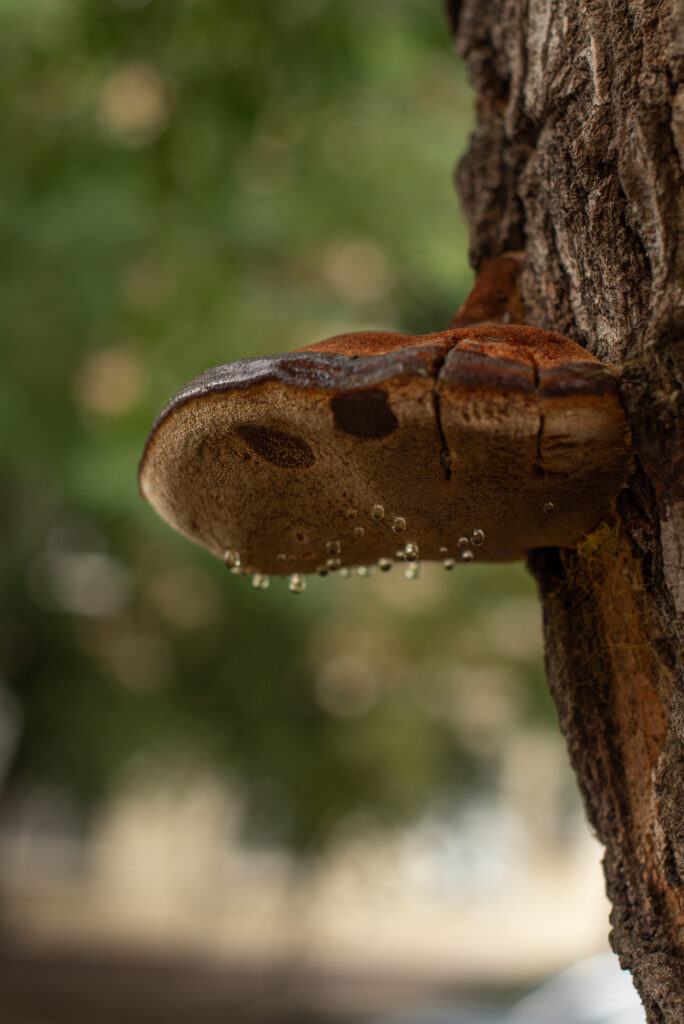
Mushroom coffee is a beverage made by blending ground coffee, or instant coffee, with powder or extract from medicinal mushrooms. The species most often named are lion’s mane (Hericium erinaceus), chaga (Inonotus obliquus), reishi and cordyceps.[1][2] Sellers promote it as a gentler, more focused alternative to ordinary coffee, and the mushroom coffee evidence behind those promises is thin: research exists on individual mushrooms, but almost none on the finished drinks.
Dietitians quoted by GoodRx say that there is little research on mushroom coffee itself, and that most claims rest on studies of single ingredients.[1] A 2025 systematic review of lion’s mane, the best-studied of the group, found small and varied trials.[3] A 2026 feature in the consumer magazine Nutrition Action concluded that the evidence for mushroom coffees and supplements “comes up short.”[4]
| Typical mushrooms | Lion’s mane, chaga, reishi, cordyceps |
|---|---|
| Caffeine | About half of regular coffee for one popular brand (around 50 mg versus 95 mg per cup), per GoodRx |
| Lion’s mane evidence | Systematic review of 26 studies, including 5 randomized controlled trials |
| Studies of mushroom coffee itself | Very few; most research uses isolated extracts |
| U.S. regulation | Sold as food or dietary supplement; makers may not claim to treat disease |
What mushroom coffee is
The drinks pair a familiar base with extracts or powders from medicinal mushrooms. News-Medical, a medical information site, lists lion’s mane, chaga, reishi and cordyceps as the common species and says they are believed to contain polysaccharides, triterpenoids and antioxidants.[2] The mushrooms are generally ground and extracted, not eaten whole, and the extraction method, either water alone or water and alcohol, changes which compounds end up in the product.[2]
Coffee itself is made from roasted coffee beans, and the mushroom component is an addition to that. Brands may not state the dose of each mushroom, which leaves the amount consumed per cup unclear. Nutrition Action observed that supplement companies are not required to disclose manufacturing processes, so consumers may not know what a “mushroom extract” actually contains.[4]
Caffeine content
The most concrete difference from regular coffee is caffeine. GoodRx reports that mushroom coffee has about half the caffeine of regular coffee, citing one popular brand at around 50 milligrams per cup compared with about 95 milligrams for regular coffee.[1] This figure is brand specific. Products vary, and News-Medical advises checking labels, since some blends are not caffeine-free.[2] The lower caffeine content can plausibly explain reports of fewer jitters, an effect that does not require any contribution from the fungi. People who are sensitive to caffeine may also want to consider timing relative to bedtime, as discussed in this explainer on how much sleep adults need.
What research shows for each mushroom
Lion’s mane
Lion’s mane has the most human research. A systematic review by Arya Menon and colleagues in Frontiers in Nutrition (2025) followed PRISMA reporting guidelines and included 26 studies: 5 randomized controlled trials, 3 pilot trials, 1 cohort study, 1 case report, 15 laboratory studies and 1 computer analysis. Pooling one randomized trial and one pilot trial showed a combined weighted mean increase of 1.17 points on the Mini-Mental State Examination, and a one-year pilot trial in mild Alzheimer’s disease in Taiwan reported significant improvement. A 28-day cohort study found no significant effect on cognition. Randomized trials reported lower depression and anxiety scores, and one reported better sleep quality.[3]
The same authors listed major limits: small samples, such as 26, 30 and 41 participants, large differences in design and dose, and a search limited to PubMed and English-language papers. Their text also contains inconsistent figures, which readers should weigh. Findings that lion’s mane compounds affect nerve growth pathways come from laboratory and animal work and have not been shown in humans.[3] Nutrition Action reported that the largest human trial, in 43 adults, showed better performance on only one of seven attention and memory tests, by about one-twentieth of a second.[4] News-Medical cites a 2008 placebo-controlled trial in people with mild cognitive impairment that reported improvement after 16 weeks, but calls for larger and more robust trials.[2]
Chaga, reishi and cordyceps
For chaga, Nutrition Action found no peer-reviewed brain-health trials in people.[4] News-Medical describes antioxidant and anti-inflammatory findings from animal and zebrafish studies and few human studies.[2] For reishi, immune findings come from test-tube and animal work, and Nutrition Action found no human trials testing whether it prevents illness.[4] For cordyceps, News-Medical reports athlete research suggesting better aerobic capacity and less exercise fatigue, yet calls the human data largely inconclusive.[2]
The gap between studies and the cup
Almost all of this work tested isolated extracts, often at defined doses, and not a commercial coffee blend. A result for a concentrated lion’s mane capsule cannot be transferred to a drink whose mushroom content is undisclosed. In addition, many of the trials were small, which increases the chance that an apparent effect is noise, and a randomized controlled trial is needed to separate a real effect from the placebo effect. Pieter Cohen, a Harvard Medical School physician quoted in Nutrition Action, noted that makers have little incentive to fund clinical trials because they already sell their products.[4]
GoodRx quotes dietitian Megan Byrd as saying that cognitive benefits of mushroom coffee are “not well-studied yet.”[1] One study cited by that outlet found that a cordyceps mushroom coffee had more antioxidants than regular coffee, but antioxidant content in a lab measurement does not establish a health benefit in people.[1]
Safety and regulation
Mushroom coffee is generally considered safe for most people, according to GoodRx, but it lists several cautions. Reishi and chaga may lower blood pressure and blood sugar, which matters for people taking related medications. The extract can cause gas and bloating, especially in people with irritable bowel syndrome. Mushrooms contain oxalates, so people with a history of kidney stones or kidney disease are advised to avoid it, and pregnant or nursing women are advised to avoid it because research is limited.[1] News-Medical adds possible interactions with anticoagulants, immunosuppressants and glucose-lowering drugs, and mentions reports of liver toxicity linked to excessive reishi consumption.[2]
The oxalate concern has case-report support. Published reports describe oxalate nephropathy presenting as nephrotic syndrome after chaga use, and end-stage kidney disease after long-term chaga ingestion.[5][6] Case reports cannot show how common these outcomes are, but they are the reason clinicians urge caution. In the lion’s mane review, side effects were rare and often unreported, and included stomach discomfort, headache and allergic reactions, along with a case report of acute respiratory distress syndrome in a man after prolonged use.[3]
In the United States, such products are sold as foods or dietary supplements. Nutrition Action notes that companies cannot claim to treat or prevent disease but may say a product supports the body’s structure or function.[4] Claims on packaging therefore do not indicate that the product was shown to work in trials.
What stronger evidence would look like
Trials that settle the question would give participants a defined mushroom coffee and an identical-tasting coffee without mushrooms, assign them at random, and measure outcomes such as attention, mood or sleep over weeks or months. They would report the dose of each mushroom, state who funded the work, and be large enough to detect small differences. Reviews such as the lion’s mane analysis show how far current work is from that standard: small groups, short follow-up and different doses make results hard to combine.[3] Until such studies exist, claims about focus, immunity or stress relief for the drinks remain unproven.
Bottom line
The balance of the evidence is that mushroom coffee often delivers less caffeine and an uncertain amount of mushroom. Some lion’s mane trials suggest small cognitive or mood effects, and other mushrooms have little human data. Anyone with kidney disease, a history of kidney stones, a medication that affects blood sugar or clotting, or a pregnancy can ask a clinician first.
FAQs
Is there good evidence that mushroom coffee works? Not yet. Most research tested isolated mushroom extracts, often in small trials, and very little tested mushroom coffee itself.
Does mushroom coffee have less caffeine? Often, yes. GoodRx cites about 50 milligrams per cup for one popular brand against about 95 milligrams for regular coffee, but labels vary.
Which mushroom has the most research? Lion’s mane. A 2025 systematic review found 5 randomized trials, with small samples and mixed results on cognition and mood.
Is mushroom coffee safe for everyone? No. Chaga contains oxalates linked in case reports to kidney damage, and dietitians advise people with kidney problems, pregnant women and those on certain medications to check with a clinician.
Can companies claim mushroom coffee treats disease? No. In the United States, makers may describe support for the body’s structure or function but may not claim to treat or prevent disease.
More in Health
- GoodRx, Is Mushroom Coffee Good for You?
- News-Medical, The Truth About Mushroom Coffee: Benefits vs. Hype
- Menon et al., 2025, Benefits, side effects, and uses of Hericium erinaceus as a supplement: a systematic review, Frontiers in Nutrition
- Nutrition Action, Magic Mushrooms? Do Mushroom Supplements Live Up to the Hype? (July/August 2026)
- Chaga mushroom-induced oxalate nephropathy that clinically manifested as nephrotic syndrome: A case report, PubMed
- Development of End Stage Renal Disease after Long-Term Ingestion of Chaga Mushroom: Case Report and Review of Literature, PubMed