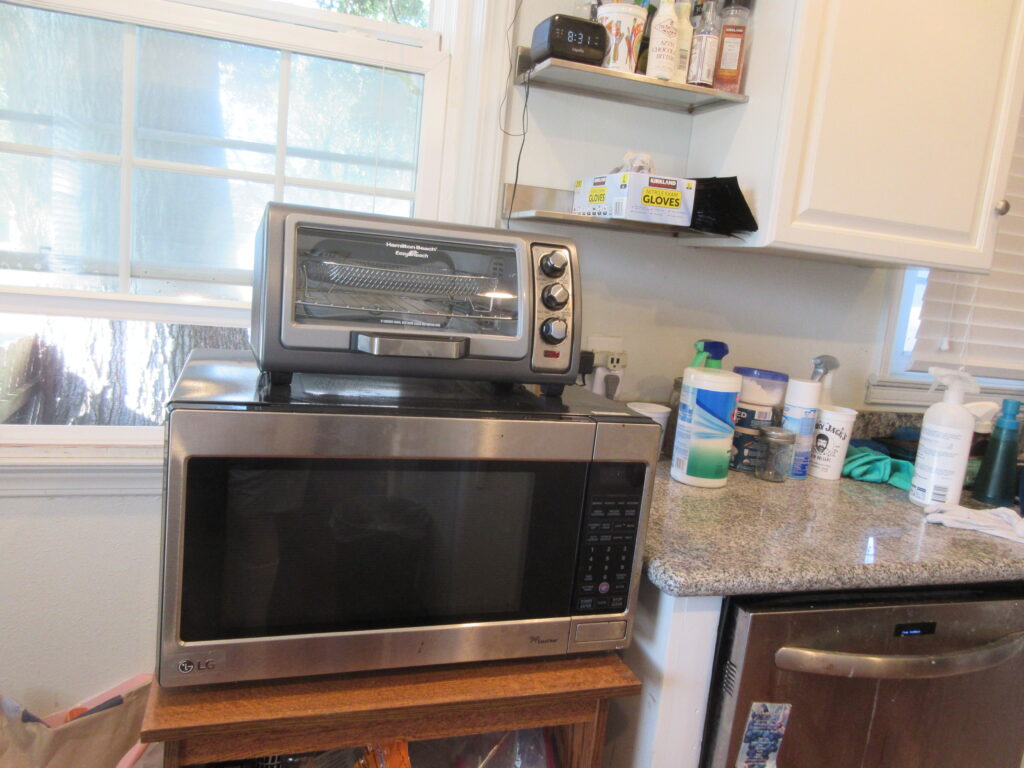
An air fryer is a countertop appliance that cooks food by blowing hot air around it at high speed with a fan, and it is usually described as a small, powerful convection oven rather than a true fryer. Manufacturers and food writers market it as a way to get crispy, fried-style food with far less oil, which raises the question: are air fryers actually healthy?[1][2]
According to published research, the answer depends on the comparison. Against deep frying, air frying usually leaves much less oil in the food, and a 2024 review put the reduction near 80 percent for potato products.[2] Comparisons with baking or roasting are scarce in the sources reviewed here. Findings on acrylamide, a chemical formed in high-heat cooking of starchy foods, are mixed, and no source reviewed here shows that the appliance makes an unhealthy food healthy.[3][4]
| How it cooks | Fan-driven hot air, similar to a convection oven |
|---|---|
| Typical test temperatures | 180 to 200 degrees Celsius in the studies cited here |
| Oil use | About 1 tablespoon or none in many recipes, per Cleveland Clinic |
| Oil in air-fried potato products | About 80 percent lower than deep frying, per a 2024 review |
| Acrylamide | Results range from large reductions to no difference, depending on the study |
How an air fryer works
A heating element warms the air in a compact chamber, and a fan circulates it quickly around food held in a basket or on a rack. The moving air dries the surface of the food and promotes browning through the Maillard reaction, which produces the crisp, golden crust people associate with frying. No pool of oil is needed, although a light coating of oil improves browning. Cleveland Clinic says air fryer recipes typically call for about a tablespoon of oil, or none.[1]
Because the food is not immersed in oil, the name is a loose one. The appliance is closer in principle to an oven, and a 2024 review of air frying technology notes that studies of the method have focused mainly on quality traits such as texture and color rather than on health outcomes.[2]
Oil and calories
The clearest health argument concerns fat. According to Cleveland Clinic, air frying may cut calories that would normally come from deep frying by up to 80 percent.[1] The 2024 review by José Téllez-Morales and Abel Arce-Ortiz, published in Sustainable Food Technology, reports a final oil content about 80 percent lower in air-fried potatoes than in conventionally fried ones. It also reports that final moisture is about 35 percent higher, and that several studies found conventionally fried potatoes had more than twice the fat content.[2]
The figures are not identical across studies, and they apply to potato products rather than to all foods. A 2022 study of French fries in Frontiers in Nutrition did not measure oil content in the air-fried samples at all. It cited a general figure that deep-fried fries carry about 40 percent oil.[3] A 2024 potato study from Gazi University likewise did not measure finished fat content and took the lower-oil advantage from earlier literature.[4] The fat reduction is therefore well supported in direction, while the exact percentage varies with the food, the batter and the recipe.
Fat reduction matters because dietary fat is energy dense. Lower saturated fat intake may help manage LDL cholesterol and cardiovascular risk, according to Medical News Today, though that outlet’s comparison was between fried chicken and oven-roasted chicken rather than between appliances.[5]
Acrylamide
What it is
Acrylamide forms when starchy foods such as potatoes and bread are cooked above about 120 degrees Celsius by baking, frying, grilling, toasting or roasting. The UK government explains that it arises from the Maillard reaction and increases with longer, hotter cooking.[6] The International Agency for Research on Cancer classified acrylamide in 1994 as Group 2A, “probably carcinogenic to humans.”[7] The U.S. Food and Drug Administration says acrylamide caused cancer in laboratory animals at levels much higher than those found in food, and that it is researching whether the lower levels in food pose a risk to people.[8]
The UK government states that the Food Standards Agency’s total diet study found margins of exposure of about 300 for average adults and 120 for toddlers, which indicate public health concern, compared with a margin of 10,000 or more that the European Food Safety Authority considers low concern.[6] Both governments advise limiting browning in home cooking as a precaution.
What studies find for air frying
The studies disagree. In a 2022 experiment, researchers led by Lu Dong air fried potato strips at 180, 190 and 200 degrees Celsius and compared them with deep-fried fries. The deep-fried fries contained 649.75 nanograms of acrylamide per gram. Air-fried samples ranged from 42.12 to 1,598.41 nanograms per gram, rising with temperature and time. The best air-frying condition, 190 degrees for 18 minutes, gave 342.37 nanograms per gram, a 47.31 percent reduction.[3] Air frying at the wrong settings thus produced far more acrylamide than deep frying.
A 2024 study by Semra Navruz-Varlı and Hande Mortaş compared air-fried, deep-fried and oven-fried potato sticks. Mean acrylamide was 12.19 micrograms per kilogram for air frying, 8.94 for deep frying and 7.43 for oven frying, and the differences between methods were not statistically significant. Soaking the raw potatoes for 10 minutes lowered acrylamide in every method, with a statistically significant effect only for deep frying. The authors noted a small sample of 24 and high variability.[4]
The much-quoted claim that air frying cuts acrylamide by 90 percent traces to individual studies. In the 2024 review, one study is listed with a 90 percent reduction, several others found reductions of more than half, and two found no clear difference.[2] A figure of up to 90 percent is therefore a best case and not a typical result.
Practical guidance from regulators
The FDA also notes that acrylamide forms when coffee beans are roasted, a process covered in this entry on coffee roasting, and not when coffee is brewed. For home cooking, the agency advises cooking potatoes and other starchy foods to a golden yellow rather than brown, toasting bread to light brown, and soaking raw potato slices in water for 15 to 30 minutes before frying or roasting. It also advises against refrigerating raw potatoes, noting that this can increase acrylamide during cooking. The UK government, citing a more recent study, says fridge storage does not materially increase formation.[8][6] The two agencies thus agree on the golden-color rule and differ on refrigeration.
What air frying does not change
An air fryer lowers added oil, but it does not change what is in the food. Bacon, battered products and heavily processed items keep their own fat content. Medical News Today stresses that most comparisons are against deep frying and not against baking or grilling, that air-fried food still contains fat, and that the benefits apply when the appliance is used properly.[5] It also reports a 2024 study linking higher fried-food intake to greater risk of obesity, though that finding concerns fried food generally and not air frying specifically, and observational findings of this kind, studied in epidemiology, cannot prove cause.[5]
The same source notes that air fryers get hot, so safe handling matters. Cleveland Clinic dietitian Julia Zumpano recommends limiting oil and heat, never reusing oil, avoiding inhalation of high-heat smoke and using an exhaust fan.[1] These are general precautions for hot cooking rather than risks unique to air fryers.
Bottom line
The evidence supports a narrow conclusion. Replacing deep-fried foods with air-fried versions probably lowers fat intake, which is a plausible health benefit, and the 2024 review notes that the literature has focused mainly on quality traits, with health effects still needing research.[2] Acrylamide results vary, and cooking to a lighter color, soaking potatoes and avoiding long, hot settings are the measures that regulators recommend. For wider context on browning chemistry, see this explainer on what the Maillard reaction is.
FAQs
Are air fryers actually healthy? They can be healthier than deep frying because food absorbs much less oil, but the sources reviewed here do not show an advantage over baking, and they do not improve the nutrition of the food itself.
How much less oil does an air fryer use? A 2024 review reports about 80 percent less oil in air-fried potatoes than in conventionally fried ones, though the figure varies by food and study.
Do air fryers reduce acrylamide? Sometimes. A 2022 study found a 47 percent reduction at the best settings but far higher levels at long, hot settings, and a 2024 study found no significant difference from deep or oven frying.
Is acrylamide known to cause cancer in people? It causes cancer in animals at high doses, and IARC classifies it as probably carcinogenic to humans, but the FDA says it is still researching the risk from the lower levels in food.
How can acrylamide be limited at home? The FDA advises cooking to golden yellow, toasting bread lightly and soaking raw potato slices in water for 15 to 30 minutes before cooking.
More in Health
- Cleveland Clinic, Are Air Fryers Healthy?
- Téllez-Morales and Arce-Ortiz, 2024, Advances in the quality characteristics of fried potato products with air frying technology: a mini review, Sustainable Food Technology
- Dong et al., 2022, Effects of Air Frying on French Fries, Frontiers in Nutrition
- Navruz-Varlı and Mortaş, 2024, Acrylamide formation in air-fried versus deep and oven-fried potatoes, Frontiers in Nutrition
- Medical News Today, Are air fryers healthy?
- UK Government, Acrylamide
- IARC Monographs Volume 60, Acrylamide (1994)
- U.S. FDA, Acrylamide and Diet, Food Storage, and Food Preparation