Yukon Flats National Wildlife Refuge in Interior Alaska covers 8,634,512 acres and is a significant waterfowl breeding ground. It was established on 2 December 1980; Fort Yukon is the nearest city.[1]
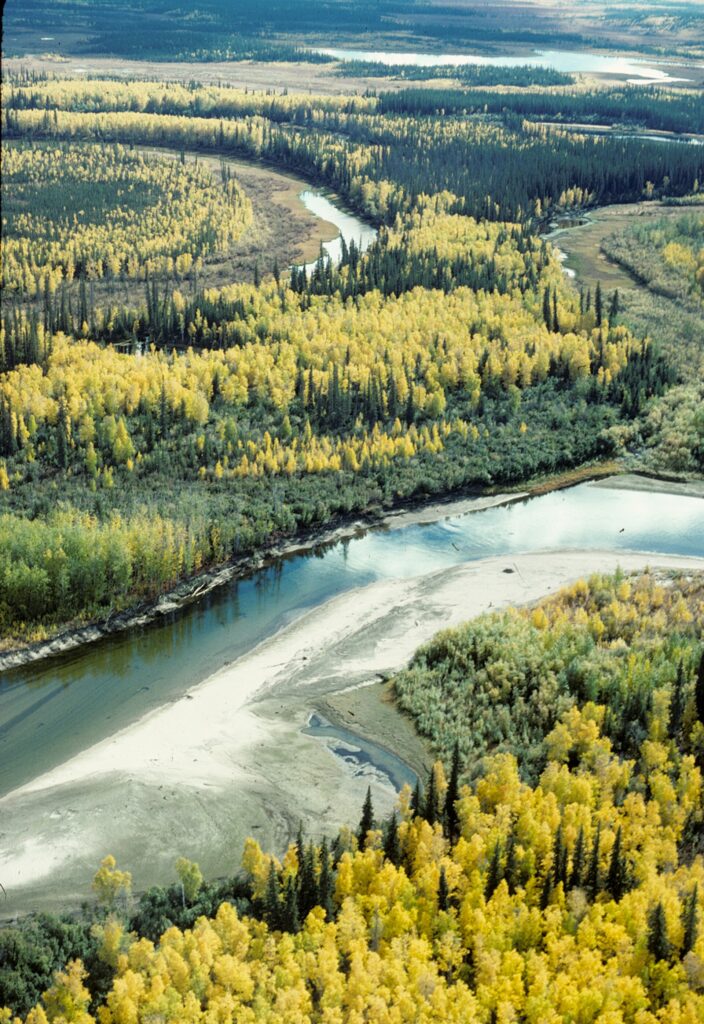
| Area | 8,634,512 acres (about 34,943 km²) |
|---|---|
| Established | 2 Dec 1980 |
| Earlier status | National monument, 1 Dec 1978 |
| Nearest city | Fort Yukon |
| Administered from | Fairbanks |
| Rank | Third-largest national wildlife refuge |
Geography
The refuge lies near the Arctic Circle and protects wetlands across most of the Yukon Flats, a basin centred on the confluence of the Yukon, Porcupine and Chandalar Rivers. It is the third-largest national wildlife refuge in the United States, though less than half the size of the two largest, the Arctic and Yukon Delta refuges. The U.S. Fish and Wildlife Service administers it from offices in Fairbanks.[1]
Wildlife
The area is an important waterfowl breeding ground. Mammals include moose, black and brown bears, wolves, caribou, Dall sheep, Canada lynx, beaver, river otter, red fox, wolverine, mink and muskrat. Birds of prey include bald and golden eagles, four species of falcon and six species of owl.[1]
History
A proposal to dam the Yukon River at Rampart and flood the Flats was rejected, which helped lead to protection of the area. President Jimmy Carter designated it a national monument under the Antiquities Act on 1 December 1978. The Alaska National Interest Lands Conservation Act changed its boundaries and status to a wildlife refuge on 2 December 1980.[1]
FAQs
How large is the refuge? 8,634,512 acres.
When was it established? 2 December 1980.
What is it known for? Waterfowl breeding and a wide range of northern wildlife.
Where is it administered from? Fairbanks.
Sources
Key facts
- 8,634,512 acres
- Established 2 Dec 1980
Quick checkWhich town is nearest to Yukon Flats NWR?Show answer
Fort Yukon
Sources
- Wikipedia. Yukon Flats National Wildlife Refuge. 2026 (accessed 2026-11-12)
Editorially reviewed by Specialty Digest Editorial TeamLast reviewed November 12, 2026Researched and drafted with AI assistanceReport an issue