The snowy owl (Bubo scandiacus) is the heaviest owl in North America. It breeds on Arctic tundra across northern Canada, Alaska and Eurasia, feeds heavily on lemmings, and in years of lemming abundance spreads farther south in winter.[1]
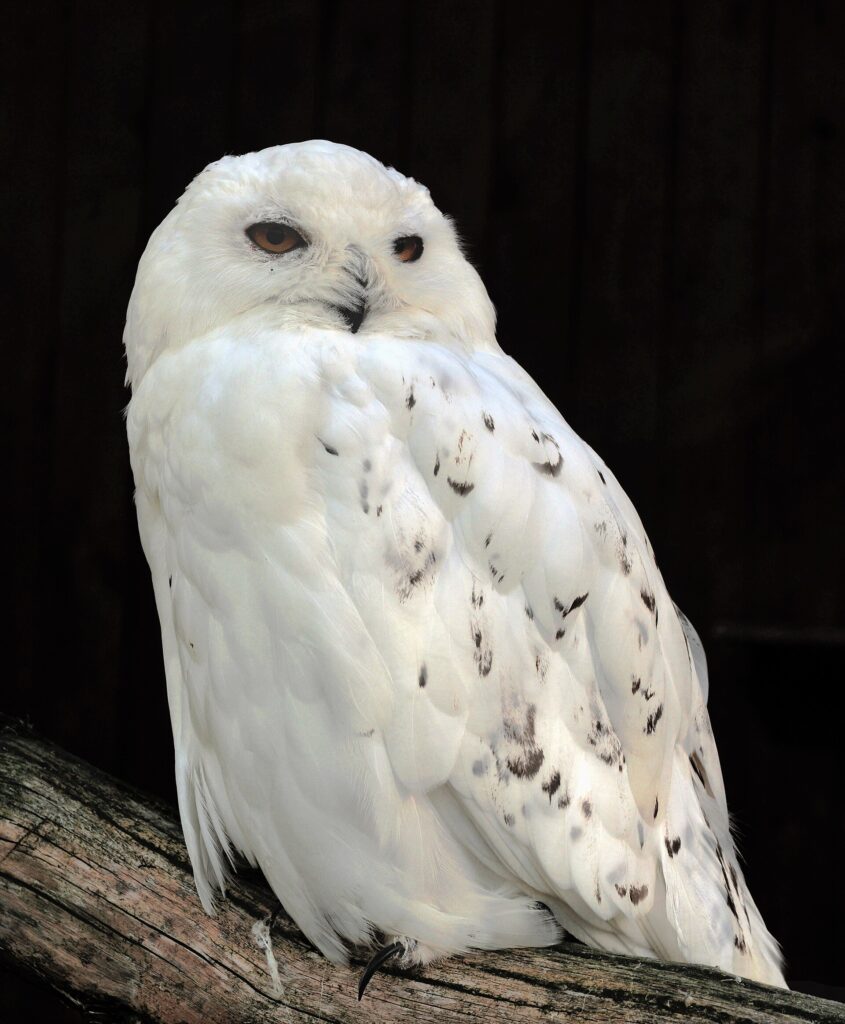
| Scientific name | Bubo scandiacus |
|---|---|
| Weight | 0.7–3.0 kg (1.5–6.6 lb) |
| Length | 0.5–0.8 m |
| Wingspan | 1.3–1.8 m |
| Clutch | 2–16 eggs |
| Incubation | 31–34 days |
Description
The snowy owl is mostly white. Females and juveniles have brown spotting and barring, while males can be nearly all white, and feathers cover the face, legs and talons. It weighs 0.7 to 3.0 kilograms, is 0.5 to 0.8 metres long with a wingspan of 1.3 to 1.8 metres, and females are about 30 percent larger than males.[1]
Range and habitat
The species breeds on Arctic tundra across northern Canada, Alaska and Euro-Siberia. In winter it reaches southern Canada, most often on the Great Plains, favouring flat, open, treeless areas such as marshes, shorelines, farmland and airports.[1]
Diet and lemmings
Snowy owls eat mainly small mammals and waterfowl, with a strong preference for lemmings, and they hunt mostly during the day. Lemmings are the staple summer food, and climate-driven ice crusts on the ground can block lemmings from reaching their food, which may hurt owl breeding and survival. In years when lemmings are abundant, owls breed successfully and spread farther south in greater numbers.[1]
Nesting and conservation
Owls usually begin breeding in their second year and raise one clutch of 2 to 16 eggs each season. Incubation lasts 31 to 34 days, the first flight occurs at 43 to 57 days, and parents feed young for up to three months. The worldwide population fell an estimated 64 percent from 1976 to 2016, and the IUCN listed the species as Vulnerable in 2017.[1]
FAQs
What do snowy owls eat? Mainly lemmings, other small mammals and waterfowl.
Why do they move south some winters? In years of abundant lemmings, more owls breed and spread farther.
Is the snowy owl threatened? The IUCN listed it as Vulnerable in 2017.
Sources
Key facts
- Wingspan 1.3–1.8 m
- IUCN Vulnerable 2017
Quick checkWhat is the snowy owl staple summer food?Show answer
Lemmings
Sources
- The Canadian Encyclopedia. Snowy Owl. 2026 (accessed 2026-11-14)
Editorially reviewed by Specialty Digest Editorial TeamLast reviewed November 14, 2026Researched and drafted with AI assistanceReport an issue