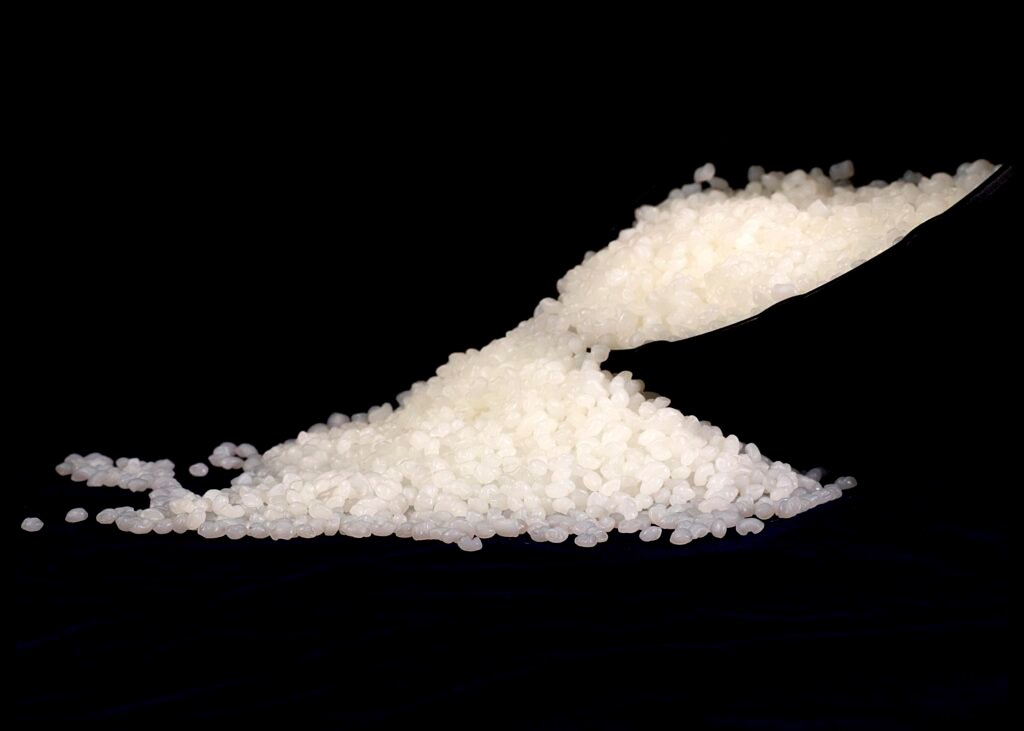
A polymer is a large molecule built from many repeating smaller units, called monomers, chemically linked together into long chains. Polymers make up both natural materials, including cellulose in plant fibers, proteins, and natural rubber, and synthetic materials such as plastics, synthetic rubbers, and many modern fabrics, and their unique combination of light weight, flexibility, and chemical tunability has made them among the most widely used materials in the modern world.
How Polymer Chains Form
Polymers form through chemical reactions that link monomer molecules end to end, a process called polymerization. In addition polymerization, monomers simply add onto a growing chain one after another without losing any atoms along the way. In condensation polymerization, monomers link together while releasing a small byproduct molecule, often water, as each new bond forms. The resulting chains can range from a few hundred to many thousands of repeating units long, and this chain length strongly influences the material’s strength, melting behavior, and flexibility.
Thermoplastics and Thermosets
Polymers are broadly divided into thermoplastics, which soften when heated and can be melted and reshaped repeatedly, and thermosets, which form permanent chemical bonds between chains during curing and cannot be remelted once set. Thermoplastics such as polyethylene and polypropylene are valued for being recyclable and easy to mold into new shapes using heat, making them common in packaging and consumer products. Thermosets such as epoxy resins and many rubbers offer greater heat resistance and structural stability once cured, making them suited to applications such as adhesives, coatings, and composite materials that must hold their shape permanently.
Natural Versus Synthetic Polymers
Many polymers occur naturally, including proteins that fold into complex three-dimensional shapes to perform biological functions, DNA, which stores genetic information as a long chain-like molecule, and natural rubber, harvested from certain tree saps. Synthetic polymers are manufactured industrially, usually starting from petroleum-derived chemical building blocks, and include familiar plastics such as polyethylene, polyvinyl chloride, and polyester, as well as synthetic fibers like nylon. The development of synthetic polymer chemistry in the twentieth century dramatically expanded the range of available materials beyond what nature alone provided.
Properties That Make Polymers Useful
Polymers are prized for being lightweight relative to metals and ceramics, resistant to corrosion, and capable of being molded into complex shapes at relatively low cost and energy compared to metal casting or machining. Their properties can be adjusted by changing the chemical structure of the monomers, blending different polymers together, or adding fillers and additives, allowing engineers to design materials ranging from flexible plastic films to rigid structural composites from a relatively small set of base chemistries.
Environmental Concerns and Plastic Waste
The durability that makes many synthetic polymers useful also means they resist natural breakdown, and plastic waste that is not properly collected and processed can persist in the environment, including oceans, for decades or longer, breaking down into smaller microplastic particles rather than fully decomposing. This has driven growing interest in biodegradable polymers designed to break down more readily under specific conditions, as well as expanded recycling programs, though contamination and the mixing of different polymer types during collection remain significant obstacles to recycling more plastic waste effectively.
History of Polymer Science
Although natural rubber and other natural polymers were used for centuries, the scientific understanding that polymers are long chain molecules rather than loosely associated small molecules was only firmly established in the early twentieth century, largely through the work of chemist Hermann Staudinger. This insight launched the field of polymer chemistry, leading to the development of major synthetic materials such as nylon in the 1930s and a wide range of commodity and specialty plastics in the decades that followed, fundamentally changing manufacturing, packaging, and consumer products.
Composites and Reinforced Polymers
Polymers are frequently combined with reinforcing materials to create composites that outperform either component alone. Fiberglass embeds thin glass fibers within a polymer resin, producing a material that is both lightweight and strong, widely used in boat hulls, automotive panels, and piping. Carbon fiber composites use even stronger, stiffer carbon fibers within a polymer matrix, offering an exceptional strength-to-weight ratio prized in aerospace structures, high-performance vehicles, and sporting equipment such as bicycle frames, though the fibers and resin typically cost more to produce than conventional metals or unreinforced plastics.
Polymers in Everyday Life
Polymers appear throughout daily life in forms that often go unnoticed precisely because they have become so ordinary. Clothing fibers such as polyester and nylon, packaging films, adhesives, paints, and the insulation around electrical wiring all rely on polymer chemistry, as do more specialized applications such as contact lenses, medical tubing, and the binders that hold together composite wood products like particleboard. The sheer range of applications reflects how adjustable polymer chemistry is, since a relatively modest set of chemical building blocks can be combined and processed in countless ways to meet very different performance requirements.
FAQs
What is the difference between a thermoplastic and a thermoset?
Thermoplastics soften when heated and can be melted and remolded repeatedly, while thermosets form permanent chemical bonds during curing and cannot be remelted once set, making them more heat resistant but not recyclable in the same way.
Why do plastics persist so long in the environment?
The strong chemical bonds and large molecular size that give plastics their durability also make them resistant to the natural processes that break down organic matter, causing them to fragment into microplastics rather than fully decompose.
More in Materials Science
Quick checkWhy do plastics persist so long in the environment?Show answer
The strong chemical bonds and large molecular size that give plastics their durability also make them resistant to natural decomposition, causing them to fragment into microplastics instead.
Editorially reviewed by Specialty Digest Editorial TeamLast reviewed November 2, 2026Researched and drafted with AI assistanceReport an issue