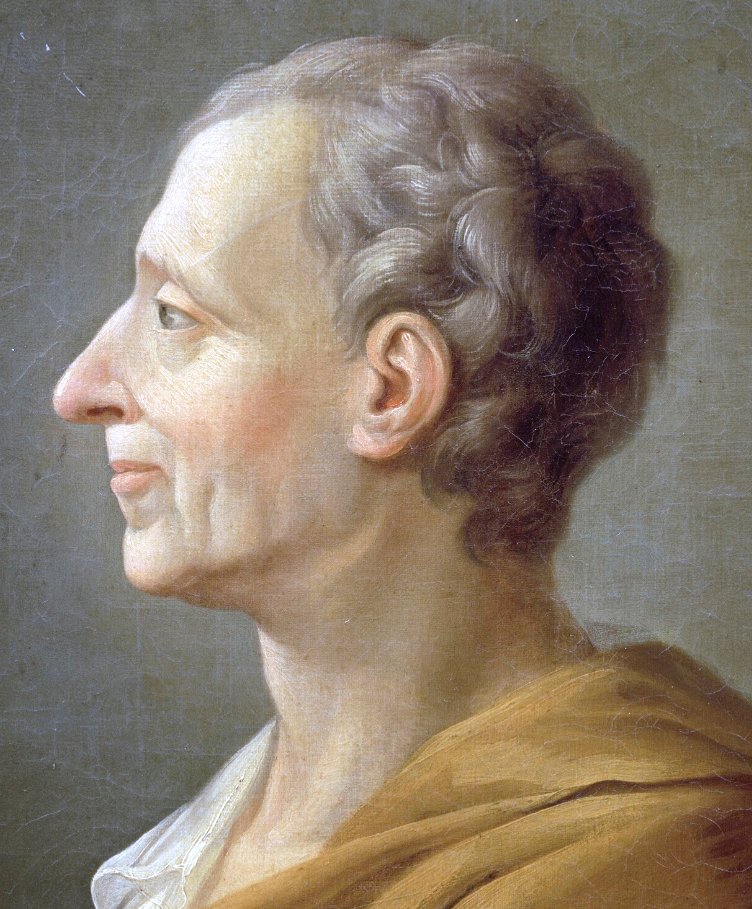
Separation of powers is a model of government organization that divides state authority into separate, independent branches, each holding its own distinct powers, so that no single branch can accumulate enough authority to dominate the others. The eighteenth-century French philosopher Montesquieu is widely credited with coining and popularizing the concept, which has since become a foundational structural principle in the constitutions of the United States and dozens of other countries around the world.
The three branches
In systems built on separation of powers, government authority is typically divided into three branches. The legislative branch makes laws; in the United States, Article I of the Constitution establishes Congress for this purpose. Under a doctrine known as nondelegation, the legislature is generally barred from handing off its core lawmaking authority to another body, though it may authorize executive agencies to issue detailed regulations as long as the legislature supplies what courts call an intelligible principle to guide and constrain that agency’s discretion.
The executive branch approves and enforces the laws the legislature passes; Article II of the US Constitution establishes the presidency for this role. The judicial branch, established under Article III in the American system, interprets the laws and resolves disputes about their meaning and application, including, in many systems, the power to review whether legislation itself complies with the constitution.
Checks and balances
Separation of powers rarely operates as a rigid, airtight division; most systems pair it with checks and balances, mechanisms that let each branch limit the others’ exercise of power, preventing any one branch from becoming too dominant even within its own formal domain. In the US system, Congress passes legislation, but the president holds veto power over it, while Congress can override a presidential veto with a two-thirds majority vote in both chambers.
Courts can strike down laws they find unconstitutional, a power known as judicial review, while the president nominates federal judges, including Supreme Court justices, subject to Senate confirmation, giving the elected branches meaningful influence over who sits on the bench. The House of Representatives holds the power to impeach the president or federal judges for serious misconduct, while the Senate holds the corresponding power to try, convict, and ultimately remove an impeached official from office.
Montesquieu’s influence
Montesquieu developed his theory of separated powers in his 1748 work The Spirit of the Laws, drawing substantially on his own observations and interpretation of the English constitutional system of his time, which he understood, not entirely accurately, as dividing power cleanly among a monarch, a legislature, and an independent judiciary. Though his reading of English government has since been challenged by historians as somewhat idealized, his theoretical framework proved enormously influential among the framers of the United States Constitution, who explicitly cited his work while designing the new federal government’s structure in the late eighteenth century.
The resulting American system, sometimes called the Madisonian model after James Madison’s own extensive contributions to its design, deliberately built in considerable friction between the branches, reflecting a core belief that ambition must be made to counteract ambition, in Madison’s own memorable phrase, rather than relying on the good intentions of any single set of officeholders to prevent an abuse of power.
Separation of powers around the world
Not every democracy structures its government around a strict separation of powers in the American style. Parliamentary systems, including the United Kingdom‘s, instead fuse legislative and executive power to a significant degree, since the executive, the prime minister and cabinet, is drawn directly from and remains accountable to the legislature, the opposite of the American model’s insistence on independently elected, separately accountable branches. Many countries nonetheless maintain a genuinely independent judiciary even within an otherwise fused parliamentary system, preserving at least one meaningful separation between the branch that interprets law and the branches that make and enforce it.
Federal countries add a further layer of complexity, dividing power not only among the traditional three branches but also between a national government and various regional or state governments, a related but analytically distinct concept generally discussed under the separate heading of federalism rather than separation of powers in the narrower, single-level sense described here.
Criticisms and ongoing debates
Separation of powers has long faced criticism alongside its widespread adoption. Some scholars argue that strict separation can produce gridlock, particularly when different branches controlled by rival political factions refuse to cooperate, leaving pressing problems unresolved while each branch blames the other for the resulting dysfunction. Others note that the modern growth of executive agencies, which often combine rulemaking, enforcement, and adjudicatory functions within a single body, sits uneasily with a theory originally built around three cleanly distinct branches, prompting ongoing legal and political debate over how much of this blended authority is consistent with the separation of powers principle in its original form. Despite these tensions, the core underlying goal, preventing any single set of officeholders from accumulating unchecked power, remains broadly influential across a wide range of constitutional democracies, even where the specific institutional design departs significantly from Montesquieu’s original three-branch model.
FAQs
- Who is credited with popularizing the concept of separation of powers? The eighteenth-century philosopher Montesquieu is widely credited with coining and popularizing the modern concept.
- What are the three branches of government in a separation of powers system? The legislative branch (which makes laws), the executive branch (which enforces laws), and the judicial branch (which interprets laws).
- Do all democracies use strict separation of powers? No. Parliamentary systems, like the United Kingdom’s, fuse legislative and executive power to a significant degree, since the executive is drawn from and accountable to the legislature, unlike the American model.
Key facts
- Concept popularized by the 18th-century philosopher Montesquieu
- Three branches: legislative, executive, judicial
- US Constitution: Article I (Congress), Article II (presidency), Article III (courts)
- Checks and balances include veto power, veto override, judicial review, and impeachment
- The nondelegation doctrine limits how much lawmaking power the legislature can hand to agencies
Quick checkWho is credited with popularizing the concept of separation of powers?Show answer
The eighteenth-century philosopher Montesquieu is widely credited with coining and popularizing the concept.
Sources
- Cornell Law School Legal Information Institute, 'Separation of Powers', https://www.law.cornell.edu/wex/separation_of_powers_0
Editorially reviewed by Specialty Digest Editorial TeamLast reviewed November 2, 2026Researched and drafted with AI assistanceReport an issue