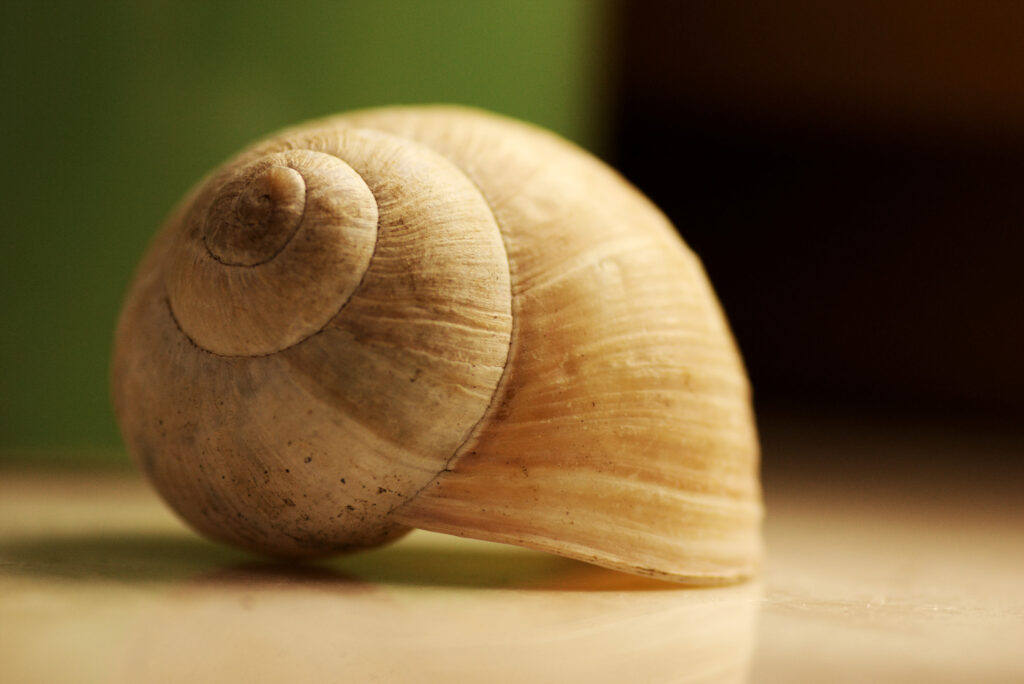
Snail mucin, listed on ingredient labels as snail secretion filtrate, is the mucus that garden snails release, collected and filtered for use in cosmetics. It became a staple of Korean beauty, or K-beauty, products such as serums, essences, creams and sheet masks, which are marketed for hydration, smoother texture and a dewy finish. Consumers and researchers alike ask: does snail mucin skincare actually work?[1][2]
The short answer from the published evidence is limited and qualified. A systematic review of 10 clinical studies found improvements in skin hydration markers, roughness, elasticity and wrinkles, but the studies were small, several lacked control groups, and many tested multi-ingredient products.[2] Cleveland Clinic describes the clinical trials as mostly small and notes that the benefit of snail mucin on its own is hard to isolate.[1] The strongest claims, such as scar removal or reversal of aging, go beyond the data.
| Also called | Snail secretion filtrate, snail slime, snail mucus |
|---|---|
| Main component | Water, with smaller amounts of hyaluronic acid, glycolic acid, allantoin, collagen, elastin and peptides |
| Best-supported effect | Moisturizing, mostly in small human studies |
| Systematic review | 10 clinical studies, 5 of them randomized controlled trials |
| Main limits | Small samples, few long-term data, mixed formulas |
Origins and production
According to National Geographic, ancient Greeks reportedly applied snail slime to inflamed skin. The modern vogue is traced to the 1980s, when Chilean snail farmers who handled snails for the French food market noticed softer hands and faster-healing cuts, which helped launch snail creams in South America. A later South Korean boom spread the products through social media. The magazine cites a market-research estimate that the global market was worth about $555 million in 2022.[3]
Harvesting methods vary by farm. Some let snails crawl over nets so that slime drips into pans, and others use misting chambers that induce secretion. The mucus is released as a stress response, and output changes with diet and collection method.[3] Lab Muffin reports that snails are stressed, for example with salty water, but not killed, and that the degree of harm is unquantified.[4] A 2023 review notes that older methods crushed or killed the animals, and it describes newer extractors that use ozonized water to stimulate secretion without harming them.[5]
What snail mucin contains
Snail mucin is mostly water. According to Cleveland Clinic, it also contains hyaluronic acid, glycolic acid, allantoin, collagen, elastin, and other peptides and proteins.[1] Several of these are familiar cosmetic ingredients. Hyaluronic acid and similar humectants attract and hold water in the outer layer of skin. Allantoin is used as a soothing agent. Glycolic acid is a mild exfoliant.
The exact makeup is not fixed. Cleveland Clinic notes that composition varies with the type of snail and with how the mucus is collected and processed, so the contents of one product cannot be assumed from another.[1] Product labels do not always state the concentration of the filtrate. A 2023 review in Natural Products and Bioprospecting puts water at 90 to 99.7 percent of fresh slime, with glycoproteins, enzymes, proteoglycans, antimicrobial peptides and metal ions in the remaining 0.3 to 10 percent.[5] The Lab Muffin Beauty Science site, which reviews cosmetic research, points out that collagen and elastin molecules are probably too large to penetrate the skin, so their presence in the ingredient does not by itself imply an effect on the skin’s own collagen.[4]
Laboratory research
Much of the clinical research involves a specific filtrate from the garden snail Cryptomphalus aspersa, abbreviated SCA in the literature.[2] Laboratory work on this filtrate examined how skin cells called keratinocytes and fibroblasts multiply, migrate and survive in culture. The Lab Muffin review cites such studies but cautions that results in cultured cells may not carry over to human skin.[4] Cell studies of this kind are an early step in research, and they are usually followed by human clinical trials before a benefit is claimed.
Laboratory results are encouraging but preliminary. National Geographic describes a 3D skin-model study in which skin treated with snail mucus extract showed less inflammation after ozone exposure. Dermatologist Elizabeth Bahar Houshmand told the magazine that more, large clinical trials are needed.[3] The 2023 review likewise concludes that more research is required to understand the mechanisms, and that many findings come from cell, animal or small studies.[5]
What human studies show
The systematic review
A systematic review collects every study that meets set criteria and appraises them together. It differs from a meta-analysis, which pools the numbers statistically. The review, published in the Journal of Integrative Dermatology, searched PubMed, Embase and Cochrane and included 10 clinical studies. Five were randomized controlled trials and five were open-label or uncontrolled. Most participants were adult women with facial photoaging, meaning skin changes from sun exposure. Other groups included people with acne linked to prolonged mask use and cancer patients receiving radiation therapy.[2]
The reviewers reported improvements in transepidermal water loss, skin roughness, elasticity and wrinkles. They also noted that snail secretion reduced inflammatory acne in one trial and reduced side effects and sped healing after laser treatment.[2] The same authors listed serious limitations: small samples, missing control groups, a lack of long-term follow-up, and products that combine several active ingredients, which makes it hard to credit the snail component. They also described the antimicrobial evidence as limited.[2] The review did not use a formal certainty-grading system, and some details in its tables and text do not agree with each other, which is a further reason for caution.
A randomized split-face trial
One of the better-designed studies is a 2013 trial in the Journal of Drugs in Dermatology by Sabrina Fabi and colleagues. It was a two-center, double-blind, randomized, split-face study of 25 patients with moderate to severe facial photodamage. One side of each face received an emulsion with 8 percent snail secretion and a serum with 40 percent, and the other side received a placebo. After 12 weeks of daily use, wrinkles around the eyes on the treated side had improved significantly (P = .03), and skin texture was better on the treated side. Patients reported significant improvement in fine lines at week 8, but not a significant difference in overall skin quality.[6] The study was small and short, so it supports a modest effect rather than a transformation.
Wounds and burns
Lab Muffin summarizes a 2009 study by Tsoutsos and colleagues of 27 adults with deep partial-thickness facial burns, in which snail slime appeared to speed wound healing.[4] Cleveland Clinic similarly calls the wound-healing evidence a small, older study of a cream for certain burns.[1] Lab Muffin concludes that the evidence for regeneration of intact skin is scarce, and that the improvements seen in photoaged skin are probably due largely to moisturizing.[4]
What the evidence does not show
Several popular claims lack human support. No study in the sources reviewed here shows that snail mucin cures eczema, removes established scars or reverses aging. The Lab Muffin review lists a small double-blind trial in 20 people with atopic dermatitis and describes the result as unspectacular.[4] Aesthetician Ashlyn Yanke, quoted by Cleveland Clinic, said there is not enough evidence to suggest pure snail mucin is beneficial on its own.[1]
Two features of the research limit what can be concluded. First, most products are mixtures, so a result for a cream containing snail filtrate, humectants and other actives cannot be attributed to the snail component. Second, many studies were open-label, meaning participants knew what they were using. Expectation can shape self-reported skin quality, a pattern discussed in the literature on the placebo effect. A randomized controlled trial with a matching placebo is the standard way to separate the two, and only half of the studies in the systematic review met that design.[2]
Safety and use
Cleveland Clinic advises starting with a small patch of skin, such as behind the ear, when trying a new product, because skin may not tolerate it. It recommends caution for people with acne or eczema, since some products containing snail mucin could worsen flare-ups, and it notes that products may be too much for reactive or sensitive skin. Heavy hydration can also clog pores in some people, so a person who breaks out can scale back other moisturizers.[1] The clinic discourages snail facials in which live snails crawl on the face, because snail trails can carry bacteria, feces and other matter.[1]
The sources reviewed here do not give a reliable rate of allergic reactions to snail mucin. Anyone with a history of reactions to cosmetics, or with a skin condition, can ask a dermatologist before adding a new active product. Regulation is also light. The U.S. Food and Drug Administration states that cosmetic products and ingredients generally need no FDA approval before sale, that companies are legally responsible for their safety, and that the law does not require specific safety tests. A product intended to treat disease or affect the body’s structure or function is a drug even if it also changes appearance.[7] For a different skincare product with a better-understood mechanism, see this explainer on whether pimple patches work.
Evidence summary
Taken together, the research supports a cautious reading, and the label of a product often says less than its marketing implies. Moisturizing and small improvements in texture and fine lines are plausible, based on randomized and uncontrolled human studies of modest size. Regeneration, anti-aging and disease-treatment claims rest mainly on cell studies, animal work, small burn studies or uncontrolled trials. Larger, longer, independent trials that test a defined concentration against a plain moisturizer would be needed to show whether the snail component adds anything beyond ordinary humectants. Cleveland Clinic makes a similar point, recommending that anyone unsure whether a product suits their skin consult an aesthetician or dermatologist. Readers weighing a purchase can check how a product states its filtrate content, and can treat claims of dramatic results as unproven.[1][2]
FAQs
Does snail mucin skincare actually work? It probably helps skin hold moisture, and small studies report modest gains in texture and fine lines, but the evidence is limited and often involves multi-ingredient products.
What is in snail mucin? Mostly water, plus hyaluronic acid, glycolic acid, allantoin, collagen, elastin and other peptides and proteins, according to Cleveland Clinic. The exact mix varies by product.
Is snail mucin proven to reverse aging or cure eczema? No. The sources reviewed here found no human evidence for an eczema cure, and anti-aging findings come from small or uncontrolled studies.
Is snail mucin safe for sensitive or acne-prone skin? Cleveland Clinic advises a patch test first and caution with acne or eczema, because some products may worsen flare-ups.
Are snail facials with live snails recommended? No. Cleveland Clinic discourages them because snail trails can carry bacteria and other matter.
More in Health
- Cleveland Clinic, Snail Mucin Skincare
- Journal of Integrative Dermatology, Snails and Skin: A Systematic Review on the Effects of Snail-Based Products on Skin Health
- National Geographic, Snail mucin and skin care
- Lab Muffin Beauty Science, Snail Slime Skincare Science
- Rashad et al., 2023, Biological activities of gastropods secretions: snail and slug slime, Natural Products and Bioprospecting
- Fabi et al., 2013, The Effects of Filtrate of the Secretion of the Cryptomphalus aspersa on Photoaged Skin, PubMed
- U.S. Food and Drug Administration, FDA Authority Over Cosmetics: How Cosmetics Are Not FDA-Approved, but Are FDA-Regulated