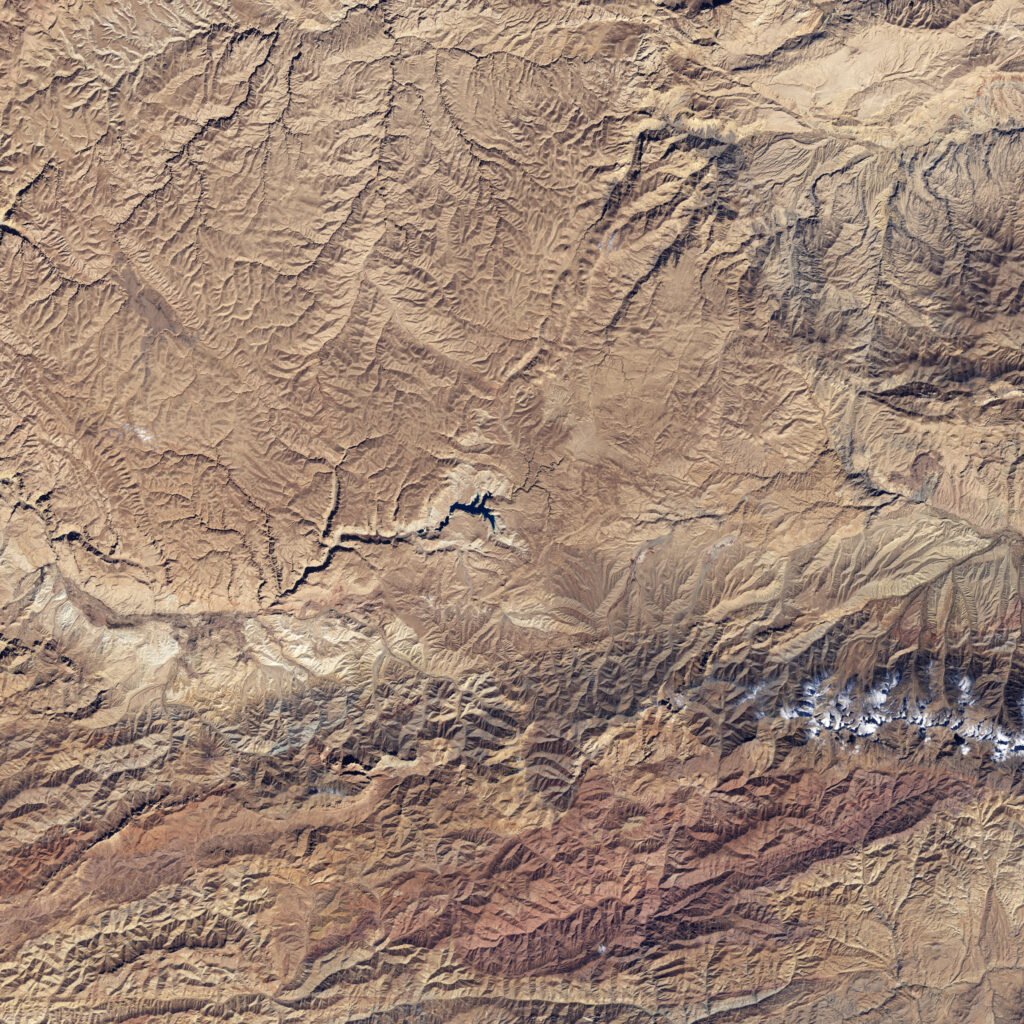
Afghanistan is a landlocked country in South and Central Asia, bordered by Pakistan to the south and east, Iran to the west, and Turkmenistan, Uzbekistan and Tajikistan to the north, with a narrow strip in the northeast, the Wakhan Corridor, touching China. Its capital and largest city is Kabul. The country’s rugged, mountainous terrain, dominated by the Hindu Kush range, has shaped its history as a crossroads of trade and conquest for thousands of years.
Where Is Afghanistan Located?
Afghanistan sits at the meeting point of South Asia, Central Asia and the Middle East, a position that made it a key link on the historic Silk Road. Most of the country is mountainous or semi-arid, with the Hindu Kush mountains running through the center and northeast. This terrain has long made overland travel difficult and has shaped settlement patterns around river valleys and a handful of major cities, including Kabul, Herat, Kandahar and Mazar-i-Sharif.
A Brief History
Afghanistan’s location on major trade and invasion routes exposed it to a long succession of empires, including Persian, Greek, Mauryan, and various Central Asian dynasties, before it took shape as a distinct political entity in the eighteenth century. The twentieth and twenty-first centuries brought repeated conflict: the Soviet invasion and occupation from 1979 to 1989, a civil war and the rise of the Taliban in the 1990s, the United States-led intervention beginning in 2001, and the Taliban’s return to power in August 2021 following the withdrawal of international forces. That transition triggered a sharp economic contraction, according to the World Bank, as international aid was reduced and Afghanistan lost access to the international banking system and offshore reserves (World Bank).
Government and Economy Today
Afghanistan today is governed by the Taliban, which has not been formally recognized as the government by most of the international community. The World Bank reports that Afghanistan’s economy has shown a degree of resilience in 2024 and 2025, supported by low inflation, improved domestic revenues, and demand linked to returning migrants, with growth led by agriculture, mining, construction and services. Even so, the World Bank notes that living standards remain under pressure: rapid population growth, high youth unemployment and restrictions on women’s economic participation remain significant constraints on durable, inclusive growth (World Bank).
Culture and People
Afghanistan is home to a mix of ethnic groups, including Pashtuns, Tajiks, Hazaras and Uzbeks, each with distinct languages and traditions; Dari and Pashto are the country’s official languages. Islam shapes daily and civic life throughout the country. Centuries as a crossroads of trade left a rich architectural and cultural legacy, including historic sites in cities such as Herat and Balkh, though decades of conflict have damaged or endangered much of this heritage.
What Is Afghanistan Known For?
Afghanistan is best known internationally for its mountainous, strategically significant geography; its long history as a crossing point between civilizations; and the conflicts of the past half-century, from the Soviet occupation to the most recent Taliban takeover. It is also known for its cultural depth, including a tradition of poetry and craftsmanship, and for the resilience of its population through decades of war and instability.
Key Takeaways
- Afghanistan is a landlocked, mountainous country at the crossroads of South Asia, Central Asia and the Middle East, with Kabul as its capital.
- Its location made it a historic hub of trade and, repeatedly, of conflict and invasion.
- The Taliban returned to power in August 2021 after the withdrawal of international forces, triggering a sharp economic contraction.
- The World Bank reports a degree of economic resilience in 2024 to 2025, though unemployment, restricted women’s economic participation and aid dependency remain major constraints.
- The population is ethnically diverse, with Pashtuns, Tajiks, Hazaras and Uzbeks among the largest groups, and Islam central to civic and daily life.
Key facts
- Capital and largest city: Kabul1
- Landlocked, bordered by Pakistan, Iran, Turkmenistan, Uzbekistan, Tajikistan and a narrow border with China1
- Official languages: Dari and Pashto1
- Governed by the Taliban since August 2021, not formally recognized by most of the international community2
- Economy showed resilience in 2024 to 2025 but remains constrained by unemployment and aid dependency2
Quick checkWhat geographic feature has most shaped Afghanistan's history as a crossroads of trade and conflict?Show answer
Its position at the meeting point of South Asia, Central Asia and the Middle East, astride the historic Silk Road and dominated by the Hindu Kush mountains.
Sources
- World Bank. Afghanistan Overview. Undated, accessed 2026 (accessed 2026)
Editorially reviewed by Specialty Digest Editorial TeamLast reviewed September 22, 2026Researched and drafted with AI assistanceReport an issue