Alaska ghost towns are former communities that have been abandoned or have shrunk dramatically, ranging from sites with standing buildings to places that have returned to wilderness. Causes include the end of gold and copper mining, fires, floods, avalanches, erosion, earthquakes, and epidemics [1].
| Type | Abandoned or greatly diminished communities |
|---|---|
| Regions | Southeast, Southcentral, Interior, Western and Northern Alaska, Aleutians and Kodiak |
| Common causes | Mine closures, fire, flood, avalanche, erosion, earthquake, epidemic |
Definition
The Wikipedia list of ghost towns in Alaska describes them as places ranging from sites with standing buildings to sites that have returned to wilderness, and sorts them by condition from fully abandoned to still-active communities that have shrunk. The list itself is incomplete [1].
Mining towns
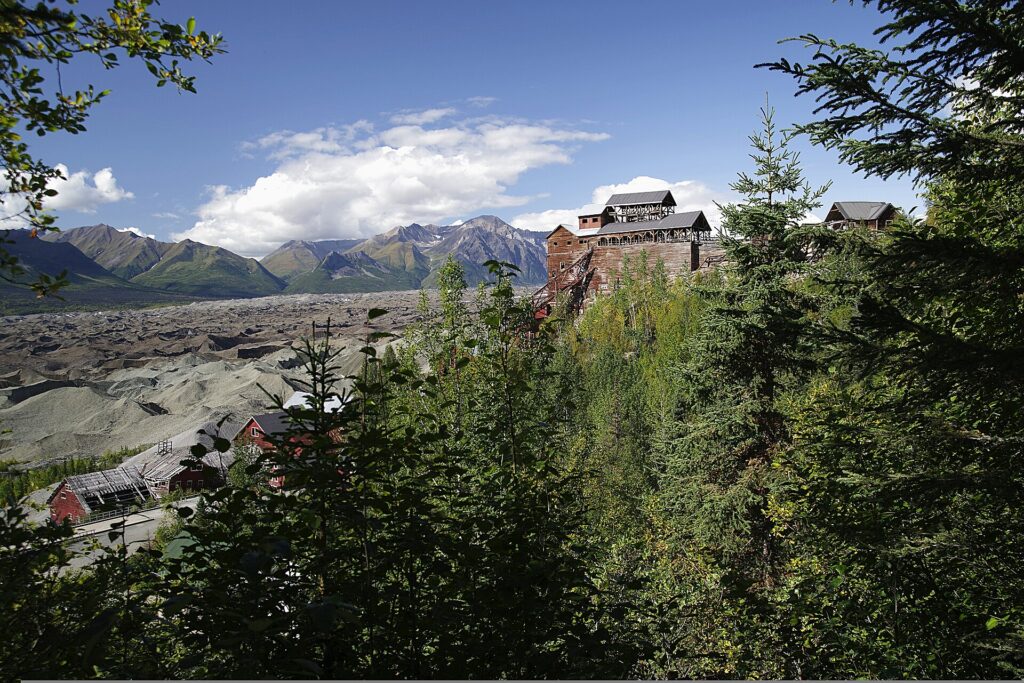
Several sites were tied to mining. Amalga near Juneau was a mining town from 1902 to 1927, abandoned when the Eagle River Mine closed. Coldfoot was a mining boom town that declined when the mines ran dry in 1912. Kennicott in the Copper River region was abandoned in 1938 and lies about 4.5 miles from McCarthy [1]. Flat, a gold rush town in the Yukon-Koyukuk area, existed from 1909 to 2004 and never recovered from a 1924 fire [1].
Natural disasters
Katmai on Kodiak Island was buried in ash from the 1912 eruption of Mount Katmai. The original village of Chenega was destroyed by a tsunami from the 1964 earthquake and resettled as Chenega Bay. Afognak, an Alutiiq village, was abandoned in 1964 after the Good Friday earthquake. Dyea near Skagway is known for the cemetery called The Slide, where nearly everyone buried died in an 1898 avalanche [1].
Other causes
York near Nome lost every resident to the 1918 influenza epidemic, and Ayak was abandoned around 1918. Tikigaq at Point Hope was abandoned because of erosion, and Old Minto because of repeated flooding. King Island near Nome was abandoned in 1970 after school closures forced families to leave [1].
Other notable sites
Attu in the Aleutians was the site of the only land battle fought in the United States during World War II. Aurora on the Kenai Peninsula was a 1901 settlement built around a failed hoax by businessman Thomas C. Dunn, and Chena was an 1903 boom town whose exact location was lost until it was found beneath a Fairbanks suburb [1].
FAQs
What is an Alaska ghost town? A former community that has been abandoned or has greatly shrunk, from sites with standing buildings to places that returned to wilderness [1].
When was Kennicott abandoned? Kennicott was abandoned in 1938 [1].
What destroyed Katmai? It was buried in ash from the 1912 eruption of Mount Katmai [1].
Sources
Key facts
- Kennicott abandoned in 1938
- Katmai buried by the 1912 eruption
Quick checkWhat are some Alaska ghost towns?Show answer
Examples include Kennicott, Katmai, Dyea, Flat, Coldfoot, Afognak and York.
Sources
- Wikipedia. List of ghost towns in Alaska (accessed 2026-11-14)
Editorially reviewed by Specialty Digest Editorial TeamLast reviewed November 14, 2026Researched and drafted with AI assistanceReport an issue