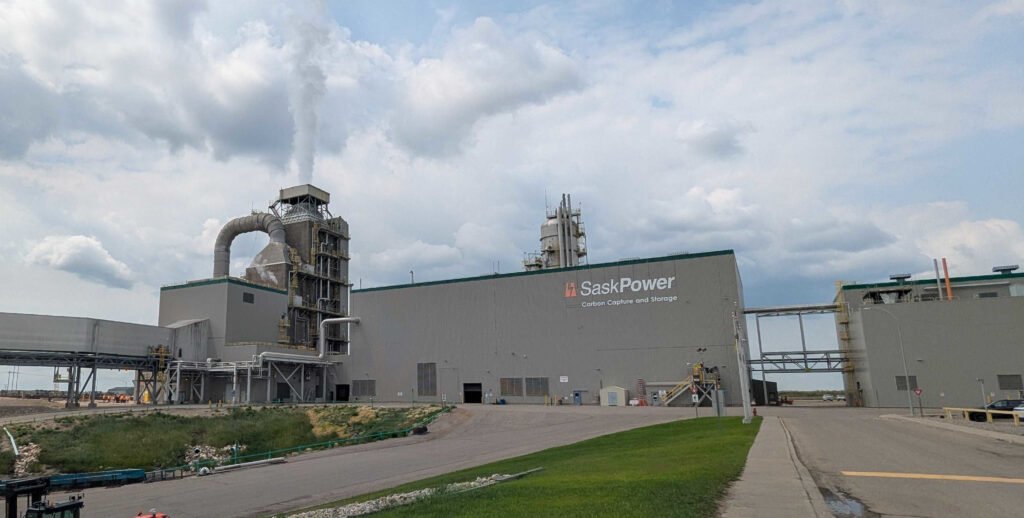
Carbon capture and storage (CCS) is a set of technologies that capture carbon dioxide (CO2) from industrial plants or power stations, move it to a storage site and inject it deep underground so it stays out of the atmosphere. It targets emissions from sources such as fossil-fuel power plants, cement kilns, steel mills and gas processing. CCS does not stop CO2 from being produced, so it is usually discussed as one tool alongside efficiency and renewable energy.
History of carbon capture and storage
Separating CO2 from gas streams is an old industrial practice, used for decades in natural gas processing and chemical production. Injecting CO2 underground for oil recovery is also long established. Storing it permanently as a climate measure is newer, and it began at industrial scale in the North Sea.
The U.S. Department of Energy (DOE) describes the Sleipner gas field in the North Sea as the world’s first and longest running carbon storage operation. In a 2009 announcement, DOE said more than 10 million tonnes of CO2 had been stored in a sandstone reservoir about 1 kilometer deep, and that researchers from the Scripps Institution of Oceanography and the Lamont-Doherty Earth Observatory would use gravity meters on the seafloor to track the injected gas.
A later milestone came on land. DOE reported in 2017 that the Petra Nova project near Houston, Texas, had begun commercial operations on January 10, 2017, and then captured more than 1 million tons of CO2. DOE called it the world’s largest post-combustion carbon capture system at that time.
How carbon capture and storage works
CCS has three stages: capture, transport and storage. In the capture stage, CO2 is separated from other gases. At a power plant this is often done on the exhaust, or flue gas, by passing it through a liquid that binds CO2. DOE says Petra Nova used an advanced amine-based process, developed by Mitsubishi Heavy Industries and Kansai Electric Power, in which a high-performance solvent separates CO2 from the flue gas, removing 90 percent of the CO2 in the stream it treated.
In the transport stage, the captured CO2 is dried and compressed so that it becomes a dense fluid, then moved by pipeline, and in some cases by ship or truck. Compression takes energy, which is one of the costs of the system.
In the storage stage, CO2 is injected through wells into deep rock formations. The U.S. Environmental Protection Agency (EPA) regulates this under its Class VI well program, which covers wells used to inject CO2 into deep rock formations for long-term underground storage, a practice it calls geologic sequestration. Operators must define an area of review, build wells so CO2 and formation fluids cannot leak out of the injection zone, and monitor the site. Each Class VI project has pre-permitting, pre-construction, pre-operation, injection and post-injection phases, and each well needs a permit to construct and operate it through site closure.
Types of carbon capture
Engineers describe capture by where it happens in a process. Post-combustion capture removes CO2 from the exhaust after fuel is burned, as at Petra Nova, and can be added to existing plants. Pre-combustion capture converts fuel into a mixture of hydrogen and CO2 before burning, so the CO2 can be removed from a concentrated stream. Oxy-fuel combustion burns fuel in nearly pure oxygen, which produces an exhaust that is mostly CO2 and water vapor.
Some industrial processes release nearly pure CO2, such as certain fertilizer and gas-processing operations, and these are the cheapest places to capture it. Direct air capture is a different approach that pulls CO2 from ambient air. It is energy-intensive because the gas is far more dilute there.
On the storage side, CO2 can be placed in deep saline formations, in depleted oil and gas fields, or in unmineable coal seams. Using CO2 to recover more oil, as Petra Nova did, is sometimes called carbon capture, utilization and storage.
Applications of carbon capture and storage
Power generation was the first large target. DOE reports that CO2 captured at Petra Nova was used for enhanced oil recovery at the West Ranch Oil Field, where oil production rose from 300 barrels per day to about 4,000 barrels per day. That example shows a trade-off: the CO2 was stored but also helped to produce more oil, which will itself be burned.
CCS is also considered for industries that have few other ways to cut emissions. Cement making releases CO2 from the chemistry of limestone itself, not only from fuel. Steel, chemicals and hydrogen produced from natural gas are other candidates. A related use is the burial of CO2 from biomass fuels, which could remove CO2 from the air.
Advantages and disadvantages of carbon capture and storage
The main advantage is that CCS can reduce emissions from large point sources that are hard to replace quickly. It can be fitted to existing plants and uses geology that, at suitable sites, can hold CO2 for very long periods. At Sleipner, DOE-funded researchers planned seafloor gravity surveys to track the injected CO2.
The disadvantages are cost, energy and risk. Capture equipment uses extra energy, which lowers a plant’s net output. Projects need large up-front investment, pipelines and suitable geology. Leakage from a poorly sealed well or a fault is a concern, which is why EPA’s Class VI program sets well construction and monitoring requirements. Public acceptance near pipelines and storage sites also affects whether projects go forward.
Critics point out that CCS can prolong the use of fossil fuels, and capture rates below 100 percent leave some emissions in place. Supporters argue that it is needed for sectors that cannot easily be electrified. How much of it is deployed depends on policy, costs and demand.
Carbon capture and storage vs. carbon sinks
A natural carbon sink, such as a forest or the ocean, absorbs CO2 that is already in the air. CCS instead intercepts CO2 at its source, before it reaches the atmosphere, or in the case of direct air capture takes it from the air with machines. Both aim to limit the build-up of CO2 behind climate change. The information here is general background and not policy or investment advice.
More in Energy
Key facts
- EPA Class VI wells inject CO2 into deep rock formations for long-term underground storage, called geologic sequestration.1
- Sleipner in the North Sea is described by DOE as the first and longest running carbon storage operation; more than 10 million tonnes had been stored by 2009.2
- Petra Nova began commercial operations on January 10, 2017, and DOE reported it captured more than 1 million tons of CO2.3
- Petra Nova used an amine-based solvent that removed 90 percent of the CO2 in the flue gas stream it treated.3
- Each Class VI well requires a permit to construct and operate it through site closure.1
Related concepts
Quick checkWhere is captured carbon dioxide stored?Show answer
It is injected through wells into deep rock formations such as saline formations or depleted oil and gas fields. In the United States, EPA regulates this under its Class VI well program.
Sources
- 1. U.S. Environmental Protection Agency, Class VI - Wells used for Geologic Sequestration of Carbon Dioxide, https://www.epa.gov/uic/class-vi-wells-used-geologic-sequestration-co2
- 2. U.S. Department of Energy, DOE Study Monitors Carbon Dioxide Storage in Norway's Offshore Sleipner Gas Field (21 May 2009), https://www.energy.gov/hgeo/articles/doe-study-monitors-carbon-dioxide-storage-norways-offshore-sleipner-gas-field
- 3. U.S. Department of Energy, DOE-Supported Petra Nova Captures More Than 1 Million Tons of CO2 (2017), https://www.energy.gov/hgeo/articles/doe-supported-petra-nova-captures-more-1-million-tons-co2
Editorially reviewed by Specialty Digest Editorial TeamLast reviewed November 4, 2026Researched and drafted with AI assistanceReport an issue