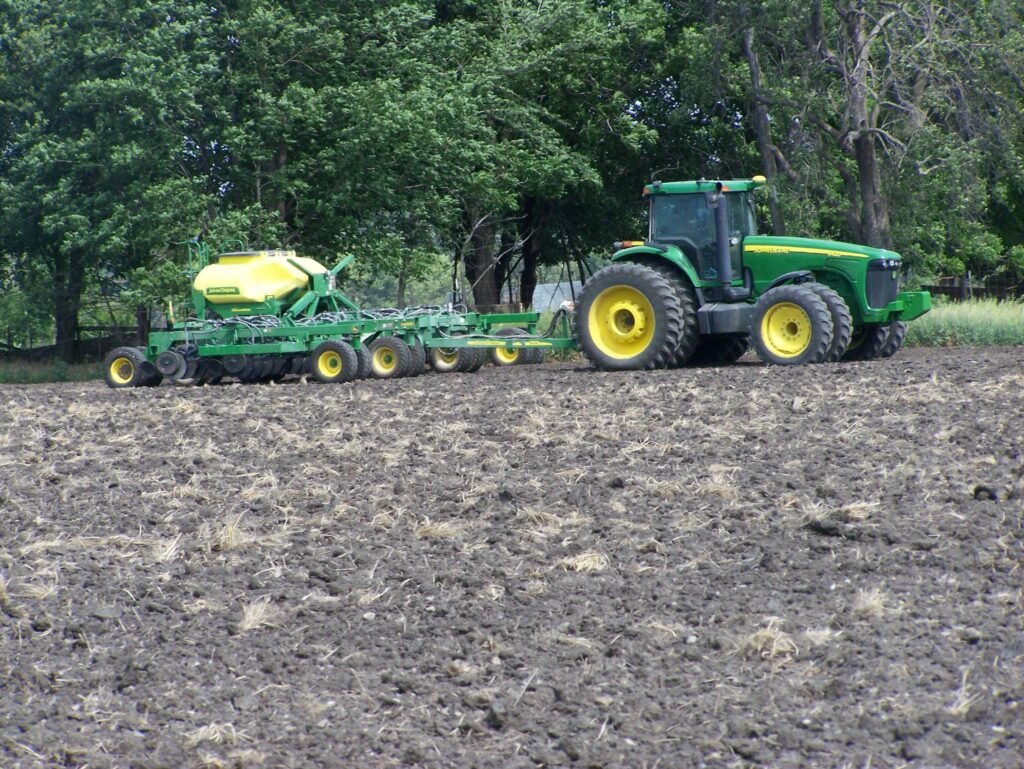
Precision agriculture is a farming approach that uses technologies such as GPS, sensors and automation to match inputs like seed, fertilizer, water and pesticides to the needs of specific parts of a field or of individual animals. The U.S. Government Accountability Office (GAO) describes it as using technologies such as GPS or automation to make farms more efficient. The aim is to apply the right amount in the right place, rather than treating a whole field the same way.
History of precision agriculture
The GAO notes that precision agriculture technologies such as variable rate fertilizer application and yield monitoring have been available since the 1990s. Adoption has been gradual. An earlier analysis by the USDA Economic Research Service (ERS), based on farm survey data, followed four key information technologies: yield monitors, variable-rate application technologies, guidance systems and GPS maps. It found that yield monitoring was used on over 40 percent of U.S. grain crop acres, while very few producers had adopted GPS maps or variable-rate application, and that adoption was slower than had been envisioned a decade earlier.
More recent figures show a wider but still partial uptake. The GAO reports that, based on 2023 survey data, only 27 percent of U.S. farms or ranches used precision agriculture practices to manage crops or livestock. The two sets of figures measure different things, so they are not a direct comparison.
Satellite positioning is the base of the whole approach, because every yield map and every automated pass across a field depends on knowing exactly where a machine is.
How precision agriculture works
The method follows a cycle of collecting data, interpreting it and acting on it. A yield monitor on a harvester, for example, records how much grain is flowing in and ties each reading to a GPS position, producing a map of how yield varies across the field. The GAO says in-ground sensors can give near-real-time information on soil and plant properties such as temperature, moisture and nutrients.
Remote sensing adds a view from above. The GAO reports that drones and ground robots offer new ways to measure crop conditions, and that new imaging sensors promise higher resolution, more frequent data and quicker delivery than traditional satellite sources.
Software then turns the readings into decisions. Farm management systems combine field maps, weather and soil records, and some use machine learning to spot patterns across large data sets. Machinery acts on the result. The GAO gives the example of auto-steering equipment that can plant a field precisely, and variable-rate equipment changes how much fertilizer, seed or chemical is applied as it moves across the field.
Types of precision agriculture technology
Guidance and auto-steering systems keep tractors on exact paths, which reduces overlap and gaps. Yield monitoring and mapping show which zones perform well and which do not. Variable-rate application adjusts inputs by zone. Remote sensing platforms and in-ground sensors supply the measurements that guide those adjustments.
The same ideas apply to animals. The GAO notes that activity monitors can help dairy farmers collect data about the health of their cows. Autonomous machines, such as self-driving tractors, are among the emerging technologies the agency discusses, though most farms do not yet use them.
Applications of precision agriculture
The ERS says precision agriculture can improve the efficiency of input use and reduce environmental harm from overapplying fertilizers and pesticides. The GAO describes the same benefit as more precise application of inputs such as water, fertilizer and feed, leading to more efficient production.
Common uses include setting seeding rates by soil zone, applying nitrogen only where crops need it, spraying herbicide on weedy patches instead of whole fields, and scheduling irrigation from soil moisture readings. Targeted irrigation matters in regions where groundwater depletion is a concern. Records from the equipment can also document what was applied and where.
Livestock operations apply the same logic. Sensors on animals and in barns record activity, feeding and health indicators, and software flags animals whose readings change so that farmers can check them early. Data gathered over several seasons can also show whether a change in practice paid off in a particular field.
Advantages and disadvantages of precision agriculture
The advantages are lower input costs when inputs are used more precisely, more detailed knowledge of each field, and less runoff or waste. Tools can be adopted one at a time or together, so a farmer can start with a single tool such as guidance.
The disadvantages are cost and complexity. The GAO says the technologies can be complex and carry high up-front costs, which makes them hard for some farmers to access, and that acquisition costs for the latest tools can be prohibitive for farmers with limited resources or access to capital. It also lists concerns about farm data sharing and ownership as an obstacle. The agency recommends better quantifying benefits and costs, because returns vary by farm and crop. Federal agencies support adoption through research, education and, in the case of USDA, financial assistance and loan programs.
Training and technical support matter too, because the equipment generates data that helps only when someone can interpret it and act on it.
Precision agriculture vs. conventional farming
Conventional management usually treats a field as a single unit, applying the same rate of seed or fertilizer everywhere based on average conditions. Precision agriculture treats the field as a set of zones that differ in soil, moisture and yield. The line between them is not sharp. Many farms use some precision tools, such as guidance or yield monitors, alongside otherwise conventional practices.
More in Agriculture & Food
Key facts
- The GAO says precision agriculture uses technologies such as GPS or automation to make farms more efficient.2
- Variable rate fertilizer application and yield monitoring have been available since the 1990s.2
- Based on 2023 data, 27 percent of U.S. farms or ranches used precision agriculture practices.2
- An ERS analysis followed yield monitors, variable-rate application, guidance systems and GPS maps.1
- That ERS analysis found yield monitoring on over 40 percent of U.S. grain crop acres.1
- The GAO says the technologies can be complex and have high up-front costs that make access hard for some farmers.2
Related concepts
Quick checkWhat share of U.S. farms used precision agriculture practices, per GAO?Show answer
The GAO reports that only 27 percent of U.S. farms or ranches used precision agriculture practices, based on 2023 data.
Sources
- 1. U.S. Department of Agriculture Economic Research Service, On the Doorstep of the Information Age: Recent Adoption of Precision Agriculture, https://www.ers.usda.gov/publications/44576
- 2. U.S. Government Accountability Office, Precision Agriculture: Benefits and Challenges for Technology Adoption and Use (GAO-24-105962), https://www.gao.gov/products/gao-24-105962
Editorially reviewed by Specialty Digest Editorial TeamLast reviewed November 4, 2026Researched and drafted with AI assistanceReport an issue