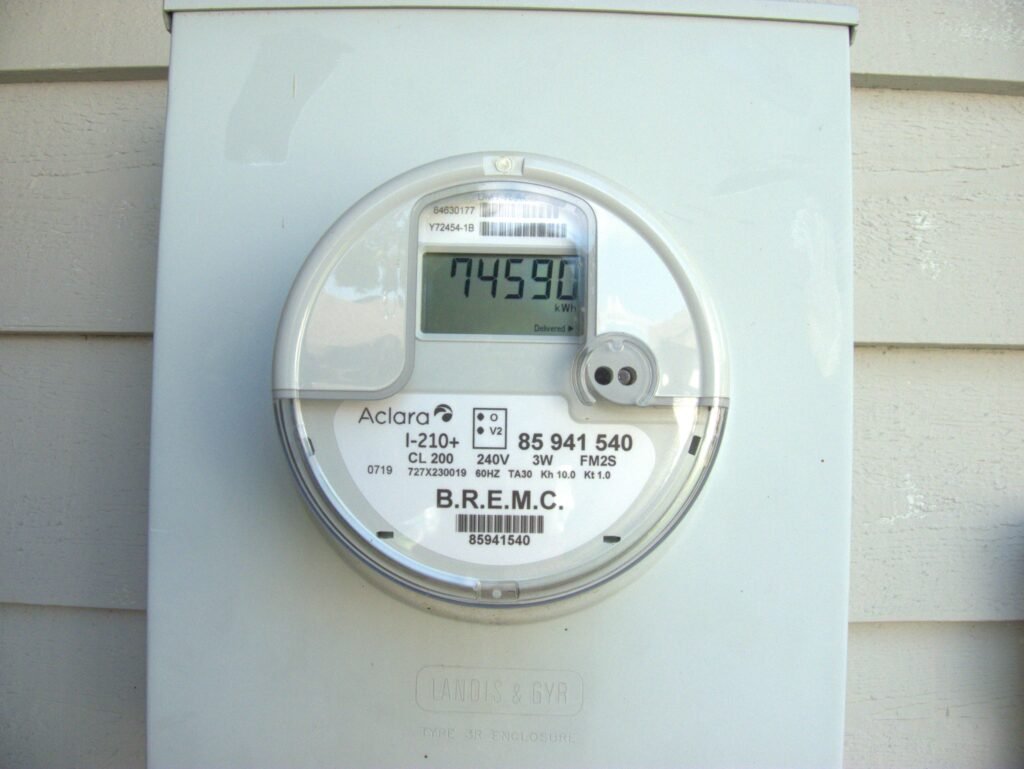
A smart grid is an electricity network that adds digital sensors, two-way communication and automated controls to the traditional power system so that utilities and customers can monitor and manage electricity use and supply more precisely. The U.S. Department of Energy (DOE) says smart grid technologies are made possible by two-way communication technologies, control systems and computer processing. The aim is a grid that is more reliable, efficient and able to take in power from many small sources.
History of the smart grid
For most of the twentieth century, electricity flowed in one direction, from large power plants through transmission lines to customers, and utilities knew little about conditions on the lines beyond what their substations reported. Meters were read by hand once a month, and a fault was often found when customers called to report an outage.
Digital technology gradually changed this. Utilities added electronic meters, sensors and control software, and the growth of wind and solar power created a need for a more flexible grid. In the United States, the Energy Independence and Security Act of 2007 gave legislative support to DOE’s smart grid activities. Section 1303 of the act set up a Smart Grid Advisory Committee and a Federal Smart Grid Task Force at DOE. The National Institute of Standards and Technology (NIST) has since published its Smart Grid Framework, now at Release 4.0, to guide the standards that let equipment from different makers work together.
How the smart grid works
A smart grid layers information on top of the physical power grid. Sensors measure voltage, current and equipment condition along lines and at substations. Communication networks carry that data to control centers, and software analyzes it to detect faults, balance supply and demand, and send commands back to equipment.
At the customer end, advanced metering infrastructure (AMI) replaces the old mechanical meter. The U.S. Energy Information Administration (EIA) defines AMI as meters that measure and record electricity use at least hourly and provide the data to both the utility and the customer at least once a day. Some meters have built-in two-way communication and can record and transmit instantaneous data.
DOE notes that customers can manage their consumption and costs better because they have easier access to their own data. Utilities benefit too, according to DOE, through improved security, reduced peak loads, increased integration of renewables and lower operating costs.
Types and components of smart grids
The smart grid is not a single product but a collection of technologies. Advanced metering infrastructure covers smart meters and the networks that read them. Distribution automation uses sensors and remotely operated switches to find a fault and reroute power around it, which can restore service to many customers without waiting for a crew.
Demand response programs offer customers prices or incentives to use less power during peak periods, or shift use to cheaper hours. Wide-area monitoring tracks conditions across transmission networks, and microgrids can operate for a time as islands if the main grid fails.
Distributed energy resources are another key part. These include rooftop solar panels, batteries and electric vehicles that can charge when power is plentiful. Together with energy storage, they let the grid cope with variable output from solar and wind turbines.
Applications of the smart grid
Smart meters are the most visible application. EIA reports that in 2022 U.S. electric utilities had about 119 million AMI installations, equal to about 72 percent of all electric meter installations. Residential customers accounted for about 88 percent of those installations, and about 73 percent of all residential meters were AMI meters.
Utilities use the data to bill from actual readings, spot outages sooner and plan equipment upgrades. Time-based rates and apps such as NIST’s Green Button initiative, which lets customers download their own energy-use data, give households information to act on.
Smart grid tools also help integrate large amounts of wind and solar power, charge fleets of electric vehicles at times that suit the grid, and support resilience during storms, by locating damage and restoring service faster.
Advantages and disadvantages of the smart grid
The advantages follow from better information. Operators can see problems sooner, reduce losses and avoid building extra capacity just to meet short peaks. Customers gain visibility and the choice of cost-saving rates, and the grid becomes friendlier to clean energy.
The disadvantages are cost, complexity and risk. Upgrading equipment and communication networks requires large investment. Because the grid becomes more connected, it also has more points an attacker could target, so cybersecurity must be designed in. Detailed usage data can reveal when people are at home, which raises privacy questions that regulators address with rules on who may see and use the data. Interoperability is a further challenge, which is why NIST’s work focuses on standards that let devices from different suppliers communicate.
Benefits vary by place. A utility with older equipment and high peak demand may gain more than one with a flat load, and results depend on how customers respond to new rates.
Smart grid vs. traditional grid
A traditional grid moves power one way and relies on manual meter reading and limited monitoring. A smart grid moves both power and information in two directions, so customers can also be producers, as when a home with solar panels sends surplus power to the network. The physical wires and power plants are largely the same; what changes is the layer of sensing, communication and control that runs over them. The information here is general background.
More in Energy
Key facts
- DOE says smart grid technologies are made possible by two-way communication technologies, control systems and computer processing.1
- DOE lists utility benefits as improved security, reduced peak loads, increased integration of renewables and lower operational costs.1
- NIST has published its Smart Grid Framework, now Release 4.0, to advance grid interoperability.2
- In 2022 U.S. utilities had about 119 million advanced metering installations, about 72 percent of all electric meters.3
- EIA defines advanced metering as meters recording use at least hourly and giving data to both utility and customer at least daily.3
Related concepts
Quick checkWhat makes a grid smart?Show answer
Two-way communication, sensors, control systems and computer processing let a smart grid monitor conditions, respond to faults and give customers and utilities data to manage electricity use.
Sources
- 1. U.S. Department of Energy, Grid Modernization and the Smart Grid, https://www.energy.gov/oe/grid-modernization-and-smart-grid
- 2. National Institute of Standards and Technology, Smart Grid Group, https://www.nist.gov/smartgrid
- 3. U.S. Energy Information Administration, How many smart meters are installed in the United States, and who has them? (FAQ), https://www.eia.gov/tools/faqs/faq.php?id=108&t=3
Editorially reviewed by Specialty Digest Editorial TeamLast reviewed November 4, 2026Researched and drafted with AI assistanceReport an issue