Key Takeaways
- Chad is Africa’s fifth-largest country by area, a landlocked nation spanning the Sahara Desert, the Sahel, and Central African savanna.
- Lake Chad, once one of Africa’s largest lakes, has shrunk dramatically since the 1960s and now sustains an estimated 50 million people across four countries.
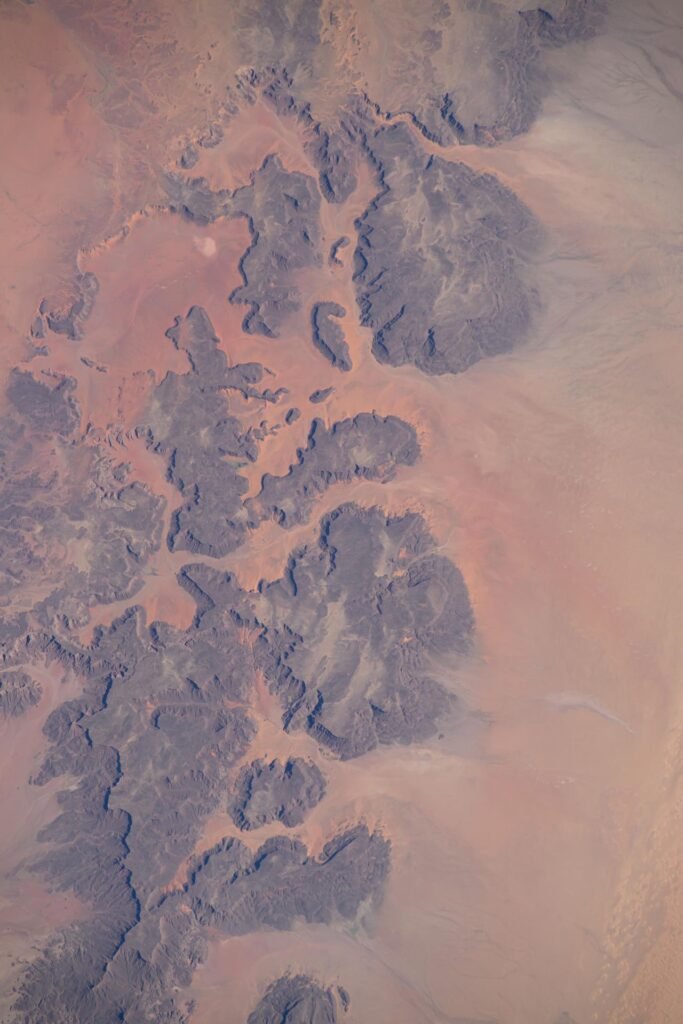
- The Ennedi Massif, a sandstone plateau in northeastern Chad, was inscribed as a UNESCO World Heritage Site in 2016 for its geology and one of the Sahara’s largest collections of rock art.
- Chad gained independence from France in 1960 and underwent a political transition after President Idriss Déby Itno’s death in 2021, adopting a new constitution in 2023 and completing elections in 2024 and 2025.
- The economy relies heavily on oil exports and subsistence agriculture, and close to 45 percent of Chadians live below the national poverty line.
- Chad hosts more than 1.5 million refugees, including large numbers fleeing Sudan’s civil war, making it one of Africa’s largest refugee-hosting countries per capita.
Where Chad Is and What Kind of Place It Is
Chad is a landlocked country in north-central Africa, ranked as the continent’s fifth-largest nation by area at roughly 1,284,000 square kilometers, according to the UN Environment Programme’s country data. It sits where the Sahara Desert meets the semi-arid Sahel and the tropical savanna of Central Africa, with borders touching Libya, Sudan, the Central African Republic, Cameroon, Nigeria, and Niger. The capital and largest city, N’Djamena, sits in the country’s southwest near the Cameroon border. With a population of about 21 million as of 2025, according to World Bank data, Chad is one of the least densely populated and least developed countries in the world.
Geography
Chad’s territory divides into three broad zones running roughly north to south. The northern three-quarters of the country lie within the Sahara Desert, including the volcanic Tibesti Mountains near the Libyan border. Moving south, rainfall increases through a semi-arid Sahel belt and into a tropical savanna region near the borders with Cameroon and the Central African Republic, as described in the UNEP country profile.
In the northeast, the Ennedi Massif rises as a sandstone plateau cut by canyons, natural arches, and rock spires shaped over millions of years by wind and water erosion. Permanent pools inside its deepest canyons sustain both wildlife and small human communities in an otherwise arid setting. The UNESCO World Heritage Centre inscribed the 2.4 million-hectare Ennedi Massif as a World Heritage property in 2016, recognizing it for its geology and for one of the largest concentrations of rock art in the Sahara, with thousands of paintings and carvings documenting a long span of human presence in the region.
Lake Chad, in the country’s southwest, gives the nation its name and remains Africa’s second-largest wetland despite having shrunk dramatically since the 1960s, per the UK government’s country profile. The lake and its basin support an estimated 50 million people across Chad, Cameroon, Nigeria, and Niger, and its continued shrinkage, tied to climate change and upstream water use, has become a driver of regional instability, according to the United Nations.
Brief History
French colonial administration governed the territory that became Chad from the early twentieth century until independence in 1960, according to Encyclopaedia Britannica. The decades that followed brought recurring civil conflict and long periods of authoritarian rule, with Chad’s politics closely tied to instability in neighboring Libya, Sudan, and the Central African Republic.
Idriss Déby Itno led the country for roughly three decades before he was killed in April 2021 while visiting troops fighting rebel forces, according to election data compiled by the Inter-Parliamentary Union. His son, General Mahamat Idriss Déby, took power at the head of a Transitional Military Council, which governed with a Transitional National Council acting as an interim legislature. Chadians approved a new constitution by referendum in December 2023, establishing a bicameral parliament. Legislative elections held on December 29, 2024 produced a newly elected National Assembly that convened in February 2025, formally ending the transitional period that began in 2021.
Government and Economy
Chad is a republic with French and Arabic as its official languages, alongside more than one hundred other languages and dialects spoken across the country, per the UK government’s country profile. Political institutions remain concentrated in N’Djamena and are still consolidating after the 2021 to 2025 transition described above.
The economy depends heavily on oil, which the World Bank reports accounts for about 15 percent of GDP but generates 41 percent of government revenue and 76 percent of export earnings. Agriculture, mostly subsistence farming and livestock herding, contributes roughly 40 percent of GDP and employs most of the workforce; the World Bank estimates the informal sector makes up about 88 percent of all jobs. Growth is projected at 3.4 percent in 2025, yet close to 45 percent of Chadians lived below the national poverty line as of 2022, and the World Bank projects extreme poverty could climb further in coming years amid recurrent droughts, floods, and conflict spillover from neighboring countries.
Culture and People
Chad is home to more than 200 ethnic groups and over 100 languages, with a population that is predominantly Muslim in the north and center and includes significant Christian and indigenous religious communities in the south, according to the United Nations and the UK government’s country profile. Alongside French and Arabic, Chadians speak languages from several distinct African language families, and French and Chadian Arabic function as lingua francas that allow communication across ethnic lines.
Most Chadians live in rural areas, where farming and pastoral herding shape daily life outside N’Djamena and secondary cities such as Sarh, Moundou, and Abéché, according to UNEP country data. In recent years Chad has also become a major host country for people displaced by conflict elsewhere: it shelters more than 1.5 million refugees, including more than 900,000 people who fled Sudan’s civil war since April 2023, giving Chad one of the highest ratios of refugees to citizens of any country in Africa, according to the United Nations.
What Chad Is Best Known For Globally
Internationally, Chad is best known for two very different reasons. Lake Chad’s dramatic shrinkage, widely documented in satellite imagery over the past half century, has made it a frequently cited case study in discussions of climate change, desertification, and the security risks that follow resource loss in the Sahel. At the same time, the Ennedi Massif has drawn growing recognition as one of the Sahara’s most significant natural and cultural sites, valued both for its sandstone formations and for rock art that ranks among the largest and best-preserved collections in the region, according to UNESCO.
Chad is also recognized within humanitarian and development circles as a country carrying an outsized share of regional crises. It remains one of the world’s poorest nations by most economic measures even as it absorbs large refugee flows from conflicts in Sudan and across the Lake Chad Basin, per the World Bank and the United Nations.
Why Chad Matters
Chad’s stability affects a wider stretch of Africa than its own borders. Its position links the Sahara to Central Africa and places it within the security dynamics of Libya, Sudan, and the Lake Chad Basin, three of the continent’s more volatile zones.
For researchers tracking climate and water security, the transformation of Lake Chad offers one of the most closely watched examples of how a shrinking water body can reshape food security and displacement patterns across borders; the lake’s fate affects tens of millions of people who depend on it in four countries. For historians and archaeologists, the Ennedi Massif’s rock art preserves a rare record of thousands of years of human life in a part of the Sahara that was once far wetter than it is today, offering physical evidence of how societies adapted as the desert expanded.
Sources
- World Bank: Chad Overview
- UN Environment Programme, Interactive Country Fiches: Chad
- UK Government, Chad Toponymic Factfile
- World Bank Open Data: Chad
- UNESCO World Heritage Centre: Ennedi Massif, Natural and Cultural Landscape
- UN News: Chad, Africa’s Refugee Haven Struggles With Its Own Stark Challenges
- Inter-Parliamentary Union, IPU Parline: Chad National Assembly
- Encyclopaedia Britannica: Chad
Key facts
- Chad's population was about 21 million in 2025, and the country ranks as Africa's fifth-largest by land area at roughly 1,284,000 square kilometers42
- The Ennedi Massif, a Saharan sandstone plateau, was inscribed as a UNESCO World Heritage Site in 2016 for its geology and one of the Sahara's largest collections of rock art5
- Lake Chad has shrunk dramatically since the 1960s but still supports an estimated 50 million people across four countries36
- Oil generates about 76 percent of export earnings and 41 percent of government revenue, while close to 45 percent of Chadians lived below the national poverty line in 20221
- Chad hosts more than 1.5 million refugees, including over 900,000 who fled Sudan's civil war since April 20236
Quick checkWhat is Chad's most iconic UNESCO World Heritage site?Show answer
The Ennedi Massif, a sandstone plateau in northeastern Chad known for its canyons, natural arches, and one of the largest collections of rock art in the Sahara, inscribed by UNESCO in 2016.
Sources
- World Bank. Chad Overview. 2026 (accessed 2026-09-22)
- UN Environment Programme. Interactive Country Fiches: Chad. 2026 (accessed 2026-09-22)
- UK Government. Chad Toponymic Factfile. 2021 (accessed 2026-09-22)
- World Bank. World Development Indicators: Chad. 2025 (accessed 2026-09-22)
- UNESCO World Heritage Centre. Ennedi Massif: Natural and Cultural Landscape. 2016 (accessed 2026-09-22)
- UN News. Chad: Africa's Refugee Haven Struggles With Its Own Stark Challenges. 2026 (accessed 2026-09-22)
- Inter-Parliamentary Union. IPU Parline: Chad National Assembly. 2025 (accessed 2026-09-22)
- Encyclopaedia Britannica. Chad. n.d. (accessed 2026-09-22)
Editorially reviewed by Specialty Digest Editorial TeamLast reviewed September 22, 2026Researched and drafted with AI assistanceReport an issue