Chum salmon (Oncorhynchus keta), also called dog or calico salmon, have the widest distribution of any Pacific salmon. They are an important source of fresh and dried fish for subsistence users in arctic, northwestern and Interior Alaska.[1]
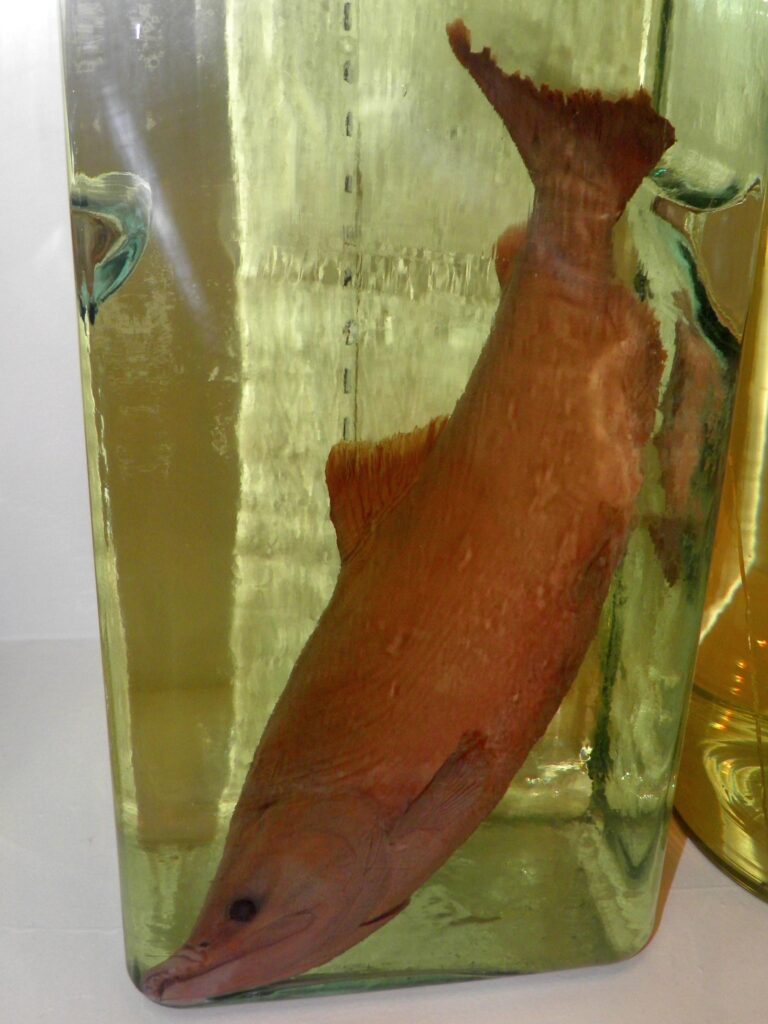
| Scientific name | Oncorhynchus keta |
|---|---|
| Typical weight | 7–18 lb (4 to over 30 lb) |
| Lifespan | 3–6 years |
| Eggs per female | 2,400–3,100 (max about 4,000) |
| Alaska catch, last decade | Over 18 million fish, about $71 million |
| Sport harvest | Usually under 25,000 statewide |
Description
Ocean-fresh adults have a metallic greenish-blue back with fine black speckles. In fresh water they show green and purple vertical bars, giving the name calico salmon, and males develop a hooked snout and large teeth, giving the name dog salmon. Chum weigh 4 to more than 30 pounds, typically 7 to 18 pounds, and females are generally smaller than males.[1]
Range
Chum have the widest distribution of any Pacific salmon, from the Sacramento River in California and Kyushu Island in the Sea of Japan north and east to the Mackenzie River in Canada and west to the Lena River in Siberia.[1]
Life cycle
Chum live three to six years. Fry have no freshwater residency period and move to sea, though later than pink salmon fry, feeding on stream and estuary insects and then zooplankton in salt water. By fall they move to the Bering Sea and Gulf of Alaska and spend one or more winters there, and in Southeast Alaska most mature at age four. They spawn in small side channels, large river areas, small streams and intertidal zones, preferring upwelling spring areas, and females typically lay 2,400 to 3,100 eggs. Yukon River fish may travel more than 2,000 miles to spawn in Yukon Territory.[1]
Fisheries and subsistence
More than 18 million chum were caught in Alaska in the last decade, worth about $71 million, mainly by purse seines and drift gillnets, with some fish wheels and set gillnets. Chum are an important year-round source of fresh and dried fish in arctic, northwestern and Interior Alaska, and a traditional source of dried fish for winter elsewhere. Sport harvest is usually under 25,000 fish statewide, mostly taken incidentally while fishing for other salmon.[1]
FAQs
Why are chum called dog salmon? Spawning males develop a hooked snout and large teeth.
How big are chum? Typically 7 to 18 pounds.
How far do Yukon chum travel? More than 2,000 miles.
Sources
Key facts
- Lives 3–6 years
- Yukon runs over 2,000 miles
Quick checkWhich Pacific salmon has the widest range?Show answer
Chum salmon
Sources
- Alaska Department of Fish and Game. Chum Salmon, Wildlife Notebook Series. 2026 (accessed 2026-11-14)
Editorially reviewed by Specialty Digest Editorial TeamLast reviewed November 14, 2026Researched and drafted with AI assistanceReport an issue