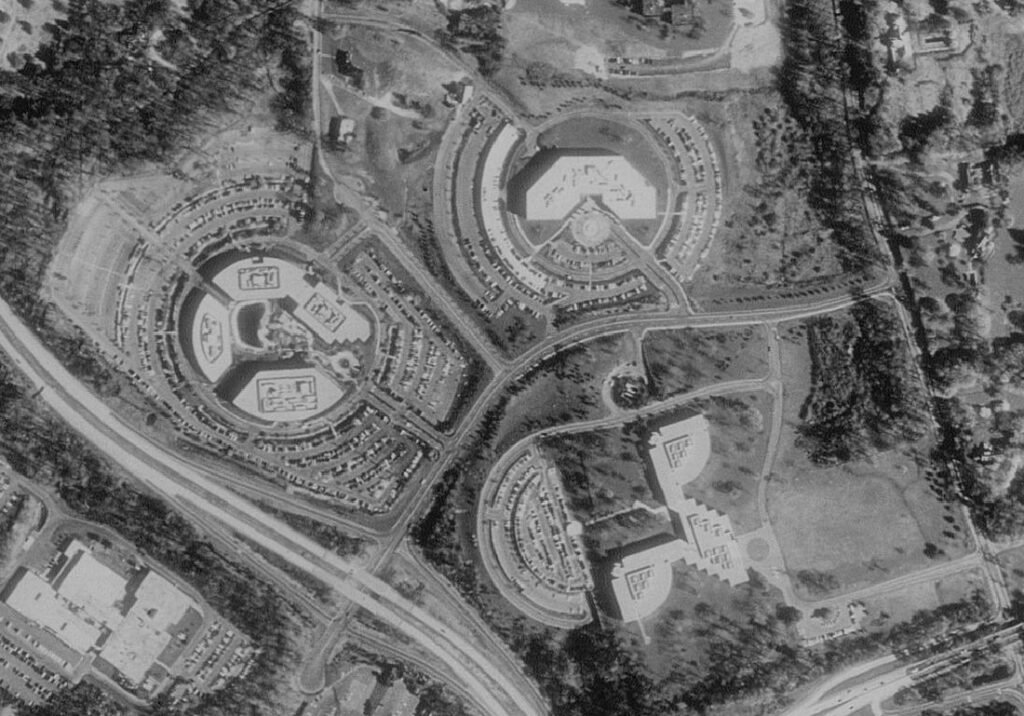
Mastercard Incorporated, usually called Mastercard, is an American technology company in the global payments industry, headquartered in Purchase, New York. It runs a network that authorizes, clears and settles payment transactions between consumers, financial institutions, merchants and governments. For 2025 it reported net revenue of $32.8 billion and net income of $15.0 billion.
History of Mastercard
Mastercard’s operating company, originally named MasterCard International Incorporated, was formed in November 1966 as a Delaware membership corporation. For decades it was owned and governed by the banks that issued its cards and signed up merchants. The parent company, MasterCard Incorporated, was incorporated as a Delaware stock corporation in May 2001. Its financial institution customers are generally principal members, which take part directly in the business, or affiliate members, which take part indirectly through a principal member. This membership structure explains why banks, and not outside shareholders, once held the decisive voice in how the company was run.
The ownership model changed in May 2006. The company completed a plan for a new ownership and governance structure that included a new board of directors with a majority of directors who were independent from its financial institution customers, a charitable foundation, and an initial public offering of its Class A common stock. The change ended the arrangement in which the member banks governed the company.
The 2006 change was challenged in court. In 2006, a group of merchants filed a supplemental complaint alleging that the IPO and related agreements with financial institutions violated U.S. antitrust law and amounted to a fraudulent conveyance. The merchants asked, among other relief, for an order that would unwind the IPO. The litigation is part of the broader dispute over interchange fees.
Products and services of Mastercard
Mastercard offers payment solutions under several brands, including its primary brand Mastercard, Maestro and Cirrus. It switches payment transactions over its own network and has added automated clearing house capabilities, covering both batch and real-time account-based payments. On top of the network it sells security services, consumer acquisition and engagement services, business and market insights, digital and authentication tools, and processing and gateway services.
Technology for security is a major theme. In 2025 about 40 percent of all Mastercard transactions were tokenized, which means a card number is replaced by a digital substitute so that a stolen record is of less use. The company also cites Agentic Tokens as part of its tokenization capabilities, and said it supported spending of crypto and stablecoin assets through approximately 130 crypto co-brand card programs and through its Mastercard Move platform.
Corporate structure and operations of Mastercard
Mastercard owns its corporate headquarters in Purchase, New York, at 2000 Purchase Street, and its principal technology and operations center in O’Fallon, Missouri. It is listed on the New York Stock Exchange under the symbol MA.
Its transaction model is called a four-party system. A typical transaction involves the cardholder, the merchant, the issuer, which is the cardholder’s bank, and the acquirer, which is the merchant’s bank, in addition to Mastercard. The company’s customers are the financial institutions that act as issuers and acquirers, and it earns revenue by charging fees for processing and by assessing customers based on the dollar volume on cards that carry its brands. As described in an earlier annual report, it guarantees the settlement of many of these transactions among its customer financial institutions.
In 2025 Mastercard reported net revenue of $32,791 million, up 16 percent from $28,167 million in 2024, and operating expenses of $13,894 million. Operating income was $18,897 million, an operating margin of 57.6 percent. Net income was $14,968 million, and diluted earnings per share were $16.52. Gross dollar volume across its brands was $10.6 trillion, and it handled 175.5 billion switched transactions. The effective income tax rate was 19.4 percent, compared with 15.6 percent in 2024. On a non-GAAP basis, which excludes gains and losses on equity investments, Special Items such as litigation judgments and settlements, and certain one-time items, adjusted net income was $15.4 billion and adjusted diluted earnings per share were $17.01.
Impact of Mastercard
Switched transactions are payments that the network routes, authorizes and settles, and the count of 175.5 billion shows the scale of that routing. Gross dollar volume is the total value of purchases and cash on cards bearing the brand. Together they measure how much commerce depends on the network.
Mastercard shows how a payments network works as shared infrastructure. In the four-party model, banks rather than Mastercard deal directly with cardholders and merchants, and the company earns fees tied to activity, so its revenues track the volume of spending and the number of transactions. Rules on interchange fees, surcharging and data privacy therefore affect it directly.
The company has expanded from cards into digital payments, security tools and account-based payment rails. Tokenization works alongside encryption, which scrambles data so that only authorized parties can read it, and both aim to protect account data as payments move across the network.
Criticism and legal matters
In 2005, the first of a series of complaints was filed on behalf of merchants against Mastercard, Visa and a number of financial institutions in United States federal courts, and the cases were later consolidated in the Eastern District of New York as MDL No. 1720. The claims allege, among other things, that the networks and banks conspired to set interchange fees and adopted point-of-sale rules in violation of the Sherman Act, which prohibits monopolization and conspiracies to restrain trade.
In 2011 Mastercard entered a judgment sharing agreement with Visa and a number of financial institutions. The company says that regulatory decisions and legislation on interchange fees across jurisdictions may have a material adverse effect on its prospects. It paid $647 million in cash for legal settlements in 2025, compared with $496 million in 2024 and $929 million in 2023.
More in Finance
Key facts
- MasterCard International was formed in November 1966 as a Delaware membership corporation, and MasterCard Incorporated was incorporated in May 2001.1
- Mastercard completed an initial public offering of Class A common stock in May 2006 and moved to a board with a majority of independent directors.1
- Mastercard reported net revenue of $32,791 million and net income of $14,968 million for 2025.2
- Gross dollar volume was $10.6 trillion and switched transactions were 175.5 billion in 2025.2
- Mastercard owns its headquarters in Purchase, New York, and its technology and operations center in O'Fallon, Missouri.2
Related concepts
Quick checkWhen did Mastercard become a public company?Show answer
Mastercard completed an initial public offering of its Class A common stock in May 2006, when it also adopted a governance structure with a majority of independent directors.
Sources
- [1] MasterCard Incorporated, Annual Report on Form 10-K for the year ended December 31, 2006, U.S. Securities and Exchange Commission, https://www.sec.gov/Archives/edgar/data/1141391/000119312507042384/d10k.htm
- [2] Mastercard Incorporated, Annual Report on Form 10-K for the year ended December 31, 2025, U.S. Securities and Exchange Commission, https://www.sec.gov/Archives/edgar/data/1141391/000114139126000013/ma-20251231.htm
Editorially reviewed by Specialty Digest Editorial TeamLast reviewed November 4, 2026Researched and drafted with AI assistanceReport an issue