Patterns of Access and Opportunity
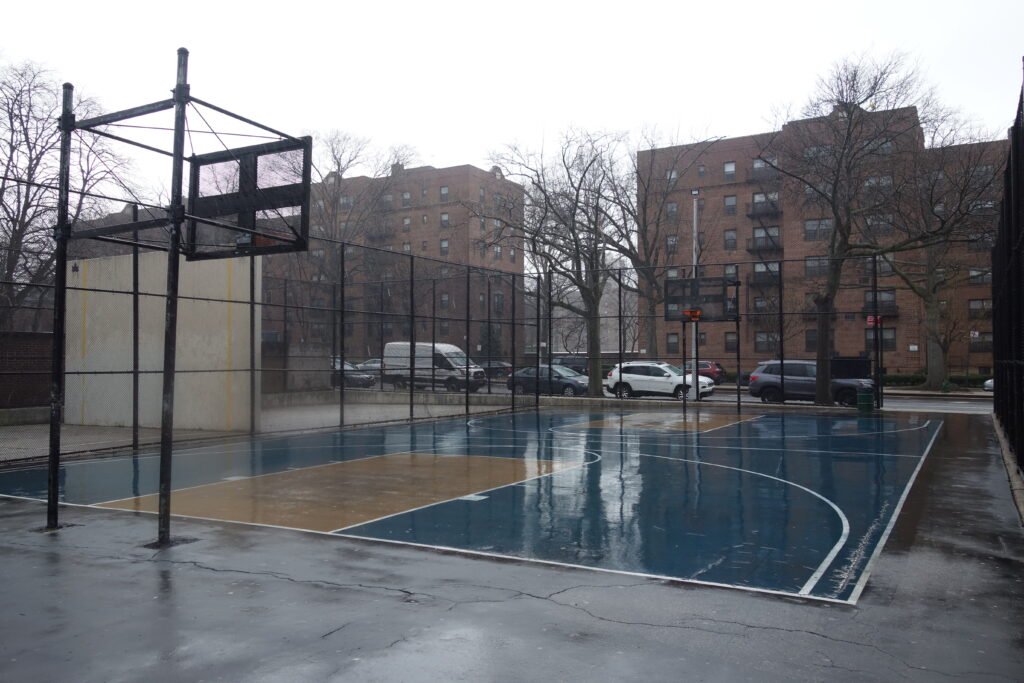
Sport sociologists study how broader patterns of economic and social inequality shape who gets to participate in organized sport, at what level, and with what resources, treating sport not as a separate world insulated from society but as a reflection of many of the same structural patterns found elsewhere. Access to youth sport in many countries correlates strongly with family income, since participation often requires paying for equipment, travel, private coaching, and club or league fees that create real barriers for lower-income families, even when a given sport has no inherent cost of entry at the recreational level.
Researchers in this field have also long documented a persistent gap between representation among athletes and representation in coaching, front-office, and ownership positions across many professional and collegiate sports, a pattern often described as a leadership or opportunity pipeline problem rather than a talent or interest problem. Understanding these patterns has informed a range of policy responses, including targeted scholarship and access programs, diversity initiatives in coaching pipelines, and ongoing academic research tracking whether participation and leadership gaps are narrowing or persisting over time across different sports and levels of competition.
Policy Responses
Organizations seeking to address access and representation gaps in sport have pursued several different policy approaches, with varying degrees of documented success. Targeted scholarship programs and subsidized equipment or league-fee assistance aim directly at the financial barriers that limit youth sport access for lower-income families, while community-based programs that bring organized sport directly into underserved neighborhoods attempt to reduce the transportation and logistical barriers that can compound financial ones. Coaching and front-office pipeline programs, which provide mentorship, networking, and leadership development specifically for candidates from underrepresented backgrounds, have become a common response to the coaching and leadership representation gap.
Evaluating the effectiveness of these interventions remains an active area of academic research, since many programs are relatively recent and long-term outcome data, such as whether participants go on to sustained careers in coaching or front-office roles at rates comparable to the broader athlete population, is still accumulating. Sport sociologists generally caution against treating any single policy intervention as a complete solution, instead viewing meaningful change in access and representation as requiring sustained effort across multiple levels simultaneously, from youth participation programs through professional hiring practices.
Intersections with Other Social Factors
Sport sociologists increasingly emphasize that social inequality in sport rarely operates through a single factor in isolation, and that socioeconomic status, geography, gender, and other social categories frequently intersect and compound one another in shaping an individual access to and experience within organized sport. A young person from a lower-income family in a rural area without nearby facilities, for example, faces a different and often more compounded set of barriers than someone facing just one of those obstacles alone, making single-factor explanations and single-factor interventions incomplete on their own.
This intersectional perspective has shaped how some researchers and advocacy organizations approach policy design, favoring interventions that address multiple overlapping barriers simultaneously, such as programs that combine transportation assistance, equipment provision, and free or subsidized coaching specifically in communities facing several compounding disadvantages at once, rather than programs that address only a single barrier in isolation and may therefore reach only a fraction of the population actually facing the fullest combination of obstacles.
Global Perspectives
While much of the published sport sociology research on social inequality originates from North American and European academic contexts, researchers studying sport in other regions have documented distinct patterns of inequality shaped by local economic conditions, colonial histories, and social structures, cautioning against assuming that findings from one national context automatically transfer to other parts of the world. Access barriers tied to geography and infrastructure, for example, often look considerably different in regions with limited organized sport infrastructure compared with wealthier countries where the primary barriers tend to be cost and logistics rather than outright absence of facilities or programs.
This growing body of global and comparative research has encouraged sport sociologists to be more cautious about universal claims regarding how inequality operates in sport, instead favoring context-specific analysis that accounts for the particular economic, historical, and cultural conditions shaping access and opportunity in a given country or region, while still drawing on shared theoretical frameworks that allow meaningful comparison across these different national and regional contexts.
Summary
Research on social inequality in sport underscores that organized athletics both reflects and, without deliberate intervention, can reproduce broader patterns of economic and social disadvantage, a recognition that has pushed sport organizations, researchers, and policymakers toward intersectional, multi-level approaches aimed at expanding genuine access and representation rather than relying on simple participation statistics as evidence that meaningful equity has been achieved.
As access and representation data continue to be collected across more sports and regions, researchers anticipate a growing ability to evaluate which specific policy interventions produce the most durable improvements, allowing the field to move beyond general principles toward more precise, evidence-based recommendations for the organizations, governing bodies, and communities working to narrow persistent gaps in sporting opportunity and representation.
In the end, sport and social inequality research reminds observers that athletic achievement, however much it is popularly framed as a pure meritocracy determined solely by talent and effort, unfolds within real social and economic structures that shape who even gets the chance to develop and demonstrate that talent and effort in the first place, a recognition with implications well beyond sport itself.
Recognizing this reality has pushed a growing number of sport organizations to treat equitable access not as a peripheral social concern but as a core part of their mission, integrating it into how programs are funded, staffed, and evaluated going forward.
Key facts
- Array
Quick checkWhat is a commonly cited example of the gap between athlete representation and leadership representation in sport?Show answer
In many professional and collegiate sports, the proportion of coaches, general managers, and executives from certain demographic groups differs noticeably from the proportion of athletes from those same groups.
Sources
- Array
Editorially reviewed by Specialty Digest Editorial TeamLast reviewed November 4, 2026Researched and drafted with AI assistanceReport an issue