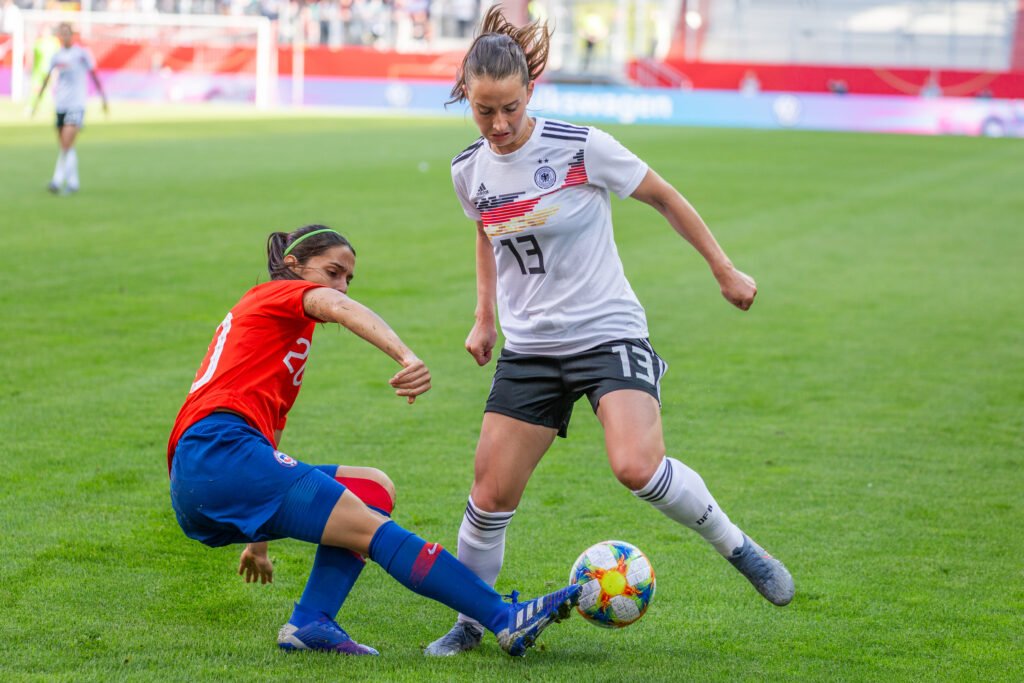
Historical and Social Context
The sociological study of gender in sport examines how social expectations about gender have historically shaped, and continue to shape, who participates in sport, which sports are considered socially appropriate for different genders, how athletes are covered by media, and how pay and resources are distributed across men and women competitive leagues. For much of the twentieth century, organized sport in many countries was structured around assumptions that limited opportunities for women and girls, both through formal exclusion from certain competitions and through broader cultural messaging about which activities were considered feminine or appropriate.
In the United States, the passage of Title IX in 1972 marked a significant turning point by prohibiting sex discrimination in any education program receiving federal funding, which included school and university athletic programs, leading to a dramatic increase in participation opportunities for female athletes over the following decades. Despite these gains, researchers continue to document persistent disparities in areas such as media coverage volume, broadcast scheduling, sponsorship revenue, and compensation between men and women professional leagues, making gender in sport an active and evolving area of both academic research and public policy debate.
Media Representation and Pay Disparities
Studies analyzing sports media coverage across many countries have consistently found that women sport receives substantially less total airtime, fewer feature stories, and less prominent scheduling than men sport, even accounting for differences in overall participation and fan interest, a gap that media researchers argue can itself suppress fan interest in a cycle that is difficult to break without a deliberate change in coverage decisions. When women sport does receive coverage, researchers have also documented a historical tendency toward commentary that emphasizes athletes personal lives or appearance more than their athletic performance, compared with coverage of men sport, though many researchers note this pattern has been gradually shifting in recent years.
Compensation disparities between men and women professional leagues in the same sport have become a particularly visible and contested aspect of this broader topic, with league organizations, players associations, and researchers disagreeing over how much of the gap reflects differences in revenue generation, which is itself shaped by the historical media coverage and sponsorship patterns described above, versus how much reflects discriminatory structures independent of revenue. Several prominent legal disputes and collective bargaining negotiations in recent years have brought increased public attention to these questions, making gender-based compensation analysis an active area of both sport sociology research and labor negotiation.
Participation Trends Over Time
Longitudinal data tracking participation rates by gender across many countries generally shows substantial growth in female sport participation over recent decades, though researchers note this growth has not been uniform across all sports, socioeconomic groups, or regions, and significant gaps in access and opportunity persist in many contexts even as overall participation numbers have improved. Sports historically coded as more masculine or more feminine in a given culture have shown different rates of gender-balance change, with some traditionally male-dominated sports seeing substantial growth in female participation while retaining a much smaller shift in the reverse direction.
Researchers studying these trends generally caution against treating aggregate national participation statistics as the full picture, since meaningful disparities often persist at more granular levels, such as access to high-quality coaching, elite competitive pathways, and collegiate scholarship opportunities, even in sports and regions where basic participation numbers appear to have substantially closed between genders. This has led many sport sociologists to argue that participation counts alone are an incomplete measure of genuine equity in sport.
Transgender and Nonbinary Athletes
In recent years, questions about the inclusion of transgender and nonbinary athletes in competitive sport categories have become a prominent and actively debated subset of the broader field of gender and sport, with different sporting bodies adopting a range of differing eligibility policies that continue to evolve. Researchers and policymakers in this space grapple with balancing fair competition considerations against inclusion and non-discrimination principles, a balance that different sports, countries, and competitive levels, from recreational to elite, have approached differently and continue to revisit as scientific understanding and social attitudes both continue to develop.
This remains one of the more contested and rapidly evolving areas within gender and sport scholarship, with ongoing research, legal challenges, and policy revisions occurring across many different sporting federations simultaneously, making it an area where encyclopedia-level summaries are likely to need periodic revision as both the scientific evidence base and governing-body policies continue to develop further.
Summary
Gender in sport remains an active field spanning historical legal change, ongoing media and compensation disparities, and current debates over inclusion policy, united by a shared recognition that sport does not exist apart from the broader society around it, and that social expectations about gender continue to shape athletic opportunity and experience in ways researchers, policymakers, and athletes themselves continue to study and contest.
As participation data, media coverage patterns, and policy frameworks continue to evolve across different countries and sporting bodies, researchers studying gender in sport emphasize the value of tracking these trends over time rather than relying on any single snapshot analysis, since meaningful progress toward equity in this area has historically unfolded gradually and unevenly across different sports, regions, and competitive levels rather than through any single decisive turning point.
Taken as a whole, the study of gender in sport demonstrates how athletic institutions, like other major social institutions, both absorb and sometimes resist the broader gender norms and inequalities present in the societies that create them, making continued research, policy attention, and public dialogue genuinely necessary rather than treating any current state of affairs as a fixed or finished outcome.
Key facts
- Array
Quick checkWhat major U.S. legislation significantly expanded athletic opportunities for women and girls?Show answer
Title IX, a federal civil rights law passed in 1972, prohibited sex discrimination in federally funded education programs, including athletics, significantly expanding opportunities for female athletes.
Sources
- Array
Editorially reviewed by Specialty Digest Editorial TeamLast reviewed November 4, 2026Researched and drafted with AI assistanceReport an issue