Atheism is the position that denies or rejects belief in the existence of God or gods. In its broadest sense, the term covers a range of views, from the rejection of specific gods described in particular religious traditions, to a general denial that any god exists, to the stronger claim that the very concept of
Atheism Read More »
The position that denies or rejects belief in the existence of God or gods, distinguished from both theism and agnosticism.
Buddhism is a religion and philosophical tradition founded by Siddhartha Gautama, known as the Buddha, or “the awakened one,” in the region of ancient India around the fifth or sixth century BCE. It centers on understanding and ending suffering through ethical conduct, mental discipline, and the cultivation of wisdom, offering a path toward liberation that
Buddhism Read More »
A religion and philosophical tradition founded by the Buddha, centered on ending suffering through ethical conduct and wisdom.
Christianity is a monotheistic religion centered on the life, teachings, death, and resurrection of Jesus of Nazareth, whom adherents believe to be the Son of God and the savior of humanity. It originated among Jewish followers of Jesus in first-century Roman Judea and has since grown into the world’s largest religion by number of adherents,
Christianity Read More »
A monotheistic religion centered on the life, death, and resurrection of Jesus of Nazareth, the world's largest religion by adherents.
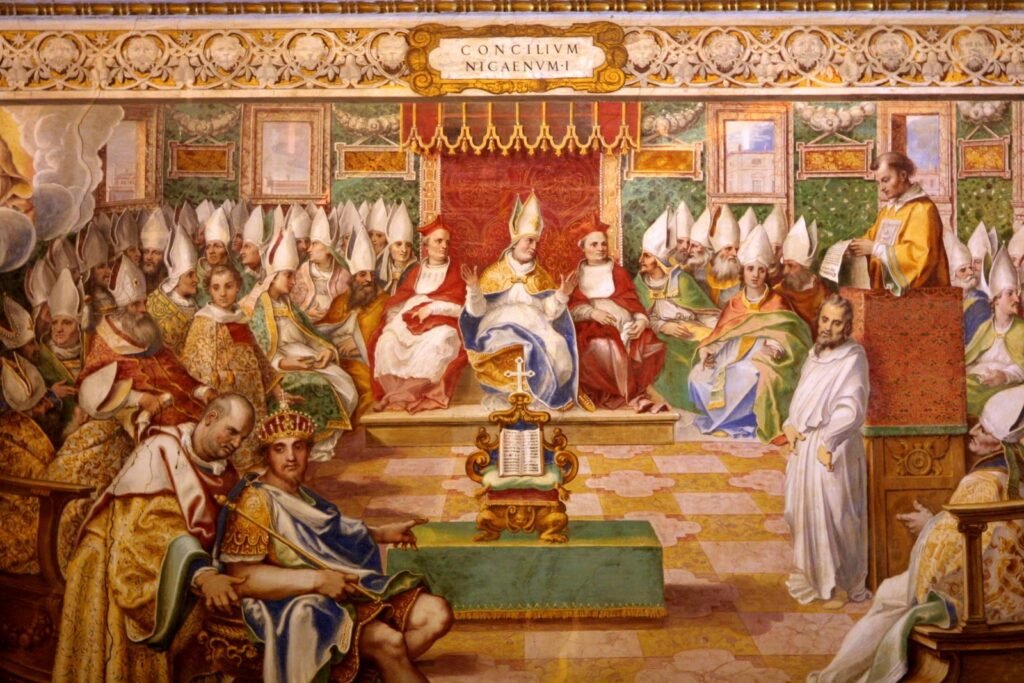
The Council of Nicaea, also called the First Council of Nicaea, was a gathering of Christian bishops held in 325 at the city of Nicaea, called by the Roman emperor Constantine. It condemned the teaching of the priest Arius about the nature of Jesus, produced the first version of the Nicene Creed and settled a
Council of Nicaea Read More »
A 325 gathering of bishops called by Emperor Constantine that condemned Arianism and issued the first Nicene Creed.
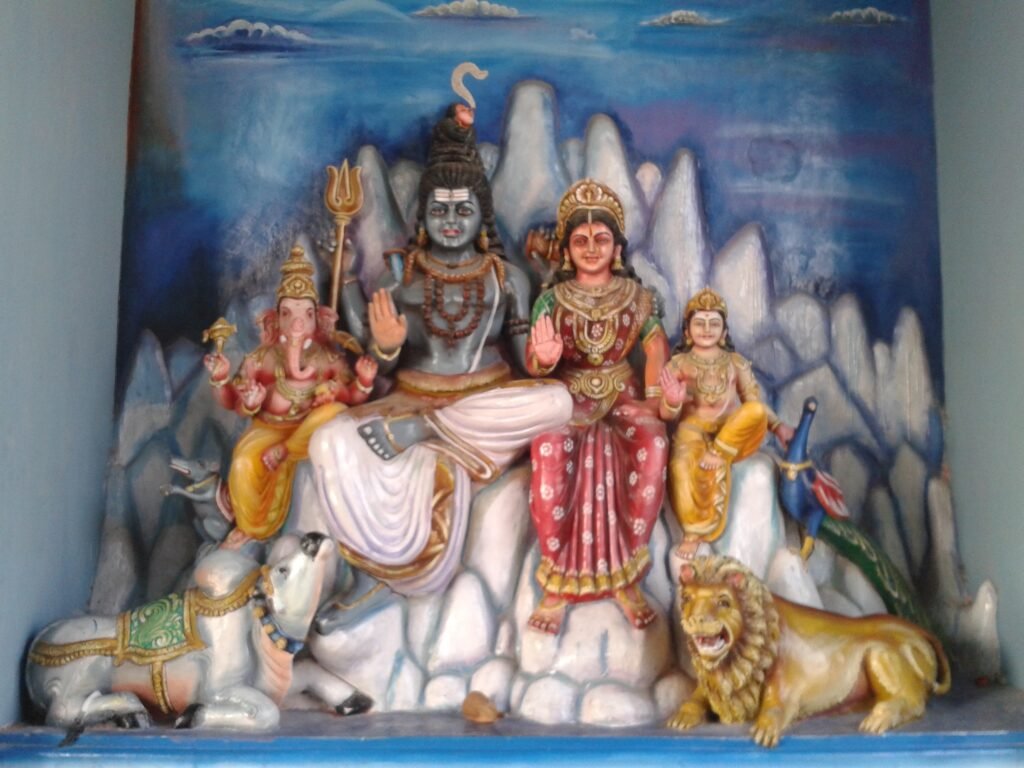
Hinduism is a major religious and philosophical tradition originating in the Indian subcontinent, encompassing an unusually diverse range of beliefs, practices, and deities rather than a single unified doctrine or founding figure. It is the world’s third-largest religion by number of adherents, with the large majority of its followers living in India, though significant Hindu
Hinduism Read More »
A major religious and philosophical tradition originating in the Indian subcontinent, with no single founder or central authority.
Islam is a monotheistic religion founded in seventh-century Arabia, based on the teachings of the Prophet Muhammad as recorded in the Quran, which Muslims believe to be the literal word of God, known in Arabic as Allah, revealed to Muhammad over approximately two decades. It is the world’s second-largest religion by number of adherents, with
Islam Read More »
A monotheistic religion founded in seventh-century Arabia based on the teachings of the Prophet Muhammad as recorded in the Quran.
Judaism is the monotheistic religion and cultural tradition of the Jewish people, originating in the ancient Near East and generally regarded as the oldest of the three major Abrahamic faiths, which also include Christianity and Islam. Its central text, the Hebrew Bible, known in Jewish tradition as the Tanakh, describes a covenant between God and
Judaism Read More »
The monotheistic religion and cultural tradition of the Jewish people, centered on the Torah and a covenant between God and the Jewish people.
Shinto is the indigenous religious tradition of Japan, a term that can be translated roughly as “the way of the kami.” The name came into use specifically to distinguish Japan’s native beliefs from Buddhism, which arrived from the Asian mainland in the 6th century CE. Unlike many major world religions, Shinto has no single founder,
Shinto Read More »
Japan's indigenous religious tradition centered on reverence for kami, the divine forces found in nature, people, and ideas.
Sikhism is a monotheistic religion founded in the Punjab region of South Asia in the late fifteenth century by Guru Nanak, the first of ten successive Sikh Gurus whose collected teachings and writings form the foundation of Sikh belief and practice. Sikhism teaches belief in one formless, eternal God, and emphasizes equality among all people
Sikhism Read More »
A monotheistic religion founded in the Punjab region in the late fifteenth century by Guru Nanak, emphasizing equality, honest living, and service.
Taoism, also spelled Daoism, is a Chinese philosophical and religious tradition that centers on living in harmony with the Dao, often translated as “the Way,” the underlying, often indescribable process that gives rise to and flows through all things. Taoism took shape during China’s Warring States period, roughly 450 to 300 BCE, and has since
Taoism Read More »
A Chinese philosophical and religious tradition centered on living in harmony with the Dao, the natural way underlying all things.