Albert Einstein (1879 to 1955) was a German-born theoretical physicist who developed the theories of special and general relativity and helped lay the foundations of quantum theory. In 1905, while working as a patent clerk, he published papers that changed how scientists think about space, time, light and matter. He received the 1921 Nobel Prize
Albert Einstein Read More »
German-born physicist who developed the theories of special and general relativity and helped found quantum theory.
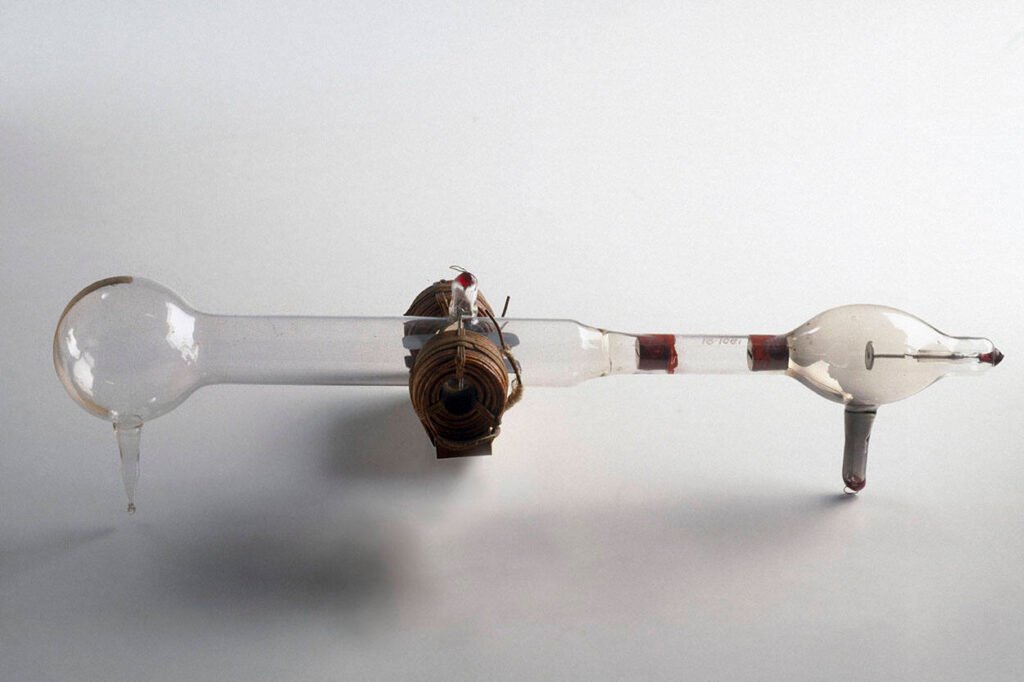
The discovery of the electron was the 1897 finding by the British physicist J. J. Thomson that cathode rays are streams of tiny negatively charged particles, far lighter than any atom. It was the first evidence that atoms have parts. Thomson announced it at the Royal Institution in London on April 30, 1897, and the
Discovery of the Electron Read More »
The 1897 finding by J. J. Thomson that cathode rays are streams of tiny, negatively charged particles smaller than atoms.
In simple terms A half-life is the time it takes for half the atoms of a radioactive substance to decay into something else. The count never quite finishes. After one half-life, half is left. After two, a quarter. After three, an eighth. The fraction is the same whatever amount you started with. How it works
Half-life Read More »
A half-life is the time it takes for half the atoms in a radioactive sample to decay into something else.
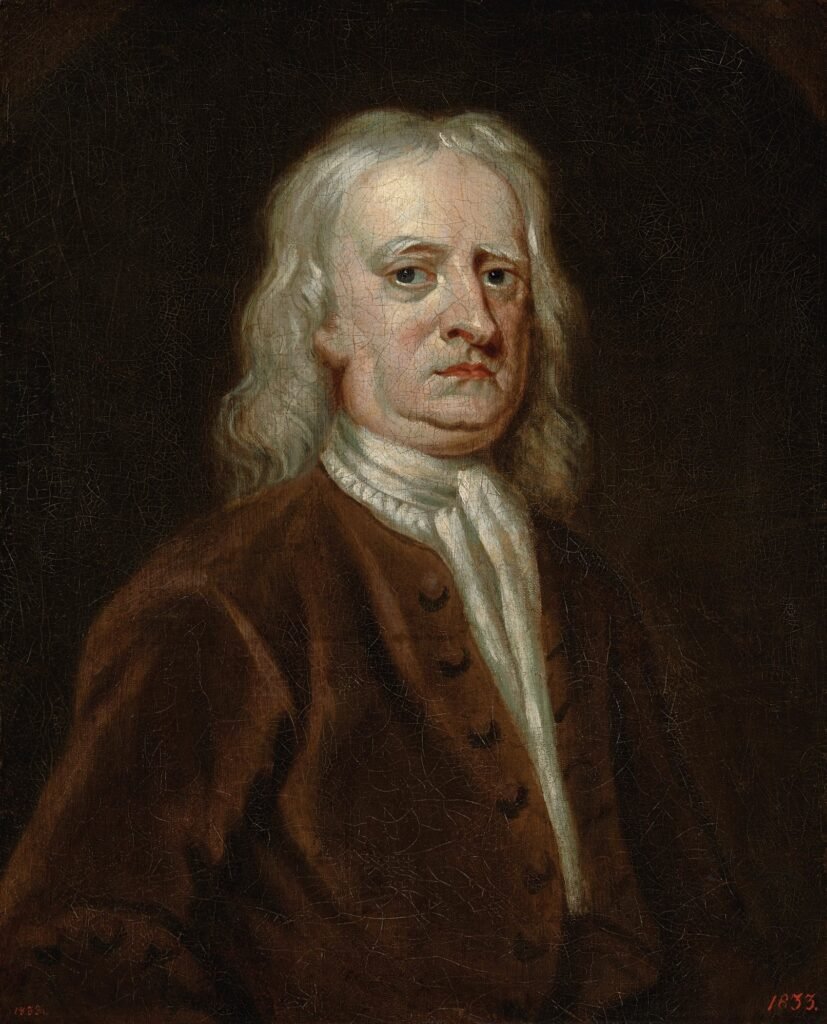
Isaac Newton (1642 to 1727) was an English mathematician and natural philosopher who formulated the laws of motion and the law of universal gravitation and helped invent calculus. His 1687 book, the Principia, described the physical world in mathematical terms and guided science for more than two centuries. Newton also transformed the study of light
Isaac Newton Read More »
English mathematician and physicist who formulated the laws of motion and universal gravitation and helped invent calculus.
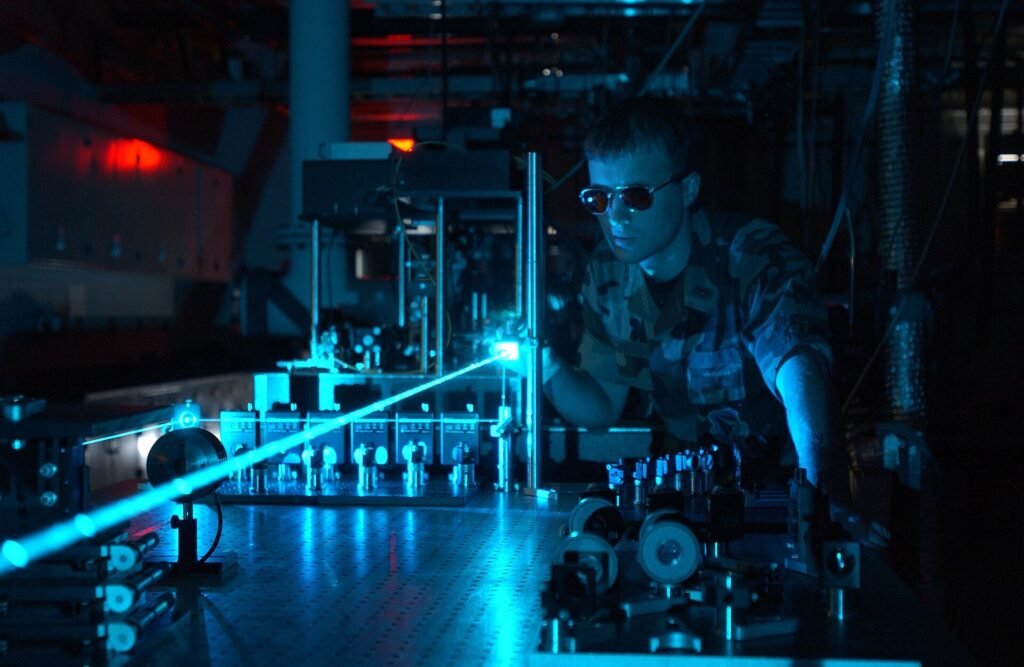
A laser is a device that produces a narrow, intense beam of light with a single, well-defined wavelength by stimulating atoms or molecules to release light in step with one another. The word is an acronym for light amplification by stimulated emission of radiation, and the light it produces is called coherent. History of the
Laser Read More »
A laser is a device that produces a narrow, coherent beam of light of one wavelength through stimulated emission of radiation.
In simple terms Marie Curie was a physicist and chemist whose research on radioactivity transformed science’s understanding of the atom, and who became the first person to win Nobel Prizes in two different scientific fields. [2] Life and work Born Maria Sklodowska in Warsaw in 1867, she moved to Paris to study physics and mathematics,
Marie Curie Read More »
Marie Curie was a physicist and chemist who pioneered research on radioactivity and became the first person to win Nobel Prizes in two different sciences.
Newton laws of motion are three physical principles, first stated together by Isaac Newton in his 1687 work Philosophiae Naturalis Principia Mathematica, that describe the relationship between a physical object and the forces acting upon it, and how that object moves in response. Together they formed the foundation of classical mechanics for more than two
Newton’s Laws of Motion Read More »
Three principles stated by Isaac Newton describing the relationship between a physical object, the forces acting on it, and its motion.
In simple terms Light in a vacuum travels at exactly 299,792,458 meters per second. Not approximately. Exactly. That precision does not come from an ever more careful experiment. Since 1983 the number has been fixed by international agreement, and the meter is defined from it. How it works In 1983 the General Conference on Weights
Speed of light Read More »
The speed of light in vacuum is exactly 299,792,458 meters per second, a fixed value that now defines how long a meter is.
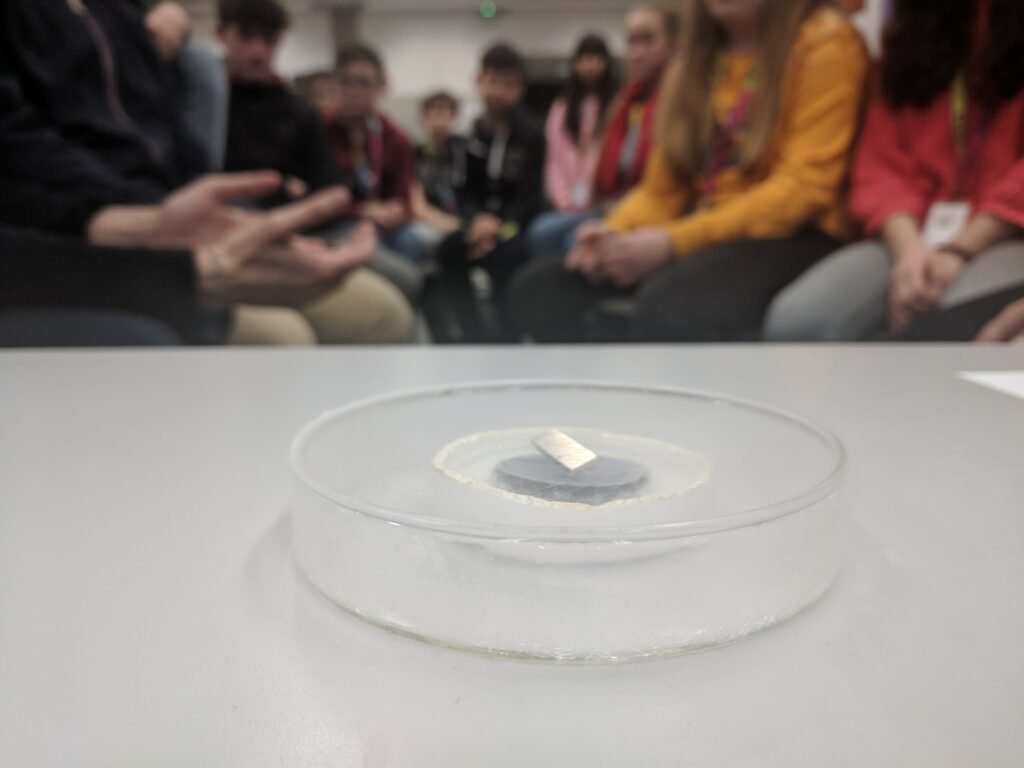
Superconductivity is a state of matter in which a material carries electric current with no electrical resistance and expels magnetic fields from its interior. It appears when certain materials are cooled below a critical temperature that differs from material to material. The effect has been known since 1911, and it now powers scientific instruments, medical
Superconductivity Read More »
A state in which a cooled material carries electric current with zero resistance and expels magnetic fields from its interior.
A thermometer is an instrument that measures temperature, usually by watching how a substance such as air, alcohol, mercury or a metal changes as it warms or cools. No single person invented it, because the device grew out of earlier thermoscopes that showed heat changes without a numbered scale. Today thermometers range from the sealed
Thermometer Read More »
A thermometer measures temperature, a device that grew from 1600s thermoscopes and now uses liquids, platinum sensors or infrared radiation.