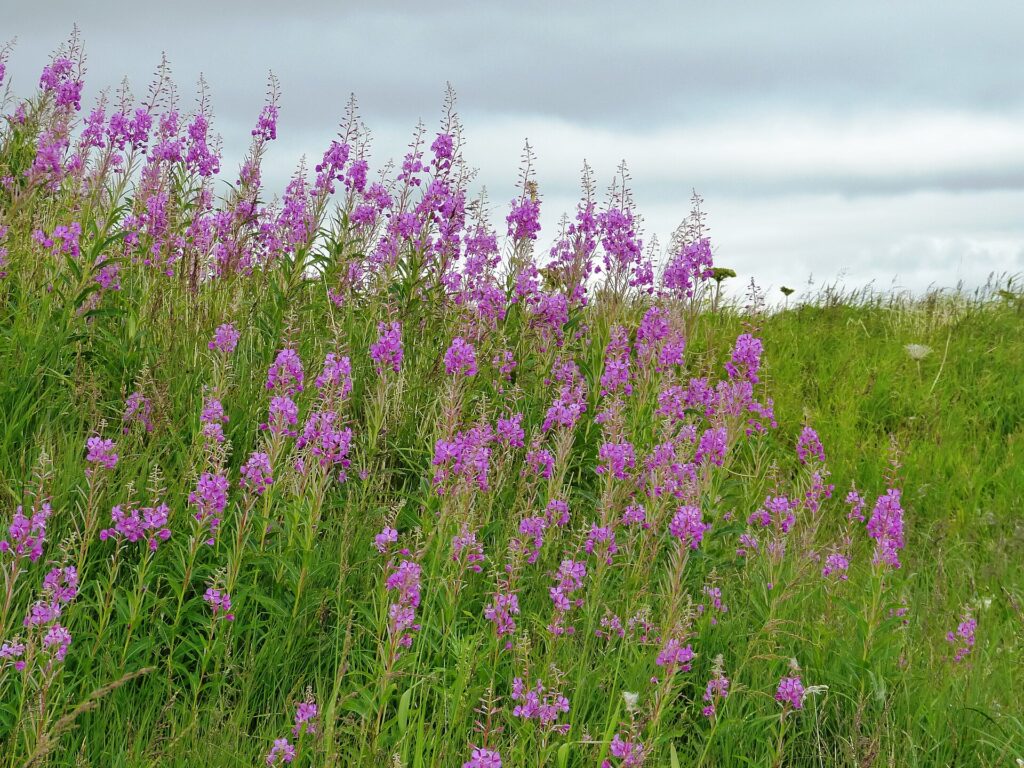
Fireweed (Chamaenerion angustifolium) is a tall pink-flowered plant that quickly colonises burned or disturbed ground across the Northern Hemisphere. It grows throughout Alaska and is the floral emblem of Yukon.[1] Fireweed in bloom in Alaska. Photo: USFWSAlaska / Public domain. Height 0.5–2 m Flowers Four magenta to pink petals, 2–3 cm across Seeds per plant
Fireweed Read More »
The pink pioneer wildflower of burned and cleared ground.
The alpine forget-me-not (Myosotis alpestris) is the official state flower of Alaska, adopted in 1917, more than four decades before statehood. A small plant with bright blue petals and a yellow and white center, it grows in open, rocky places high in the mountains throughout Alaska and is typically seen in midsummer [1][2][3]. Forget-me-not flowers.
Forget-Me-Not (Alaska State Flower) Read More »
The alpine forget-me-not is Alaska’s state flower, adopted in 1917.
In simple terms The giant panda is a bear native to central China, instantly recognizable by its black-and-white coat, that feeds almost entirely on bamboo despite belonging to a family of animals built to eat meat. [1] How it works Giant pandas live in a handful of mountain forest regions in central China, primarily in
Giant panda Read More »
The giant panda is a bear native to central China, easily recognized by its black-and-white coat, that feeds almost entirely on bamboo.
The gray wolf lives on about 85 percent of Alaska, with an estimated 7,000 to 11,000 wolves, and about 1,200 are harvested each year by licensed hunters and trappers.[1] A gray wolf in Alaska. Photo: Robbin D. Knapp from Ebensee, Austria / CC BY 2.0. Alaska population 7,000–11,000 Range About 85% of the state Annual
Gray Wolf in Alaska Read More »
Alaska’s wolves, living across most of the state.
The humpback whale migrates to Southeast Alaska each summer to feed. Adults are typically 14–15 metres long and can weigh up to 40 tonnes, and the North Pacific population is roughly 21,000 animals.[1] A humpback whale breaching in Alaska. Photo: Gillfoto / CC BY-SA 4.0. Adult length 14–15 m (up to 17 m) Weight Up
Humpback Whale in Alaska Read More »
The summer visitor of Alaska’s coastal waters.
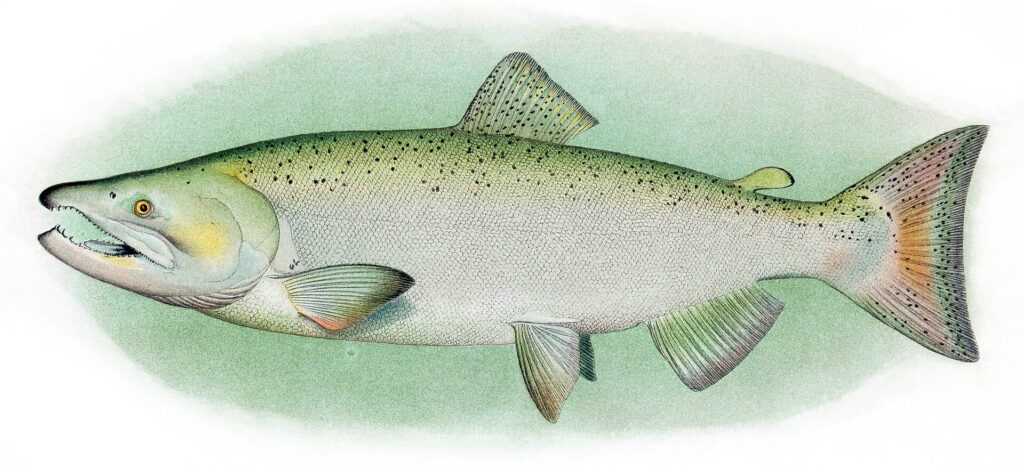
The king salmon, also called Chinook salmon (Oncorhynchus tshawytscha), is the largest Pacific salmon and the state fish of Alaska, designated in 1962. Adults typically weigh 10 to 50 pounds and can reach 130 pounds. The sport-caught world record, 97¼ pounds, was taken from Alaska’s Kenai River on May 17, 1985 [1][2]. A king salmon.
King Salmon (Alaska State Fish) Read More »
The king salmon is the largest Pacific salmon and the state fish of Alaska since 1962.
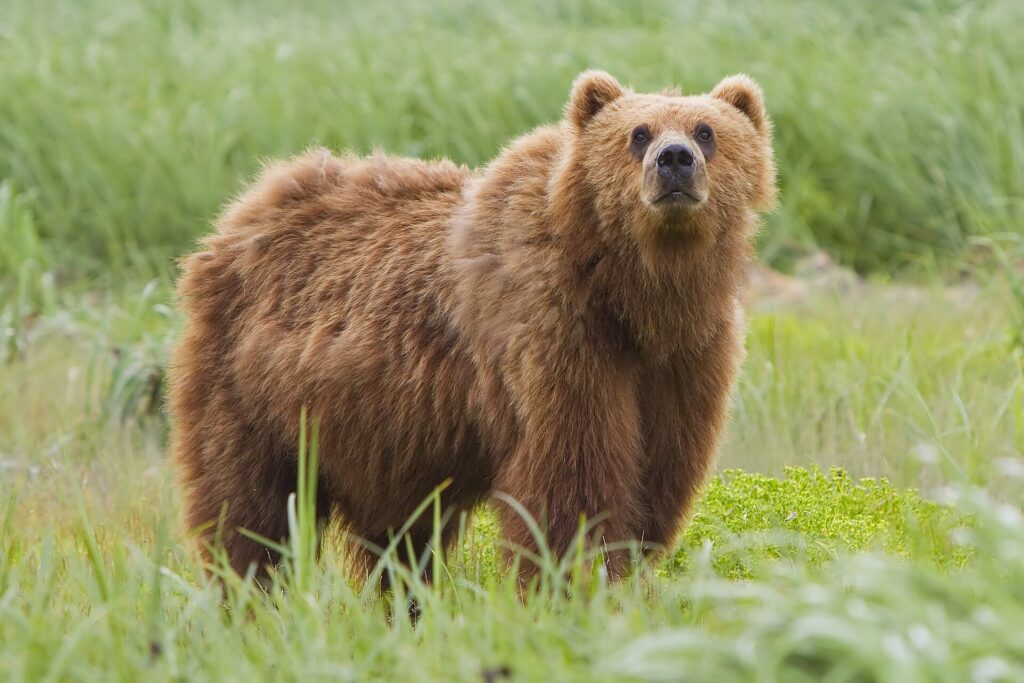
The Kodiak bear (Ursus arctos middendorffi) is a subspecies of brown bear found only on the Kodiak Archipelago in southwest Alaska. Isolated for roughly 10,000 to 12,000 years, it is among the largest bears in the world, with the largest recorded wild male weighing 751 kilograms.[1] A Kodiak bear fishing for salmon. Photo: Yathin S
Kodiak Bear Read More »
The giant island brown bear of Kodiak, Alaska.
In simple terms The monarch butterfly is a migratory butterfly native to North America, famous for an extraordinary multigenerational migration that can span thousands of miles between its summer breeding grounds and its winter shelter. [1] How it works Each year, monarch butterflies in eastern North America travel up to around 3,000 miles to reach
Monarch butterfly Read More »
The monarch butterfly is a migratory butterfly native to North America, famous for a multigenerational migration that can span thousands of miles.
The moose (Alces alces) is the largest member of the deer family and the official land mammal of Alaska, designated in 1998. The Alaska moose (A. a. gigas) is the largest subspecies, with bulls averaging about 634 kilograms and standing over 2.1 meters at the shoulder. Alaska has roughly 200,000 moose, out of about 300,000
Moose (Alaska State Land Mammal) Read More »
The moose is the largest deer and the official land mammal of Alaska, with about 200,000 in the state.
The muskox is an Arctic ungulate that survived the Ice Age and was wiped out in Alaska in the late nineteenth or early twentieth century. It was reintroduced, beginning with Nunivak Island in 1935, and its wool, qiviut, is prized for softness and warmth.[1] Muskoxen in Alaska. Photo: BLM Alaska / Public domain. Weight 180–410
Muskox in Alaska Read More »
The Arctic ungulate reintroduced to Alaska in 1935.