The orca or killer whale is common in Alaska waters, with the highest recorded densities along the Aleutian Islands and in the Gulf of Alaska. Eastern North Pacific orcas fall into fish-eating residents and mammal-eating transients.[1] An orca pod in Alaska waters. Photo: Christopher Michel / CC BY 2.0. Male length 6–8 m Female length
Orca in Alaska Waters Read More »
Alaska’s resident and transient killer whales.
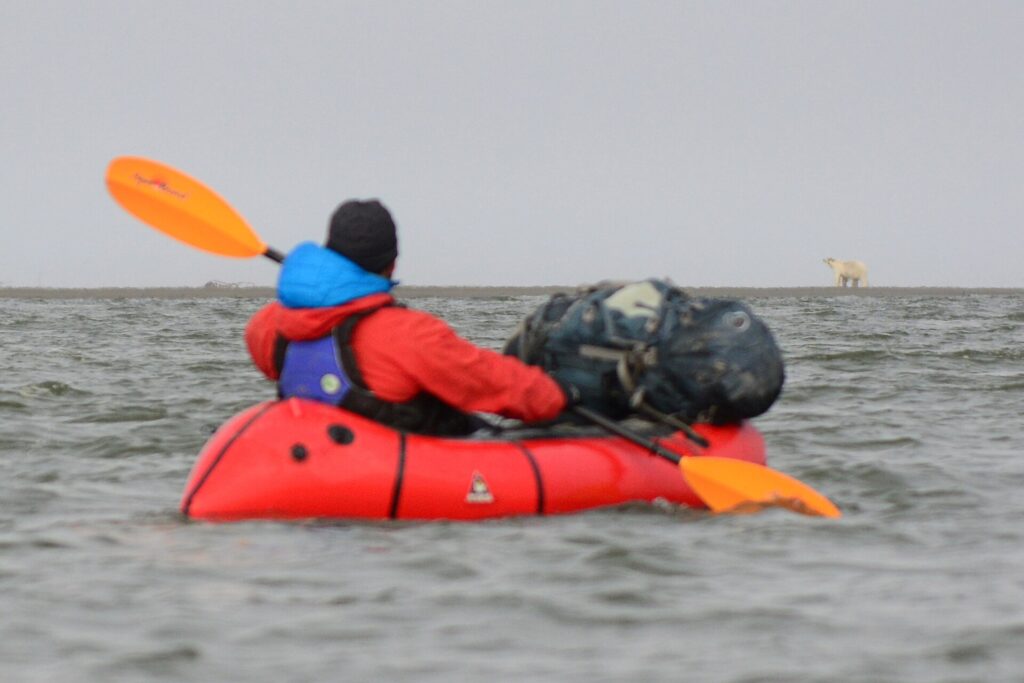
The polar bear (Ursus maritimus) is the largest land carnivore and the only bear classified as a marine mammal, and it lives along the Arctic coast of Alaska. Two subpopulations occur in the state: the Chukchi Sea population, shared with Russia, and the Southern Beaufort Sea population, shared with Canada. The species is listed as
Polar Bear in Alaska Read More »
The polar bear is a threatened marine mammal that lives on the Arctic coast of Alaska in two subpopulations.
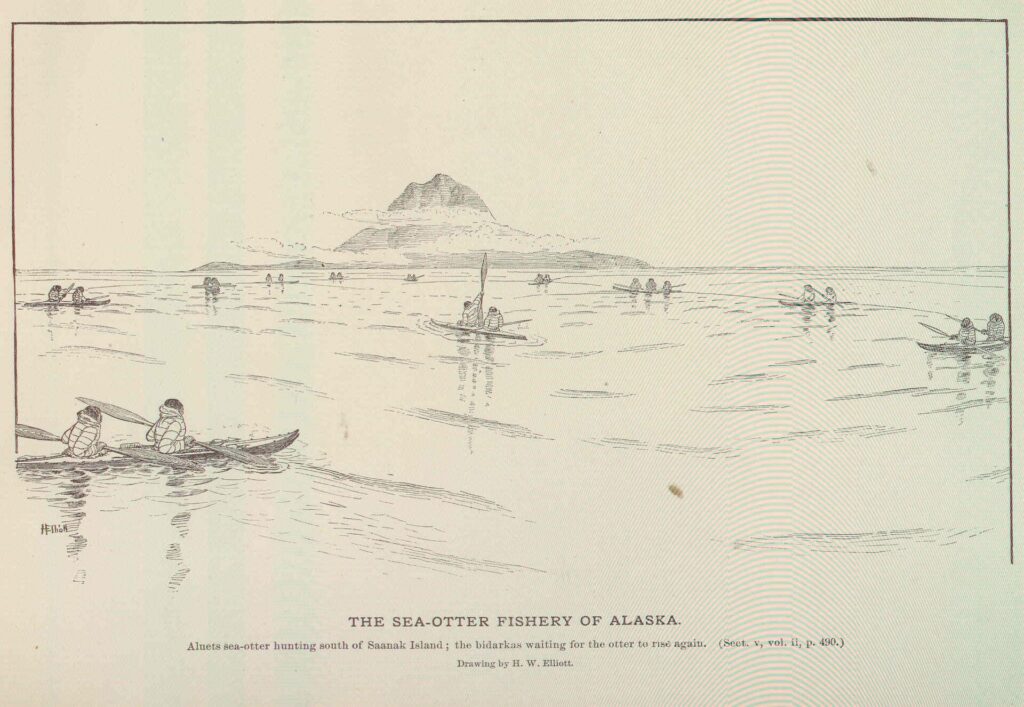
The sea otter has the densest fur of any animal, up to 150,000 hairs per square centimetre. Alaska holds most of the species, but its numbers there fell from 100,000–125,000 in 1973 to an estimated 73,000 by 2006.[1] A sea otter floating in Alaska waters. Photo: Henry Wood Elliott / Public domain. Fur density Up
Sea Otter in Alaska Read More »
The keystone marine mammal with the world’s densest fur.
The Sitka spruce (Picea sitchensis) is the largest species of spruce, growing to just over 100 meters (330 feet) in height, and is the state tree of Alaska, designated in 1962. It grows along the western coast of Canada and the United States, from the Kenai Peninsula in Alaska to near Fort Bragg, California, and
Sitka Spruce (Alaska State Tree) Read More »
The Sitka spruce is the largest spruce and the state tree of Alaska since 1962.
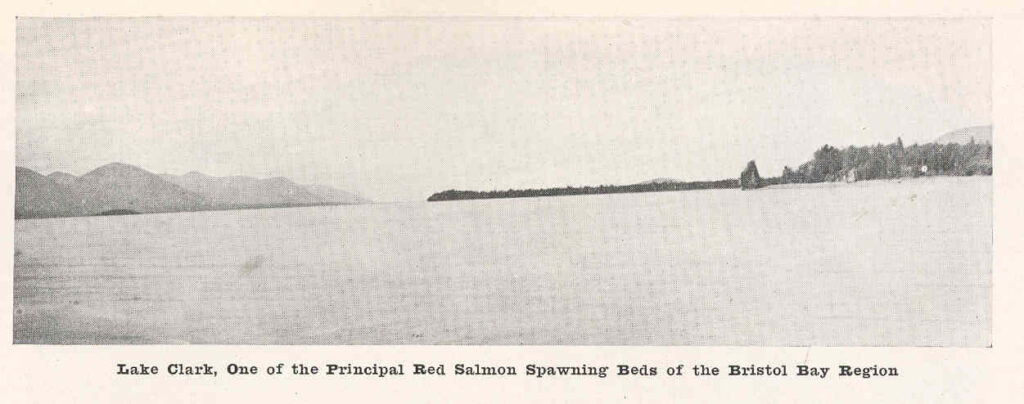
The sockeye salmon (Oncorhynchus nerka) is a Pacific salmon that turns red when it returns to spawn. Adults are 60 to 84 centimetres long, and Bristol Bay, Alaska, is the site of the world’s largest sockeye harvest.[1] Spawning sockeye salmon in an Alaska stream. Photo: Unknown authorUnknown author / Public domain. Length 60–84 cm Weight
Sockeye Salmon Read More »
The red salmon of Alaska’s lake-fed rivers.
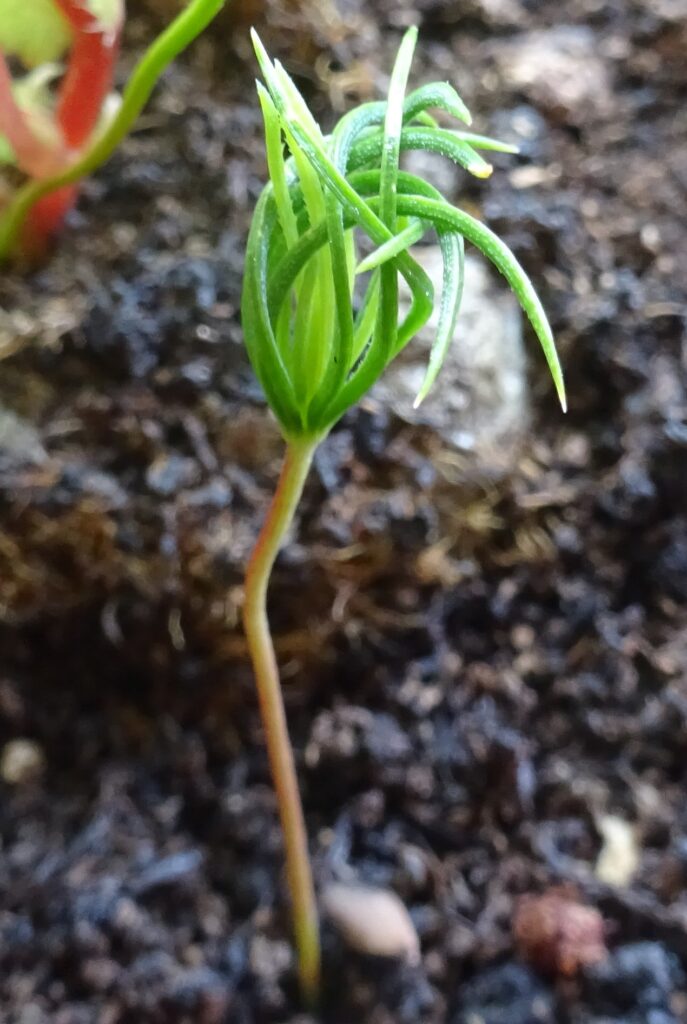
The longleaf pine (Pinus palustris) is the state tree of Alabama. It is a tall evergreen with very long needles and large cones, and it once formed vast open forests across the coastal plain of the Southeast. The tree is closely tied to fire, which clears competing plants and helps its seedlings grow. Alabama named
Southern Longleaf Pine (Alabama State Tree) Read More »
The longleaf pine (Pinus palustris) is a fire-adapted southern pine and the official state tree of Alabama.
The tufted puffin is the largest puffin species, about 35 centimetres long and 0.75 kilograms. It breeds in colonies in Southeast Alaska and the Aleutian Islands and spends the rest of the year at sea in the North Pacific.[1] A tufted puffin in Alaska. Photo: USFWSAlaska / Public domain. Length About 35 cm Weight About
Tufted Puffin Read More »
The largest puffin, nesting in Alaska’s coastal colonies.
The Pacific walrus is a large tusked marine mammal that migrates through the Bering Strait into the Chukchi Sea each summer. Males commonly weigh 800 to 1,700 kilograms, and the species depends on sea ice for resting and giving birth.[1] Pacific walruses hauled out on a beach. Photo: Unknown authorUnknown author or not provided /
Walrus in Alaska Read More »
The tusked marine mammal of the Bering and Chukchi seas.
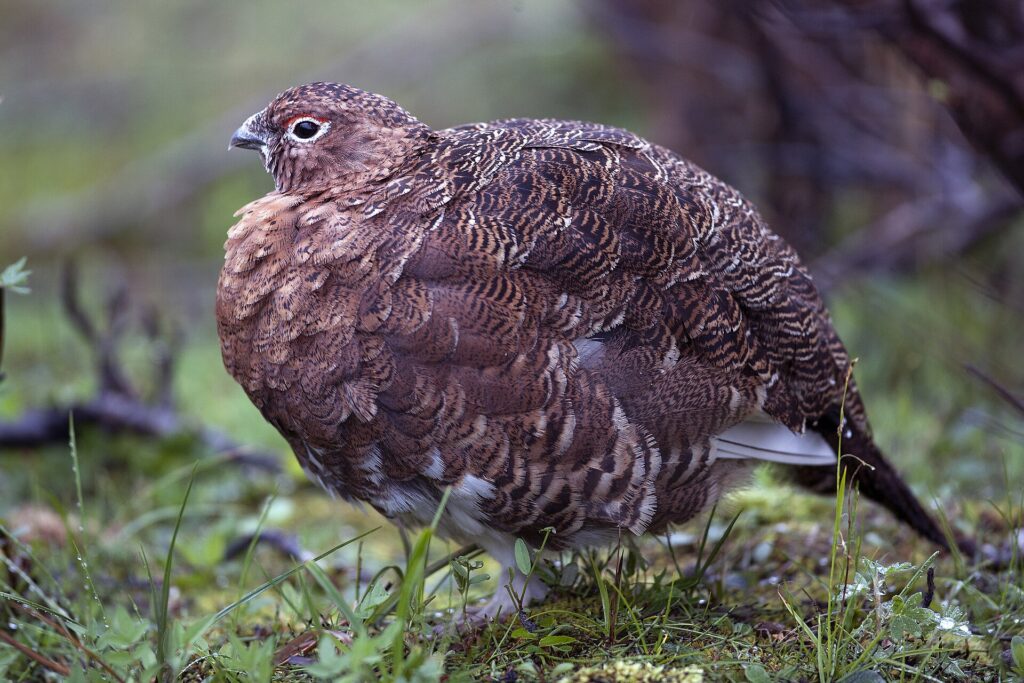
The willow ptarmigan (Lagopus lagopus) is a medium-to-large grouse of northern regions and the state bird of Alaska, adopted in 1955. Adults are 35 to 44 centimeters long and weigh 430 to 810 grams, and the bird turns white in winter to blend with snow. The IUCN classifies it as Least Concern, with a total
Willow Ptarmigan (Alaska State Bird) Read More »
The willow ptarmigan is a grouse that turns white in winter and the Alaska state bird since 1955.
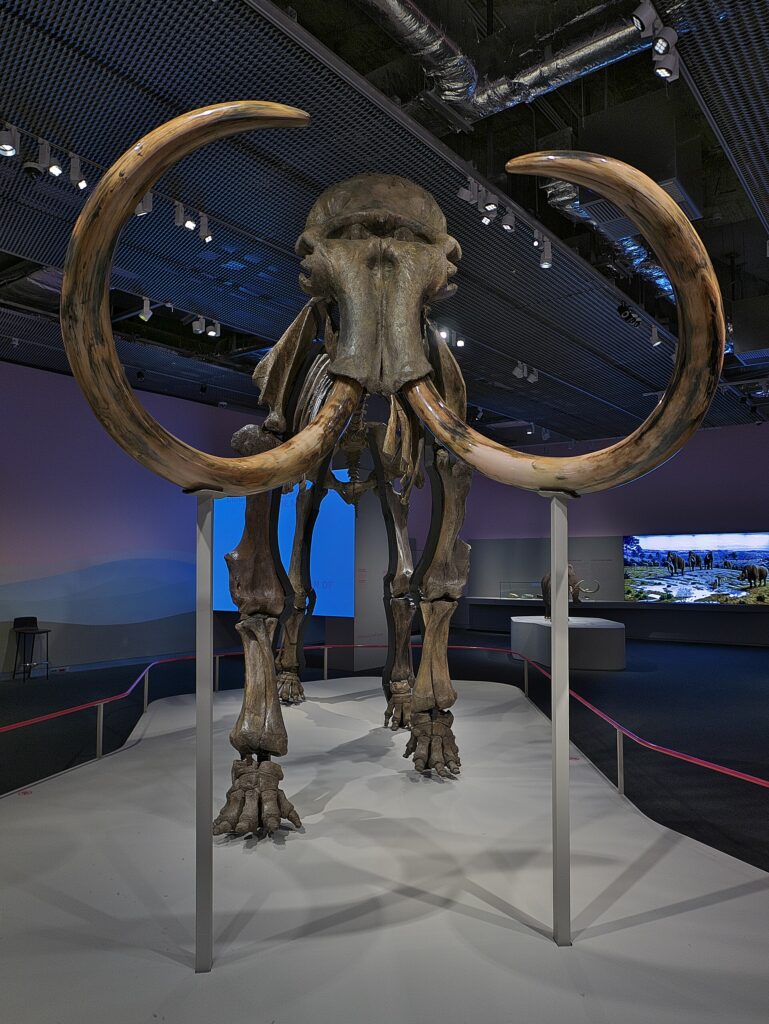
The woolly mammoth (Mammuthus primigenius) is an extinct elephant relative of the Ice Age mammoth steppe and the official state fossil of Alaska, designated in 1986. Males stood about 2.7 to 3.5 meters at the shoulder and weighed 3.9 to 8.2 tonnes. Mammoth bones, tusks and mummified remains are regularly found in the permafrost of
Woolly Mammoth (Alaska State Fossil) Read More »
The woolly mammoth is an extinct Ice Age elephant and the Alaska state fossil since 1986.