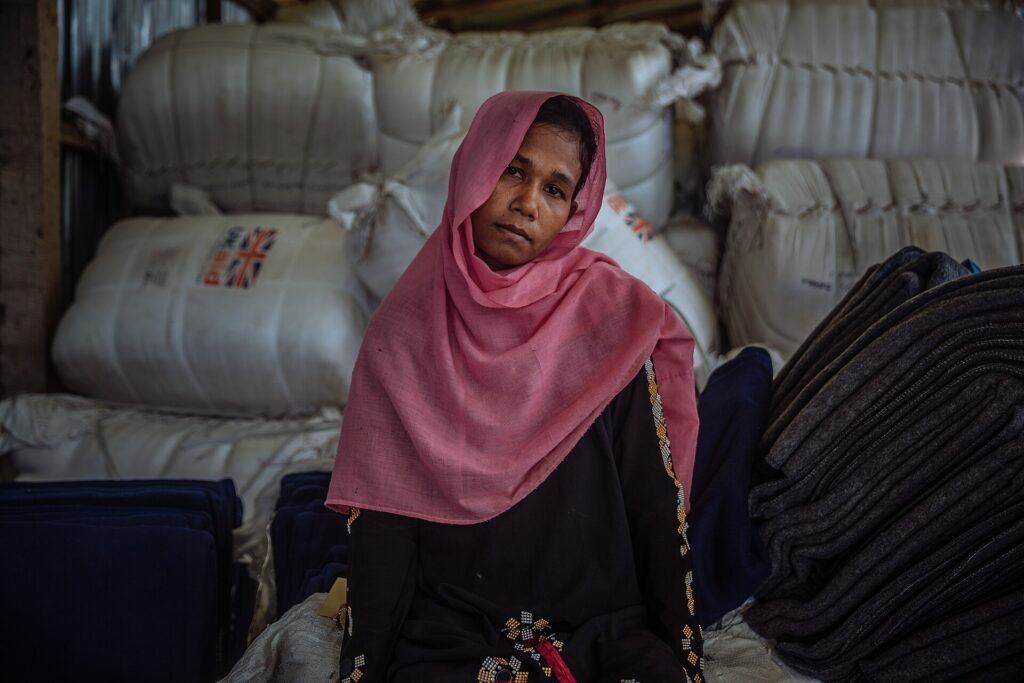
The World Food Programme (WFP) is the United Nations agency that delivers food assistance in emergencies and works with communities to improve nutrition and build resilience. It was established in 1961, is funded entirely by voluntary contributions, and received the Nobel Peace Prize in 2020.
History of the World Food Programme
A United Nations General Assembly resolution established WFP in 1961 as a joint effort of the UN and the Food and Agriculture Organization. Its first emergency operation came in 1962, when an earthquake in Iran killed more than 12,000 people and WFP supplied wheat, sugar and tea.
In 1963 the agency began its development mission. At the Aswan High Dam on the Nile in Egypt, it provided food for four years to about 50,000 Nubian people who were resettled as the dam was built. The same year, it started what became its school meals work, delivering food to 5,000 children in Togo.
Later decades brought larger operations. In the Sahel it led emergency relief airdrops from 1973. In 1980 it headed its first multinational inter-agency relief operation, for 370,000 Cambodian refugees who had fled to Thailand. From 1983 to 1985 it delivered 2 million metric tons of aid during the Ethiopian famine, and in 1989 Operation Lifeline Sudan, which WFP led alongside UNICEF, carried out what it describes as the largest humanitarian airdrop in history.
In the 2000s WFP began using cash and vouchers so that people could buy food in local markets instead of receiving rations, and the United Nations asked it to lead emergency logistics for all UN agencies and non-governmental organizations. It also operates the United Nations Humanitarian Air Service, which began in 2003.
Mission and what WFP does
WFP says hunger should be a thing of the past because enough food is produced to feed everyone, yet conflict, weather extremes, displacement, economic shocks and inequality leave millions acutely hungry. It reports that 266 million people are acutely hungry.
The agency has a presence in more than 120 countries and territories and about 20,000 staff. On any given day it can have 4,300 trucks, 55 aircraft and 135 ships moving food and other aid. Two-thirds of its work is in conflict-affected countries, where, it notes, people are three times more likely to be undernourished than people in countries without conflict.
Its programs fall into several groups:
Emergency relief: bringing food to people displaced by conflict or affected by disasters.
Nutrition: enhancing nutrition for women and children.
Livelihoods and resilience: supporting smallholder farmers and helping communities cope with climate-related shocks.
School meals: WFP calls itself the largest humanitarian organization implementing school meal programs, with more than 50 years of experience.
In 2025 WFP delivered 2.3 million metric tons of food and disbursed US$2.2 billion in cash-based transfers and commodity vouchers.
Major operations
WFP’s history lists a series of large emergency responses. In 1994 it delivered food by air and road to survivors and refugees of the Rwandan genocide, after killings sent about 3 million people fleeing into neighboring countries. In 1998 it dispatched food to more than 600,000 people in Guatemala, El Salvador, Honduras and Nicaragua after Hurricane Mitch. After the war in Iraq in 2003 it fed a record 27.1 million people over seven months.
After the 2010 earthquake in Haiti it provided food to 4.5 million people between February and April. In 2014 it fed more than 3 million people affected by the West African Ebola outbreak. In 2015 it reached 9 million hungry people in Yemen, and during the COVID-19 pandemic it adapted its operations to limit the effect on the 138 million people it had targeted for assistance.
Funding and governance
WFP’s operations are entirely funded by voluntary contributions from donor governments, institutions, corporations and individuals. Its stated funding requirement for 2026 is US$13 billion to reach 110 million people. It says that 93.5 percent of all government contributions go directly to supporting operations.
The agency publishes lists of donors by year and has been a member of the International Aid Transparency Initiative since 2012, publishing monthly financial data for its operations. It reports carrying out independent audits, investigations, inspections and periodic independent evaluations.
WFP works in partnership with governments, other United Nations agencies, non-governmental organizations and private companies to mobilize resources and reach vulnerable communities.
Nobel Peace Prize and recognition
In 2020 the Norwegian Nobel Committee awarded WFP the Peace Prize for its efforts to combat hunger, its contribution to bettering conditions for peace in conflict-affected areas, and its role as a driving force in efforts to prevent the use of hunger as a weapon of war and conflict. The Committee noted that in 2019 WFP had provided emergency food assistance in 88 countries and that more than 100 million people suffered from severe hunger that year, most as a result of war and conflict.
Challenges
WFP’s own history records the strain that funding places on its work. In 2023 it was forced to cut rations sharply in most of its operations as international humanitarian funding fell. It described a shortfall of over 60 percent, the highest in its history.
It also records a global food crisis that began in 2022 and that it describes as the largest in modern history, driven by the war in Ukraine, climate shocks and the threat of global recession. In 2025 two famines were confirmed at the same time for the first time this century, in Gaza and in parts of Sudan. WFP says it provided food assistance wherever possible despite funding shortfalls, conflict, access constraints and damaged supply routes.
Legacy and impact
WFP began as an experimental program and became the largest humanitarian agency saving lives in emergencies, a role the Nobel Committee recognized. Its work shifted over time from handing out rations to include cash, vouchers, school feeding and logistics support for the wider humanitarian system.
More in Agriculture & Food
Key facts
- A UN General Assembly resolution established WFP in 1961 as a joint UN and FAO effort.2
- WFP has a presence in more than 120 countries and territories and about 20,000 staff.1
- In 2025 WFP delivered 2.3 million metric tons of food and disbursed US$2.2 billion in cash-based transfers and vouchers.1
- WFP won the Nobel Peace Prize in 2020.3
- Its funding requirement for 2026 is US$13 billion to reach 110 million people.1
Related concepts
Quick checkHow is the World Food Programme funded?Show answer
Entirely through voluntary contributions from donor governments, institutions, corporations and individuals, rather than assessed dues from member states.
Sources
- World Food Programme, Who we are, https://www.wfp.org/overview
- World Food Programme, History, https://www.wfp.org/history
- NobelPrize.org, World Food Programme: Facts, Nobel Peace Prize 2020, https://www.nobelprize.org/prizes/peace/2020/wfp/facts/
Editorially reviewed by Specialty Digest Editorial TeamLast reviewed November 4, 2026Researched and drafted with AI assistanceReport an issue