Eisenhower Sends Troops to Integrate Little Rock
When a governor called out the National Guard to keep Black students out of a Little Rock high school, the President answered by sending in the U.S. Army to walk them through the door.
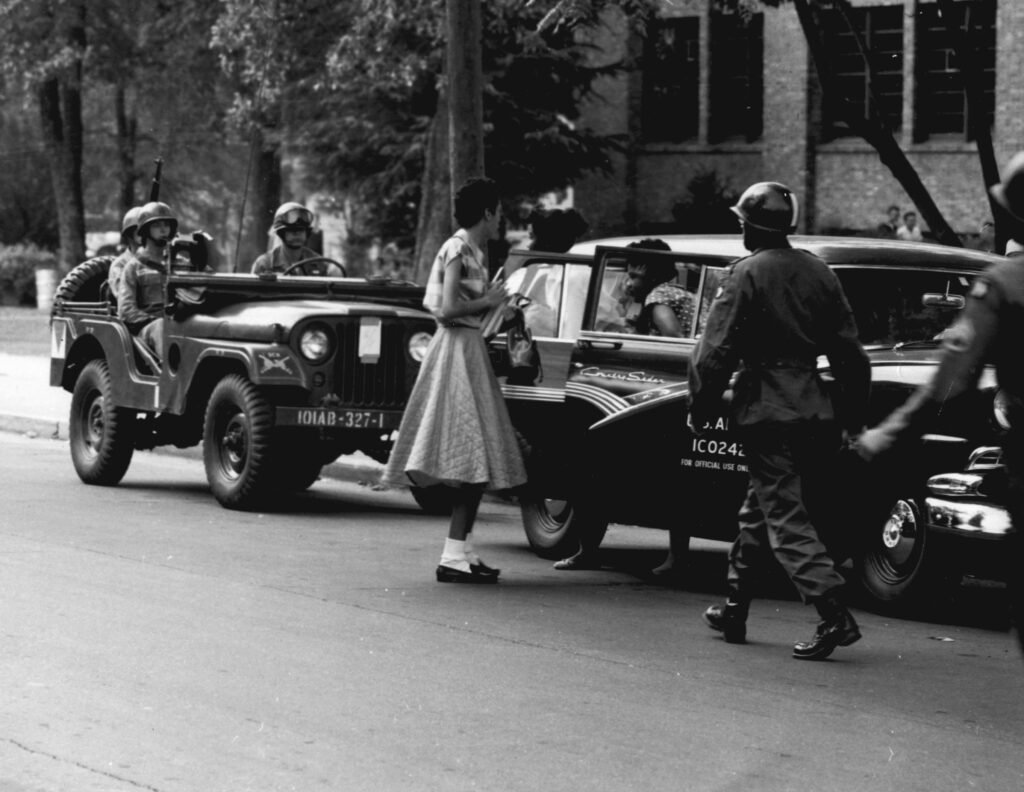
On September 24, 1957, President Dwight D. Eisenhower signed Executive Order 10730, placing Arkansas’s National Guard under federal command and ordering about 1,000 paratroopers of the Army’s 101st Airborne Division into Little Rock. The next morning, armed soldiers escorted nine Black students past a hostile crowd and into Central High School.
It marked the first time since Reconstruction that a president sent federal troops into the South to enforce Black Americans’ constitutional rights over a governor’s objection, showing that the Supreme Court’s 1954 Brown v. Board of Education ruling now carried the federal government’s full force behind it.
A right recognized on paper is not the same as a right delivered in practice. Central High had sat under a Supreme Court desegregation order for three years before anyone enforced it. The gap between a law and its enforcement is where civil rights battles are actually won or lost.
People Behind the Story
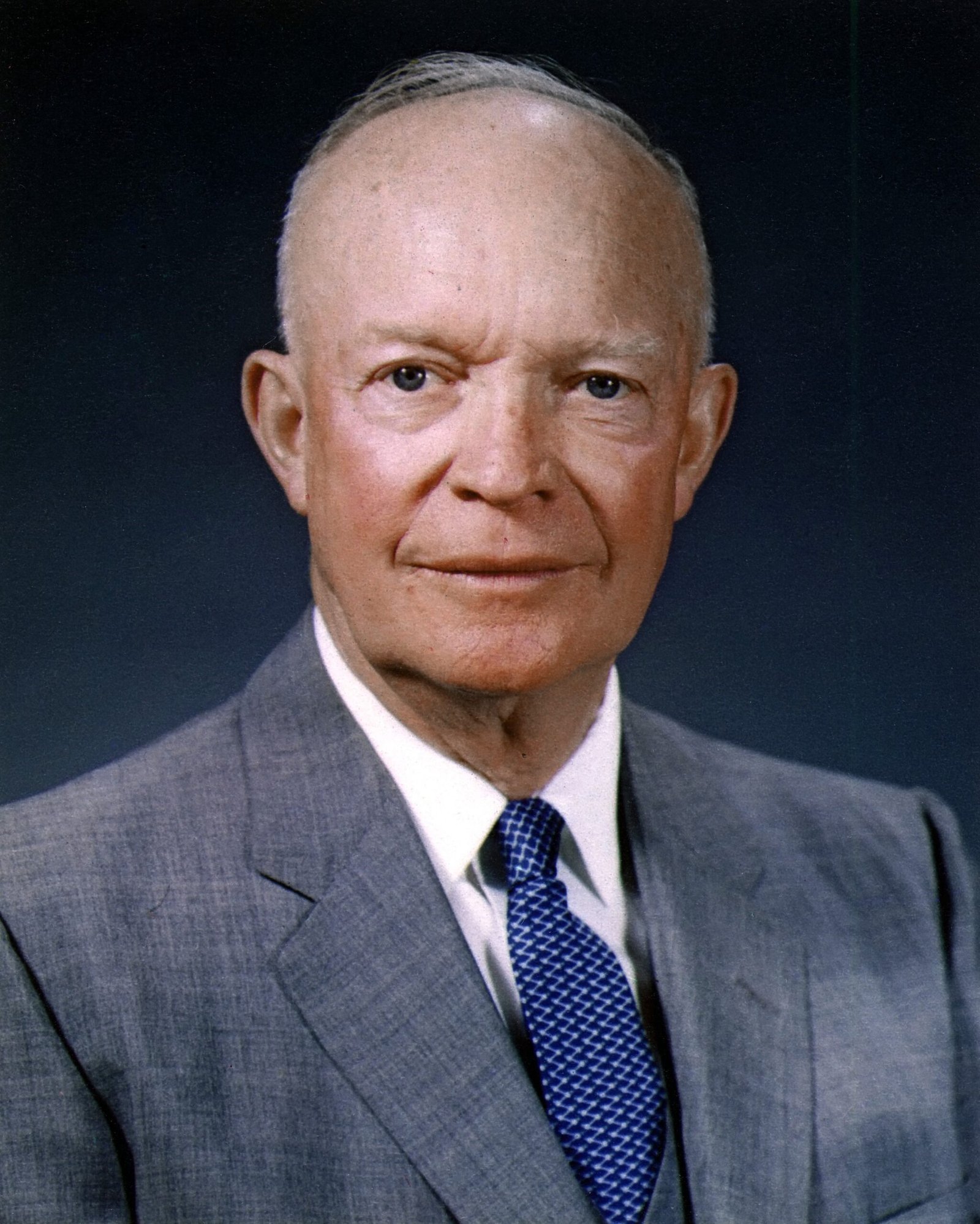
Eisenhower had resisted federal intervention for weeks, but once Governor Orval Faubus let a mob overpower local police, he federalized the Arkansas Guard and ordered in the 101st Airborne within a single day.
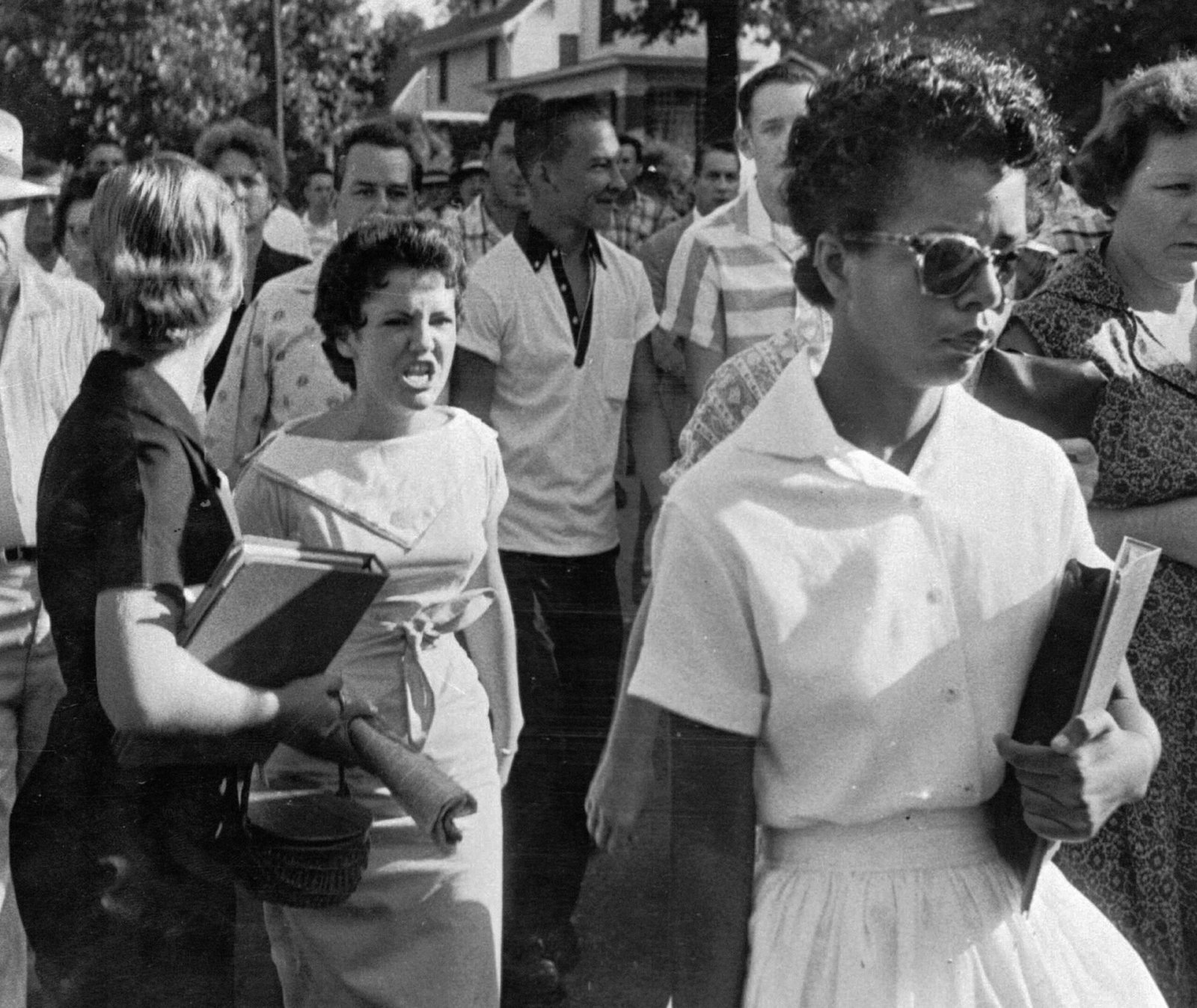
Turned away alone by armed guardsmen on September 4 and jeered by a crowd as she tried to reach the school, Eckford became the face of the crisis in a photograph published nationwide three weeks before troops finally arrived.
Key Moments
Fifteen-year-old Elizabeth Eckford tries to enter Central High alone. National Guardsmen turn her away and a jeering crowd follows her down the block, producing one of the era’s most widely published photographs.
A federal judge rules that Governor Faubus used the National Guard to obstruct a court-ordered integration plan and orders the troops withdrawn.
The Little Rock Nine enter Central High through a side door, but as a mob outside grows past 1,000 people, city police pull the students out for their own safety.
Eisenhower signs Executive Order 10730, federalizes the Arkansas National Guard, and orders roughly 1,000 paratroopers of the 101st Airborne Division into Little Rock. That evening he addresses the nation on television.
Under armed escort, the Little Rock Nine walk into Central High School and complete their first full day of classes.
Did you know? Rather than keep integrating, Little Rock closed all four of its public high schools for the entire 1958 to 1959 school year, a period remembered as the Lost Year. It took a Supreme Court ruling and a local recall vote to force the schools back open.
- “Executive Order 10730,” The American Presidency Project, UC Santa Barbara
- “Civil Rights: The Little Rock School Integration Crisis,” Dwight D. Eisenhower Presidential Library
- “Army Commemorates 1957 Little Rock Deployment,” U.S. Army
- “Little Rock Nine,” Encyclopaedia Britannica
- “Lost Year,” Encyclopedia of Arkansas