Overview A sommelier is a trained wine professional responsible for curating a restaurant wine list, advising guests on selections, and ensuring proper storage and service standards. Certification and Training Professional sommelier certification involves rigorous examinations covering blind tasting skills, wine theory, and service technique, with the highest certification levels recognized as among the most difficult
Sommelier and Wine Service Read More »
A sommelier is a trained wine service professional who manages a restaurant wine program, advises guests on pairings, and oversees proper wine storage and service.
Sonata form, also called sonata-allegro form, is a musical structure used to organize a single movement, most often the first movement, of a larger work such as a sonata, symphony, or string quartet. Built around the thematic and harmonic organization of tonal material, it became the dominant framework for serious instrumental composition during the Classical
Sonata form Read More »
A musical structure of exposition, development and recapitulation used to organize a movement, most often a first movement.
Overview Soteriology is the branch of theology concerned with the doctrine of salvation, examining how a particular religious tradition understands liberation from sin, suffering, or spiritual ignorance. The term derives from Greek roots meaning the study of salvation, and soteriological questions sit at the heart of many religious traditions core teaching. Models of Salvation Religious
Soteriology Read More »
The branch of theology concerned with the doctrine of salvation, including how individuals are understood to be saved or liberated from sin, suffering, or ignorance.
Source confidentiality lets journalists gather information that would otherwise stay hidden, at the cost of asking readers to trust an unnamed voice. When Confidentiality Is Granted Reputable newsrooms reserve anonymity for cases where a source faces genuine risk, such as retaliation from an employer or physical danger, rather than granting it routinely. Internal Verification Even
Source Confidentiality Read More »
Source confidentiality is the journalistic practice of protecting the identity of a person who provides information under a promise of anonymity.
Sous vide, French for under vacuum, is a cooking technique in which food is sealed in an airtight bag and cooked for an extended period in a precisely controlled water bath held at a specific, relatively low temperature, allowing food to cook evenly throughout to an exact desired level of doneness without the risk of
Sous Vide Read More »
A cooking technique using a sealed bag and a precisely controlled water bath to cook food evenly to an exact doneness.
Sovereignty is the supreme authority a state holds over its own territory and population, free from outside control. It is the organizing principle of the modern international system: every recognized state is treated as the final legal authority within its own borders, equal in legal status to every other state regardless of size or power,
Sovereignty Read More »
The supreme authority a state holds over its own territory and population, free from outside control.
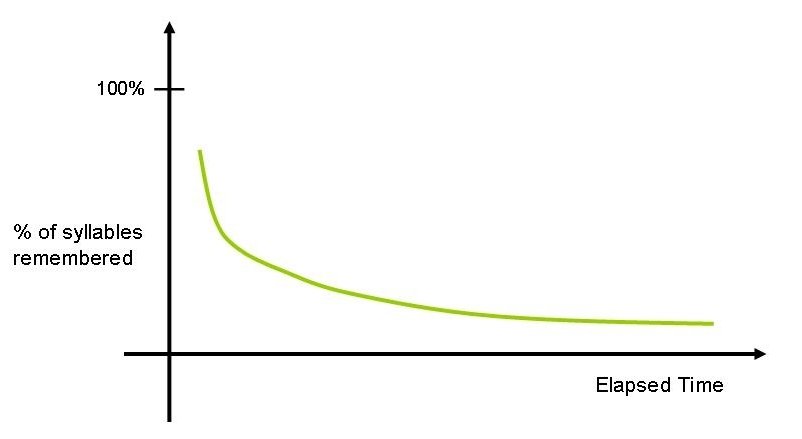
In simple terms Spaced repetition means returning to the same material several times with gaps in between, instead of studying it all in one go. The finding behind it is called the spacing effect: repetitions spread out in time tend to produce stronger memories than repetitions packed close together. How it works Researchers contrast spaced
Spaced repetition Read More »
Spaced repetition is reviewing material in separate sessions spread over time, which builds stronger memory than the same practice packed together.
The spacing effect is the well-documented finding that people remember information better and for longer when study sessions covering that information are spread out over time rather than crammed into a single, concentrated session. The effect was first documented experimentally by psychologist Hermann Ebbinghaus in the late nineteenth century through his pioneering studies of memory
Spacing effect Read More »
The finding that information is remembered better when study sessions are spread out over time rather than crammed together.
Species reintroduction is the deliberate release of animals or plants into an area where the species previously existed but has since disappeared, typically as a result of hunting, habitat destruction, or other human-caused pressures. The goal is to reestablish a self-sustaining wild population in its former range, and the practice has become an important tool
Species Reintroduction Read More »
Species reintroduction is the deliberate release of animals or plants into an area where they once lived but had disappeared, to restore the population.
Origins and Definition of Speciesism The term speciesism, popularized by philosopher Peter Singer in his influential 1975 work, describes the assumption that human interests automatically and categorically outweigh the interests of other sentient species, by analogy to other forms of discrimination based on group membership rather than individually relevant characteristics. The concept challenges the default
Speciesism and Moral Status of Animals Read More »
The philosophical examination of whether species membership alone justifies differential moral consideration between humans and other sentient beings.