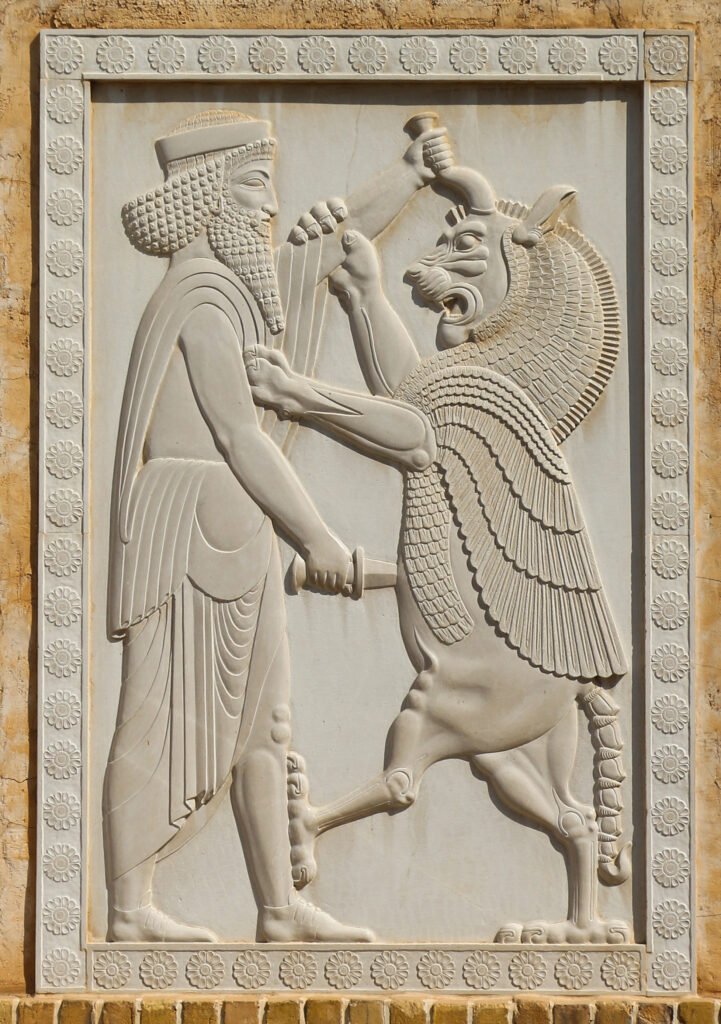
Overview
Zoroastrianism is one of the oldest monotheistic religions in continuous practice, founded in ancient Persia by the prophet Zoroaster, also known as Zarathustra. Its teachings center on Ahura Mazda, a single supreme god associated with wisdom, order, and truth, who is understood to be locked in an ongoing cosmic struggle against the forces of falsehood and chaos.
Core Beliefs
Zoroastrian ethics are often summarized in the triad of good thoughts, good words, and good deeds, reflecting a strong emphasis on moral choice and personal responsibility. Followers believe each person plays an active role in the cosmic struggle between order and chaos through the choices they make in daily life.
Worship and Symbols
Fire holds special significance in Zoroastrian worship as a visible symbol of divine light and purity, and temples maintain continuously tended sacred fires rather than treating fire itself as a deity. Prayer, purification rituals, and seasonal festivals mark the Zoroastrian religious calendar, with the New Year festival of Nowruz among its best known contributions to wider Persian culture.
Historical Development
Zoroastrianism rose to prominence as the dominant religion of several Persian empires before the spread of Islam across the region reduced its numbers substantially. Many Zoroastrians migrated to India over the following centuries, forming the Parsi community that preserved the tradition largely outside its original homeland.
Role Today
Zoroastrian communities today are small, concentrated mainly among Parsis in India and Iranis in Iran, alongside smaller diaspora populations elsewhere. Despite its modest numbers, the religion has had a lasting influence on later monotheistic traditions and continues to shape the cultural identity of its remaining followers.
Ethics and the Afterlife
Zoroastrian teaching holds that individuals will face judgment after death based on the balance of their good and bad thoughts, words, and deeds during life, with the soul crossing a symbolic bridge that becomes either passable or perilous depending on this moral balance. This emphasis on individual moral accountability and a cosmic struggle between good and evil forces is thought by many scholars to have influenced later religious traditions that emerged in the same region.
Community and Identity
Parsi communities in India, descended from Zoroastrian refugees who fled Persia centuries ago, have historically played an outsized role in business, philanthropy, and civic life in cities such as Mumbai, despite their small population. Maintaining distinct identity while adapting to new homelands has been a recurring theme in Zoroastrian history, from the original migration to India through ongoing life in diaspora communities worldwide today.
Sacred Texts
The Avesta, a collection of hymns and liturgical texts attributed in part to Zoroaster himself, forms the core scripture of the tradition, though much of the original material was lost over centuries of upheaval and only partially preserved. The surviving hymns, known as the Gathas, are considered the closest surviving record of Zoroaster own teaching and remain central to Zoroastrian liturgy today.
Influence on Later Religions
Many scholars have noted conceptual parallels between Zoroastrian ideas, such as a final judgment, a struggle between good and evil, and a coming savior figure, and later developments within Judaism, Christianity, and Islam, particularly during periods of Persian political influence over the region. While direct historical influence is debated among specialists, the comparison remains a significant point of interest in the study of religious history.
Symbols and Festivals
The faravahar, a winged figure often seen on Zoroastrian monuments, is widely recognized as a symbol of the faith, though its precise original meaning remains debated among scholars. Seasonal festivals tied to the agricultural calendar, most notably Nowruz marking the new year, remain widely celebrated well beyond the Zoroastrian community itself across the broader Persian cultural sphere.
Scholarly Interest
Despite its relatively small number of adherents today, Zoroastrianism continues to attract significant academic interest for its role in the history of religion and its possible influence on later monotheistic traditions across the region. Scholars of ancient Iran, linguistics, and comparative religion regularly draw on Zoroastrian texts and practices to better understand the broader religious history of the ancient Near East.
Challenges Facing the Community
Zoroastrian communities today face demographic challenges tied to their relatively small and aging population, prompting ongoing discussion within the community about conversion, intermarriage, and how best to preserve the tradition for future generations. These debates reflect broader questions faced by many small religious communities seeking to balance continuity with adaptation.
Summary of Enduring Influence
Though small in number today, Zoroastrian communities carry forward one of the oldest continuous religious traditions in human history, preserving rituals, texts, and ethical teachings that have shaped and been shaped by the broader religious history of the regions where the faith has taken root. Its emphasis on moral choice and the ongoing struggle between truth and falsehood remains a distinctive contribution to the history of world religion.
Preservation efforts by Parsi and Irani community organizations, alongside growing academic interest in ancient Iranian religion, suggest the tradition detailed historical record will continue to inform scholarship for generations to come.
Visitors to Zoroastrian fire temples, where permitted, often come away with a renewed appreciation for how a small community can sustain an unbroken ritual tradition across many centuries of change.
That same sense of continuity, carried forward despite centuries of displacement and demographic decline, is part of what makes Zoroastrianism such a valuable case study for historians of religion seeking to understand how ancient traditions adapt and endure.
This small but resilient community keeps the ancient tradition alive today.
Few faiths carry such ancient roots into modern times.
More in World Religions
Key facts
- One of the oldest continuously practiced monotheistic religions, founded in ancient Persia
- Teaches worship of a single supreme god, Ahura Mazda, alongside a cosmic struggle between order and chaos
- Today practiced mainly by small Parsi and Irani communities in India and Iran
Quick checkWhy is fire considered especially sacred in Zoroastrian worship?Show answer
Fire is treated as a physical symbol of Ahura Mazda light, truth, and purity rather than as an object of worship itself, and Zoroastrian temples maintain continuously burning sacred fires tended by priests, which is why outside observers have sometimes mistakenly called Zoroastrians fire worshippers even though the fire functions as a point of focus for prayer rather than a deity.
Sources
- Encyclopaedia Iranica
- World Zoroastrian Organisation
Editorially reviewed by Specialty Digest Editorial TeamLast reviewed November 4, 2026Researched and drafted with AI assistanceReport an issue