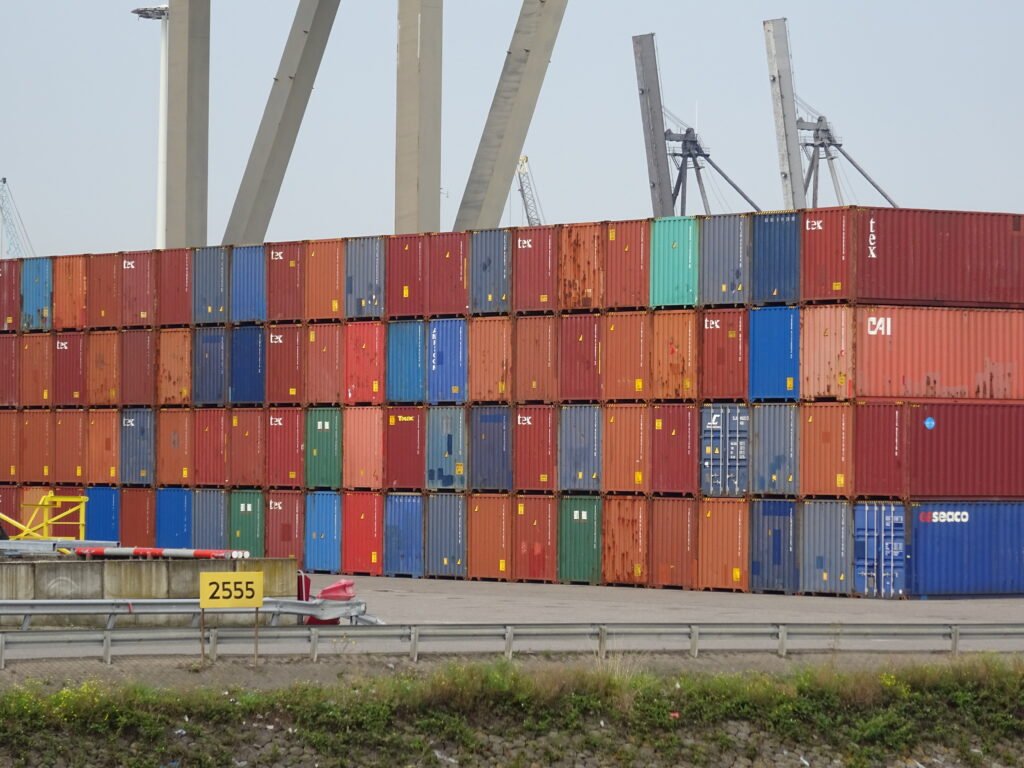
What Containerization Is
Containerization is the practice of packing goods into standardized steel shipping containers that can be lifted, stacked, and transferred between ships, trains, and trucks without ever unloading the contents inside. This standardization transformed global freight transportation by making cargo handling fast, predictable, and far less labor-intensive than earlier methods.
History and Standardization
Containerized shipping emerged in the mid-twentieth century and was formally standardized through the International Organization for Standardization in the 1960s, establishing common container dimensions still used worldwide today. This standardization meant a container built by one manufacturer could be handled by cranes, trucks, and railcars built by entirely different companies anywhere in the world.
Impact on Global Trade
Before containerization, cargo was loaded and unloaded piece by piece, a slow, labor-intensive, and theft-prone process. Containerization cut port turnaround times dramatically and reduced the labor needed to load and unload a ship, which in turn lowered shipping costs enough to make long-distance manufacturing and global supply chains economically practical on a massive scale.
Container Types and Sizes
Standard containers come in common lengths, most often twenty and forty feet, with specialized variants including refrigerated containers for perishable goods, open-top containers for oversized freight, and tank containers for liquids. This variety lets containerization handle most categories of general cargo, not just dry packaged goods.
Container Ports and Cranes
Modern container ports use massive ship-to-shore gantry cranes capable of lifting containers directly off a vessel and placing them onto trucks or rail cars within minutes. The efficiency of these port operations, measured in container moves per hour, directly determines how quickly a large container ship can be turned around and sent back to sea, which is critical to shipping line profitability.
Container Tracking and Logistics
Each shipping container carries a unique identification number that allows it to be tracked throughout its journey across multiple carriers and modes. This tracking capability, combined with electronic data interchange between shipping lines, ports, and customs authorities, gives shippers visibility into exactly where their cargo is at any point in a complex international journey.
Economic Impact of Containerization
Economists widely credit containerization with enabling the dramatic growth of global manufacturing supply chains over the past half century, since it made shipping components and finished goods across oceans cheap and reliable enough to support just-in-time international production networks. Some economic historians consider the shipping container one of the most consequential logistics innovations of the twentieth century.
Container Leasing and Ownership
Shipping lines and large logistics companies often lease containers from specialized leasing companies rather than purchasing and owning every container in their fleet outright, allowing them to flexibly scale container capacity up or down as trade volumes shift between regions without carrying the full capital cost of container ownership.
Empty Container Repositioning
Global trade imbalances mean containers often accumulate in regions that import more than they export, requiring shipping lines to reposition empty containers back to export-heavy regions at significant cost. This empty repositioning represents a substantial inefficiency in global containerized shipping and is closely tracked by shipping lines seeking to minimize unproductive container movements.
Container Weighing Requirements
International shipping regulations require shippers to provide a verified gross mass for every loaded container before it can be loaded onto a vessel, a safety measure introduced after incidents in which inaccurately declared container weights contributed to vessel stability problems and structural damage during loading operations.
Specialized Container Types
Beyond standard dry containers, the industry uses specialized variants including open-top containers for cargo too tall to load through standard doors, flat-rack containers for oversized machinery, and insulated containers for temperature-sensitive goods that do not require active refrigeration, expanding containerization to cargo types once considered unsuitable for standard container shipping.
Smart Container Technology
Some shipping lines now equip containers with GPS and sensor technology that reports location, temperature, humidity, and even whether a container door has been opened unexpectedly, giving shippers of high-value or sensitive cargo an additional layer of visibility and security beyond standard container tracking numbers alone, particularly valuable for pharmaceutical and electronics shipments.
Container Shortages and Market Disruption
Global container shortages have periodically disrupted trade when demand for shipping space outpaced available container supply, often following sudden shifts in trade patterns, leading to sharply higher shipping costs and extended delays until container manufacturing and repositioning could catch up with demand.
Container Standard Variants
Beyond standard dry containers, high-cube containers offer extra internal height for voluminous but lightweight cargo, and pallet-wide containers are built to match European pallet dimensions more efficiently than the standard sizing originally developed primarily around American and international shipping conventions.
Containerization Outlook
Containerization continues to expand into new cargo categories as specialized container designs evolve, while the industry works to address recurring supply-demand imbalances that periodically disrupt container availability and shipping costs worldwide.
Ultimately, containerization transformed global trade by making cargo handling standardized, fast, and secure, a foundation that modern intermodal and international supply chains continue to build upon decades after the practice first took hold.
As trade patterns continue to shift across regions, container manufacturers and leasing companies continue adjusting fleet size and distribution to try to keep supply aligned with wherever demand for container capacity is growing fastest.
Shippers increasingly factor container availability and positioning directly into their sourcing and inventory planning decisions, treating container logistics as a strategic variable rather than simply an operational afterthought.
This strategic view reflects how central containers have become to modern commerce.
Few other logistics innovations have reshaped global commerce as fundamentally as the humble standardized shipping container.
Key facts
- Array
Quick checkWhy was containerization a major transportation innovation?Show answer
It allowed goods to move between ships, trains, and trucks without being unloaded and reloaded, drastically cutting handling time and cost.
Sources
- Array
Editorially reviewed by Specialty Digest Editorial TeamLast reviewed November 4, 2026Researched and drafted with AI assistanceReport an issue