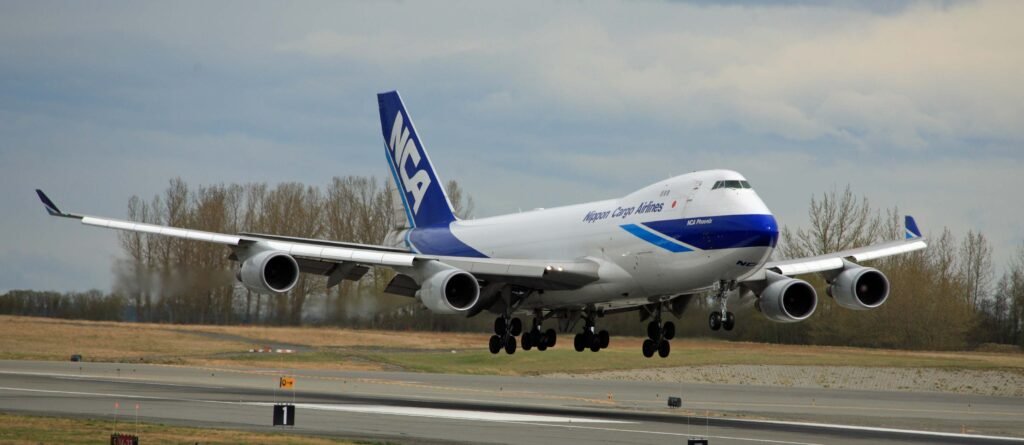
What Air Cargo Is
Air cargo refers to freight transported by aircraft rather than by truck, rail, or ship. It is the fastest major freight transportation mode, moving goods across long distances in hours rather than days or weeks, but it is also typically the most expensive option per unit of weight, reserving air cargo mainly for shipments where speed matters more than cost.
Belly Cargo Versus Dedicated Freighters
Air cargo moves in two main ways: as belly cargo stored in the lower cargo holds of passenger aircraft alongside checked luggage, and aboard dedicated freighter aircraft that carry only cargo with no passenger seating. Belly cargo capacity on passenger routes fluctuates with passenger flight schedules, while dedicated freighters offer more predictable capacity independent of passenger demand.
Typical Air Cargo Shipments
Air cargo commonly carries high-value electronics, pharmaceuticals requiring tightly controlled transit times, time-sensitive documents and parts, and perishable goods such as fresh flowers, seafood, and fruit that would spoil during slower surface transportation. E-commerce has also driven substantial growth in air cargo volume for fast international parcel delivery.
Air Cargo Infrastructure
Major air cargo hubs feature specialized cargo terminals with equipment for rapidly loading and unloading aircraft, cold storage facilities for perishable and pharmaceutical shipments, and close integration with customs authorities to speed international cargo through border clearance processes.
Air Cargo Pricing
Air cargo rates are calculated based on the greater of a shipment’s actual weight or its dimensional weight, a calculation that accounts for how much space a lightweight but bulky shipment occupies relative to denser cargo, ensuring airlines are compensated fairly for the cargo space a shipment actually uses rather than only its physical weight.
Integrators and Express Air Cargo
Integrated carriers, commonly called integrators, operate their own aircraft, ground vehicles, and sorting facilities to provide door-to-door express delivery service, controlling the entire shipment journey themselves rather than relying on separate trucking and airline partners the way traditional freight forwarders often must.
Air Cargo During Disruptions
Air cargo capacity has proven valuable during supply chain disruptions, when shippers facing delays in slower transportation modes sometimes pay a premium to move critical shipments by air instead, temporarily shifting demand and pricing dynamics across the air cargo market until the underlying disruption resolves.
Air Cargo Security Requirements
Air cargo is subject to strict security screening requirements, often comparable to passenger baggage screening, reflecting the serious safety risks that explosive or other dangerous devices concealed in cargo could pose to an aircraft in flight, with known shipper programs allowing established, vetted shippers to move cargo through somewhat streamlined security processes.
Temperature-Controlled Air Cargo
Pharmaceutical and perishable food shipments increasingly rely on specialized temperature-controlled air cargo handling, including dedicated cold storage facilities at cargo terminals and insulated or actively refrigerated shipping containers, since even brief temperature excursions can render sensitive pharmaceutical products unusable or unsafe.
E-Commerce and Air Cargo Growth
The rapid growth of international e-commerce has significantly increased demand for air cargo capacity, as online retailers and marketplaces increasingly rely on air transport to meet consumer expectations for fast international shipping, reshaping cargo demand patterns that were historically dominated by traditional business-to-business freight.
Air Cargo Documentation
Air cargo shipments require specific documentation including an air waybill, customs declarations for international shipments, and any dangerous goods paperwork if applicable, with electronic air waybill adoption growing steadily as the industry works to reduce reliance on paper documentation throughout the air cargo shipping process.
Combination Carriers and Pure Freighters
Some airlines operate as combination carriers, carrying both passengers and belly cargo on the same flights, while others operate as pure freighter airlines carrying only cargo, with the choice between these models depending heavily on an airline’s route network and the relative demand for passenger versus cargo capacity on its routes.
Live Animal and Special Cargo Handling
Air cargo operations sometimes involve specialized shipments such as live animals, oversized machinery, or valuable artwork, each requiring specific handling procedures, climate control, or security measures well beyond what standard palletized cargo shipments typically need.
Air Cargo Capacity Planning
Airlines and dedicated freighter operators plan cargo capacity based on seasonal demand patterns, with certain periods such as major shopping seasons driving sharp temporary increases in air cargo demand that require careful advance capacity planning to avoid bottlenecks at peak cargo volume times.
Air Cargo and Trade Policy
Air cargo volumes and routing are also shaped by international trade agreements and customs policy, since tariff changes or new trade restrictions between countries can shift which goods move by air and along which specific international air cargo routes.
Outlook for Air Cargo
Continued growth in international e-commerce and demand for fast delivery is likely to keep driving investment in air cargo capacity and infrastructure, even as the sector remains sensitive to broader economic and trade policy shifts.
Air cargo will likely remain the premium, time-critical layer of global freight transportation, complementing rather than replacing slower, lower-cost surface transportation modes.
Its premium cost structure reflects the genuine value of speed and reliability for the specific categories of goods that depend on it most.
That role seems likely to persist even as other freight modes continue to improve.
Shippers who understand these trade-offs make smarter decisions about when air cargo is truly worth its premium cost.
As global supply chains evolve, air cargo’s role as the fastest available option will likely only grow in importance.
That premium, for the right shipment, is a cost worth paying.
Its value is clear whenever speed truly matters.
Few shipments need it, but those that do depend on it entirely.
Key facts
- Array
Quick checkWhat types of goods are typically shipped by air cargo?Show answer
High-value, time-sensitive, or perishable goods such as electronics, pharmaceuticals, and fresh flowers or seafood.
Sources
- Array
Editorially reviewed by Specialty Digest Editorial TeamLast reviewed November 4, 2026Researched and drafted with AI assistanceReport an issue