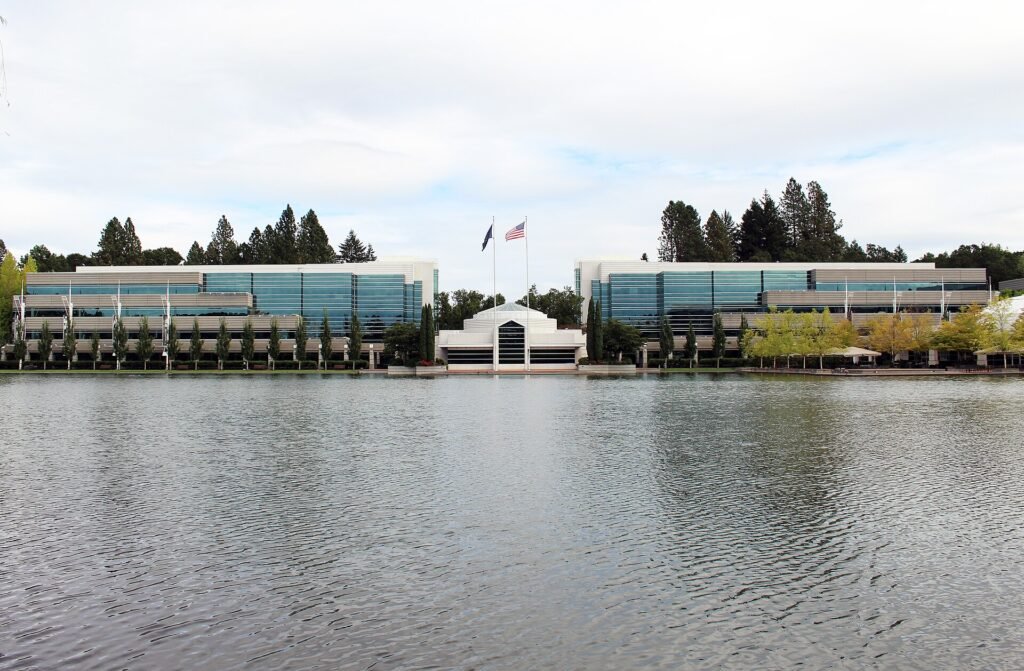
Nike is an American company headquartered in Beaverton, Oregon, that designs, develops, markets and sells athletic footwear, apparel, equipment and accessories. Its annual report states that it is the largest seller of athletic footwear and apparel in the world, and it reported revenues of $46.398 billion for fiscal 2026.
History of Nike
Nike began as a distributor. In 1964 the runner Phil Knight and his former track coach Bill Bowerman each put in $500 to form Blue Ribbon Sports. Knight sold running shoes from the trunk of his car at track meets, and the company held West Coast distribution rights to Tiger running shoes from a Japanese manufacturer.
Bowerman, who coached track at the University of Oregon, experimented with shoe design, and his waffle-pattern outsole of the early 1970s became one of the company’s early product breakthroughs. According to the Oregon Sports Hall of Fame, Knight left his accounting job in Portland to work for the company full time about five years after its founding. By 1971 the company had begun making its own shoes, starting with soccer shoes under the Nike name, taken from the Greek goddess of victory. In 1972 it introduced the Swoosh logo and sold running shoes at the U.S. Olympic Track and Field Trials in Eugene, Oregon. The company changed its name to Nike, Inc. in 1978, went public in 1980 and introduced the slogan Just Do It in 1988.
The company was incorporated in 1967 under the laws of the state of Oregon, which is where its legal home remains.
Products and services
Nike’s principal business is the design, development and worldwide marketing and selling of athletic footwear, apparel, equipment, accessories and services. Its products focus on running, basketball, football, training and other sports, as well as on lifestyle wear that people use outside of athletics.
The company has several brands within its group. Jordan Brand designs and sells footwear, apparel and accessories that are focused on sport performance and streetwear using the Jumpman trademark, and its sales are reported inside Nike’s geographic segments. Converse, a wholly owned subsidiary brand, is reported as a separate segment.
Nike reports results by geography. Its segments are North America, Europe, the Middle East and Africa, Greater China, and Asia Pacific and Latin America, with Converse reported separately. Footwear is the largest product category by sales for most athletic brands, and Nike offers models that range from elite racing shoes to casual sneakers.
Nike also offers digital services, such as apps and membership programs that give customers access to products and experiences.
Corporate structure and operations
Nike sells its products through its own channels, which it calls Nike Direct and which include stores and digital platforms, and through wholesale accounts that include independent distributors, licensees and sales representatives in nearly all countries around the world. The company says it provides products to wholesale customers through these networks and also offers interactive consumer services.
Nearly all of its products are made by independent contractors, and nearly all footwear, apparel and equipment is manufactured outside the United States. This is a major difference from companies that run their own factories, and it makes supply chain management central to its operations.
The company’s main campus is the Philip H. Knight Campus at One Bowerman Drive in Beaverton, which opened in 1990 and covers 400 acres with more than 75 buildings, according to the company’s website. The European headquarters in Hilversum was established in 1999 on the former grounds of the 1928 Amsterdam Olympic equestrian games, and it is home to more than 2,000 employees from more than 70 countries, according to the company. The Greater China headquarters in Shanghai opened in 2013. The company also keeps regional headquarters in Hilversum, the Netherlands, for Europe, the Middle East and Africa, and in Shanghai for Greater China.
Revenues reported to the U.S. Securities and Exchange Commission for fiscal years ending May 31 were:
- $51.362 billion in fiscal 2024.
- $46.309 billion in fiscal 2025.
- $46.398 billion in fiscal 2026.
The decline from fiscal 2024 to fiscal 2025 was a drop of about 10 percent, and revenue was close to flat in the following year.
Impact of Nike
Nike has had a large influence on sports marketing. Its endorsement contracts with athletes, teams and leagues are among the best-known examples of sport sponsorship, and its products are widely used in running, basketball and football. The company is also a common case study for brand equity, since the Swoosh logo is recognized across the world without any text.
The company’s approach to design and sourcing has also been widely copied. By keeping research, design and marketing in-house while contracting out most manufacturing, it can change products quickly in response to trends and test new materials without owning factories.
Its products have also shaped fashion, as sneakers moved from athletic equipment to everyday clothing, and a large resale market has grown around limited-release shoes.
Criticism and controversies
Working conditions in the factories that make athletic shoes and apparel have been a long-running issue for the sportswear industry. In the 1990s, Nike became the focus of public campaigns over wages and conditions in contract factories in Asia, and the company later introduced a code of conduct and began to publish information about its supplier factories.
The company’s own annual report acknowledges that contractors may not always comply with its standards or with local laws, and that if a contractor violates or is accused of violating such rules, this could harm its reputation. Trade policy and tariffs are another risk named in the report.
The information here is a general description of the company and not investment advice.
More in Management
Key facts
- Phil Knight and Bill Bowerman formed Blue Ribbon Sports in 1964 with $500 each.1
- The company changed its name to Nike, Inc. in 1978 and went public in 1980.1
- Nike was incorporated in 1967 under the laws of Oregon.2
- Nearly all Nike products are made by independent contractors, mostly outside the United States.2
- Revenues were $46.398 billion in fiscal 2026, which ended May 31, 2026.2
Related concepts
Quick checkHow did Nike start?Show answer
Nike began as Blue Ribbon Sports, formed in 1964 by Phil Knight and Bill Bowerman to distribute running shoes. It began making its own shoes under the Nike name in 1971 and adopted the Nike, Inc. name in 1978.
Sources
- Oregon Sports Hall of Fame, NIKE Inc. special contribution to sports, https://oregonsportshall.org/?p=1657
- NIKE, Inc., Annual Report on Form 10-K for fiscal year ended May 31, 2026, U.S. Securities and Exchange Commission, https://www.sec.gov/Archives/edgar/data/320187/000032018726000088/nke-20260531.htm
- NIKE, Inc., Welcome to NIKE, Inc. (company headquarters information), https://about.nike.com/en/company
Editorially reviewed by Specialty Digest Editorial TeamLast reviewed November 4, 2026Researched and drafted with AI assistanceReport an issue