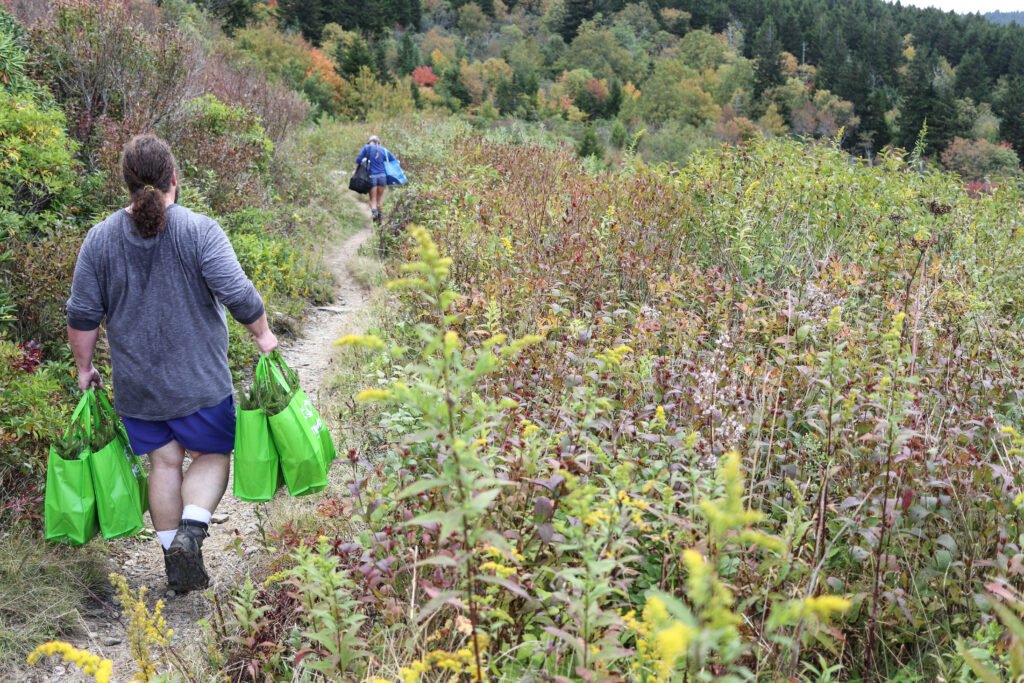
Afforestation is the establishment of forest on land that has not been forested for a very long time, or has never supported forest cover at all, typically through deliberate tree planting or seeding rather than natural regrowth. It is distinct from reforestation, which refers specifically to replanting trees on land that was forested more recently and has since been cleared, a distinction that matters for both ecological assessment and climate policy accounting.
Afforestation has gained significant attention as a potential tool for removing carbon dioxide from the atmosphere, since growing trees absorb carbon through photosynthesis and store it in their wood, roots, and surrounding soil. Several national governments and international climate initiatives have launched large-scale afforestation programs, including China’s decades-long effort to expand forest cover in previously degraded or non-forested regions and various pledges made under international climate agreements to increase global tree cover.
Ecological and Climate Considerations
While afforestation can sequester meaningful amounts of carbon over time, ecologists caution that planting trees on land that was not historically forested, such as natural grasslands, savannas, or wetlands, can sometimes cause more ecological harm than benefit, since these ecosystems often store substantial carbon in their soils already and support distinct plant and animal communities adapted to open, non-forest conditions.
The choice of species also matters considerably: afforestation projects using fast-growing, non-native species for maximum short-term carbon capture can create ecologically simplified plantations that provide far less biodiversity value than afforestation efforts using a diverse mix of species native to the region, even though both approaches may be counted similarly in simple carbon-accounting frameworks.
Large-Scale Afforestation Programs
China’s Three-North Shelterbelt Program, sometimes called the “Great Green Wall,” is among the most ambitious afforestation efforts in the world, launched in 1978 with the goal of planting a massive belt of trees across northern China to combat desertification and reduce the severity of sandstorms affecting the region. The program has planted tens of billions of trees over several decades, though researchers have also documented challenges including high tree mortality in arid areas unsuited to the chosen species.
Africa’s Great Green Wall initiative similarly aims to restore degraded land across the Sahel region through afforestation and other land restoration techniques, intended to combat desertification, improve food security, and create economic opportunities for local communities, though progress has been slower than originally planned due to funding, coordination, and maintenance challenges across the many countries involved.
Measuring Afforestation’s Real Impact
Climate scientists and ecologists increasingly emphasize that afforestation’s actual carbon and biodiversity benefits depend heavily on project design choices, including which species are planted, how the planted trees are maintained over subsequent decades, and critically, what type of ecosystem existed on the land beforehand. A growing body of research has urged caution against treating any form of tree planting as automatically beneficial for climate or biodiversity goals.
Satellite monitoring and long-term forest inventories have become essential tools for verifying whether afforestation projects actually achieve their stated goals over time, since newly planted trees can fail to establish, be cleared again within a few years, or simply not survive to maturity in the numbers originally reported, making independent verification an increasingly important part of evaluating these programs.
Community and Economic Dimensions
Large afforestation programs can create substantial local employment in nursery operations, planting, and ongoing forest maintenance, and some projects are explicitly designed to provide communities with sustainable sources of fuelwood, fodder, or non-timber forest products, which can help build local support for maintaining the new forest over time rather than clearing it again for short-term economic needs.
However, poorly designed programs that displace existing land uses, such as traditional grazing or small-scale farming, without adequate consultation or compensation have sometimes generated local resistance, underscoring those afforestation efforts tend to be most durable when local communities see direct, tangible benefits from the new forest rather than experiencing it primarily as a restriction on their existing livelihoods.
Carbon Credit Controversies
Afforestation projects are frequently used to generate carbon credits sold on voluntary and compliance carbon markets, but independent audits of several high-profile projects have found that claimed carbon removal was sometimes overstated, either because planted trees died at higher rates than projected or because the credited carbon storage failed to account properly for what the land would have absorbed naturally without intervention. These findings have prompted calls for stricter, more independently verified accounting standards before afforestation credits are sold to buyers seeking to offset their own emissions.
Despite these concerns, well-verified afforestation projects that use appropriate native species on genuinely degraded land continue to be viewed by many scientists as a legitimate, if limited, component of broader climate mitigation strategies, provided they are paired with far larger reductions in fossil fuel emissions rather than treated as a substitute for cutting emissions at the source.
FAQ
What is the difference between afforestation and reforestation?
Afforestation establishes forest on land that has not been forested for a long time or ever, while reforestation specifically replants trees on land that was more recently forested and then cleared.
Can afforestation harm ecosystems rather than help them?
Yes, planting trees on land that was historically grassland, savanna, or wetland can disrupt those ecosystems and their existing carbon stores and biodiversity, even though the project is framed as an environmental benefit.
What is China’s Great Green Wall?
It is the Three-North Shelterbelt Program, a massive afforestation effort launched in 1978 to plant a belt of trees across northern China to combat desertification and reduce sandstorm severity.
More in Conservation
In the news
Editorially reviewed by Specialty Digest Editorial TeamLast reviewed November 4, 2026Researched and drafted with AI assistanceReport an issue